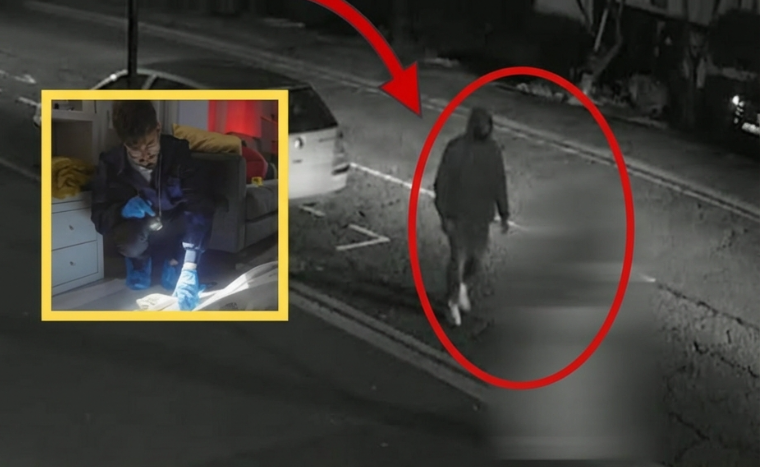
Less than a minute of video has become one of the most significant and haunting pieces of evidence in the investigation into the disappearance of Nancy Guthrie, mother of television journalist Savannah Guthrie.
Police confirmed they recovered security footage from a neighbor’s home, and although the clip lasts only 57 seconds, investigators say it has altered their understanding of the final moments before Nancy vanished. The footage does not show panic or a dramatic encounter — and that quiet normalcy is exactly what gives it such unsettling weight.
According to officials, the camera positioned across from Nancy’s residence briefly records her walking in an area she traveled often. Her movements appear steady, familiar, and without signs of alarm. There is no indication of a struggle, no second figure stepping into view, and no vehicle approaching.
To someone unaware of the circumstances, the short clip would look like part of an ordinary evening. She moves naturally through the frame, and seconds later, she disappears from sight — marking the last confirmed moment where she is seen alive and unrestrained.
Investigators are focused on what the footage does not contain. The lack of visible disruption leaves a wide gap between what the camera captured and what happened afterward. Detectives say such silence in the visual record can be deceptive, and they stress that an absence of clear activity does not eliminate the possibility of danger occurring immediately before or after the clip. With that in mind, analysts are reviewing the footage with extraordinary precision, examining every shift in light, searching for reflections on windows, studying distant movement, and mapping what falls outside the camera’s narrow angle.
Law enforcement agencies have expanded their efforts by collecting additional footage from homes, businesses, and passing vehicles. They are working to connect this single recorded moment with other surveillance fragments from the surrounding area. Investigators believe the window of time immediately before and after Nancy appears on camera may hold critical clues, and they continue urging residents to submit any video from that night, no matter how ordinary it may seem at first glance.
For the Guthrie family, the clip carries an emotional weight far beyond its investigative value. It shows Nancy moving through a calm, familiar space, unaware that these quiet seconds would become the final confirmed record of her presence. The family has spoken about the difficulty of watching the footage, describing it as a painful reminder of both proximity to answers and the vast uncertainty that remains. The sight of her walking peacefully feels hopeful in one sense, yet heartbreaking in another, because it freezes a moment that leads into silence.
Authorities emphasize that the investigation remains active and complex. They continue working with digital forensics teams, reviewing data from doorbell cameras, neighborhood security systems, and regional traffic records. Every angle, shadow, and timestamp is being examined as part of an effort to piece together a complete timeline.
As the search continues, investigators ask the public to stay alert, report information responsibly, and refrain from drawing conclusions based on speculation. For now, the 57-second clip stands as both a vital clue and an emotional turning point — a glimpse of Nancy Guthrie’s final known movements, preserved on video, while the search for answers presses forward.