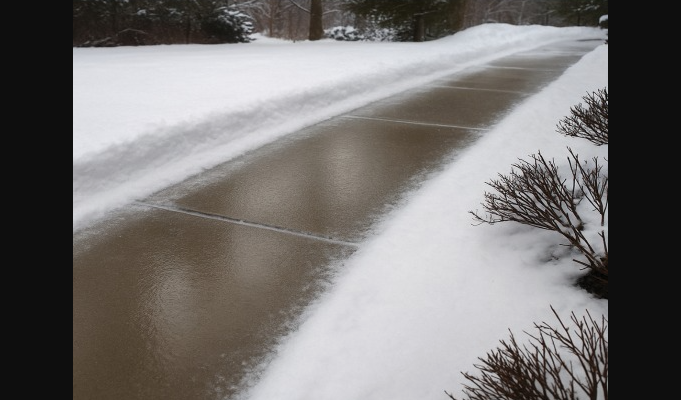
When winter arrives, everyday outdoor routines often turn into a series of unexpected safety concerns. A short walk to the mailbox can require more focus than usual, and stepping down the front stairs demands careful attention when temperatures drop. Even a simple path leading to the car can become hazardous once ice and snow settle in. Frozen surfaces make movement difficult and can lead to falls, delays, or damage to outdoor areas, especially when daytime temperatures rise and fall repeatedly.
Many households look for solutions by purchasing large bags of salt or commercial de-icers, though these products can be expensive and may cause harm to concrete, landscaping, or footwear over time. This has encouraged more people to look for practical, affordable alternatives that can be created with items already found in the home, making seasonal maintenance easier to manage.
One widely shared option involves a homemade mixture designed to help loosen ice without relying on strong chemicals. This method uses three very common ingredients: dish soap, rubbing alcohol, and warm water.
To prepare the mixture, combine one teaspoon of dish soap, one tablespoon of rubbing alcohol, and half a gallon of warm or hot water. After mixing everything together, pour the solution over icy steps, walkways, or driveways. The warm water begins softening the ice on contact, the rubbing alcohol helps slow down the freezing process, and the dish soap creates a slightly grippier surface. Because this mixture is milder than many commercial options, it tends to be gentler on concrete, soil, and footwear. Homeowners who prefer a surface-friendly and budget-conscious approach often find that this method supports safer outdoor movement throughout the colder months.
Maintaining safe walkways during winter involves more than applying an effective mixture. Small everyday habits can make a significant difference in preventing accidents. Wearing shoes with solid tread can help maintain balance in slippery areas. Taking shorter, steady steps reduces the risk of sudden slips. Clearing fresh snow before it compacts into ice is another helpful behavior that keeps surfaces easier to manage.
Using handrails whenever they are available increases stability, especially when stepping onto or off of porches or stairways. Keeping a shovel or push broom near the entrance ensures that snow can be removed quickly as needed. Sprinkling a light layer of sand on key areas adds traction that helps improve footing. Checking frequently used areas several times throughout the day, especially after periods of freezing temperatures or fresh snowfall, allows small patches of ice to be addressed early before they grow more difficult to manage.
Winter safety around the home becomes far more manageable with these simple, low-cost strategies. A few reliable ingredients, basic tools, and consistent habits can greatly improve the safety of outdoor paths. Whether caring for your own property or supporting a neighbor, these efforts contribute to safer, more comfortable outdoor spaces. Preparing early and staying attentive throughout the season helps keep walkways in good condition, supports peace of mind, and allows you to move through winter with greater ease.