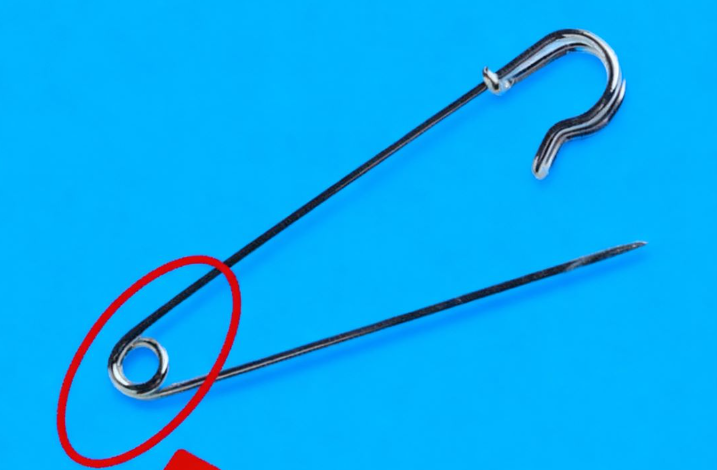
At first glance, a safety pin appears to be one of the most ordinary tools ever created. It is small, lightweight, inexpensive, and easy to overlook. Many people think of it as nothing more than a bent piece of metal designed to fasten fabric temporarily. Yet hidden within this familiar object is a thoughtful detail that often goes unnoticed: the small hole located at the end of the pin. This opening is not decorative, nor is it the result of a manufacturing shortcut. It serves a clear, intentional purpose rooted in traditional sewing practices, and understanding it reveals how much quiet ingenuity exists in everyday tools.
A Purposeful Detail Hidden in Plain Sight
For generations, seamstresses, tailors, and home sewists relied on safety pins for tasks that went far beyond holding fabric together. The small hole at the end of the pin was designed to assist with one of the most common sewing challenges: threading elastic, ribbon, or drawstrings through fabric casings. Waistbands, sleeves, hoods, and cuffs often require elastic or cords to be guided smoothly through narrow channels, and this is where the safety pin’s hidden feature becomes invaluable.
By threading a piece of string, yarn, or thin cord through the hole, the pin becomes easier to control as it moves through fabric. This added grip allows the pin to glide forward in a straight line rather than twisting sideways or flipping around inside the casing. It also reduces the chance of the pin slipping entirely into the fabric, a common frustration that can slow progress and test patience. This small design choice transforms a simple pin into a reliable guiding tool.
How Traditional Sewing Solved Everyday Problems
The safety pin’s tiny hole reflects a broader philosophy behind traditional sewing tools. Long before modern specialty gadgets filled store shelves, tools were created to serve multiple purposes with minimal complexity. Every feature had a reason. Sewing relied on efficiency, precision, and durability, especially when garments were made to last rather than be replaced.
In the same way that the hole in a safety pin improves control, other classic techniques supported smoother work. Thread was often conditioned with natural wax to prevent tangling. Seams were reinforced with backstitches to increase strength. Needles and pins were selected carefully based on fabric type. Each detail contributed to better results and fewer mistakes, especially when working by hand.
The safety pin, with its discreet hole, fits perfectly into this tradition. It demonstrates how thoughtful design can solve recurring problems without adding unnecessary complexity.
Applying Old Knowledge to Modern Sewing
Using traditional methods does not require abandoning modern tools. Instead, it offers an opportunity to work more efficiently by understanding why tools were designed the way they were. When adjusting elastic in clothing, repairing a garment, or creating something from scratch, small insights like this can save time and reduce frustration.
Threading a cord through the safety pin’s hole creates a stronger connection between the pin and the material being pulled. This connection allows for smoother movement and greater control, especially when working with thick fabrics or long casings. The result is a task that feels more manageable and predictable.
More Than a Sewing Trick
Beyond sewing, this feature has practical uses in everyday life. Safety pins are often used in crafting, organizing cords, or guiding items through tight spaces. The hole allows attachments to be secured more firmly, making the pin useful in a wide range of situations. Its versatility highlights how even the smallest design elements can expand an object’s usefulness.
A Reminder of Quiet Ingenuity
The tiny hole in a safety pin serves as a reminder that many everyday objects carry thoughtful solutions within their design. These features may fade into the background as habits change, yet they remain available for those who take a closer look. Understanding them reconnects us with generations of practical knowledge passed down through simple tools.
Sometimes, the most effective solutions are not hidden in complex technology, but in the subtle details of objects we use every day. The safety pin is a perfect example: modest, reliable, and quietly clever—waiting to be understood.