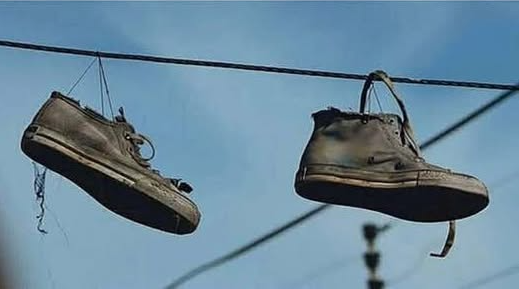
A pair of sneakers hangs high above the street, laces tied together, swinging gently against the sky whenever the breeze moves through the neighborhood. The sight catches the eye of almost everyone who passes underneath—drivers slowing down for a second look, students glancing up on their way home, visitors pausing mid-step to wonder about the strange decoration overhead.
Those shoes have turned into one of those quiet urban mysteries that spark imagination and conversation wherever they appear. Across cities and towns, the tradition carries different meanings, yet the image itself feels instantly familiar, wrapped in layers of local stories, childhood memories, and playful rebellion.
Many people trace the custom back to moments of celebration and closure. In several accounts passed down through families and communities, service members returning from duty would fling their old military boots over the nearest power line as a personal declaration of freedom.
The act marked the official end of one chapter and the beginning of another, a small ceremony performed in the open air for no audience except the sky. That spirit of milestone and release later spread into civilian life, where friends sometimes toss shoes upward to honor graduations, the last day of school, or any turning point worth remembering. These stories paint the hanging sneakers as symbols of joy and forward motion rather than anything darker.
At the same time, movies and television series have shaped a very different picture in popular imagination. Dramatic scenes in films and late-night urban tales told around campfires have convinced entire generations that the shoes signal hidden danger or secret activity.
Viewers sometimes interpret them as warnings left by local groups, or as proof that someone lost a pair in an unfortunate way. Police departments, utility workers, and community leaders regularly point out that no reliable evidence supports those intense interpretations. The thrilling versions continue to circulate because they create excitement and give city streets an air of mystery that feels almost cinematic.
In reality, the vast majority of shoes overhead come from much lighter moments. Groups of teenagers on summer evenings, children testing how far they can throw, friends daring one another after a pickup basketball game—these are the real authors of most displays.
The sneakers become unplanned sculptures against the clouds, adding unexpected color and personality to telephone poles and power lines that usually go unnoticed. Neighborhoods develop their own small legends about pairs that have stayed up for years, turning into landmarks everyone recognizes.
Utility companies and safety experts remind everyone that even harmless fun can carry consequences. Shoes wrapped around electrical wires sometimes cause outages, damage equipment, or force crews to perform risky removals. Sparks have flown, power has gone out, and repair costs have climbed because of objects never meant to be there. Cities occasionally organize clean-up events to bring the sneakers down safely, turning the process into a community effort instead of a hazard.
A growing number of people now choose different ways to celebrate milestones or express creativity. Old sneakers find second lives as planters filled with flowers, material for art projects, or donations to organizations that distribute shoes to those who need them most. Schools and community centers host shoe-decorating contests, running clubs tie bright laces together for charity displays on fences instead of wires, and artists incorporate retired footwear into sculptures and installations that stay firmly on the ground.
The sight of sneakers swaying in the wind will probably never disappear completely, and that touch of everyday magic still brings smiles to many faces. Yet as neighborhoods evolve and awareness grows, more people decide to keep the celebration and leave the power lines clear. The stories remain, the laughter echoes, and the shoes—when they finally come down—often begin brand new adventures somewhere safer and even more meaningful.