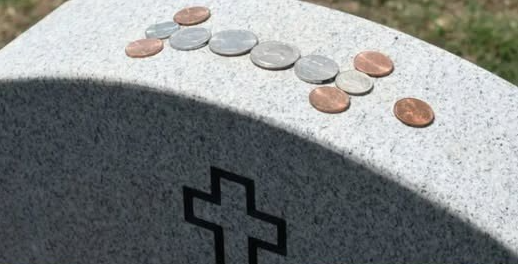
If you have ever wandered through a cemetery and noticed a small coin resting carefully on a gravestone, you may have paused with quiet curiosity. At first glance, it can look like ordinary change, something dropped without intention. Yet those small coins are rarely accidental. They are deliberate, meaningful symbols placed with care and respect. Each one carries a message meant not for the stone itself, but for the story it represents and for the loved ones who may one day notice it. In silence, these coins communicate remembrance, gratitude, and a bond that continues long after a life has ended.
This tradition is most commonly found at the graves of military service members in the United States. It developed organically over time, passed between veterans, families, and communities who understood its language without needing to explain it aloud. Leaving a coin is a way to say, “Someone was here. Someone remembers.” It offers reassurance that the individual buried there is not lost to time, and that their service still matters to people who walk the same ground years later.
Each coin carries a distinct meaning, turning spare change into a quiet code of connection. A penny is the simplest and most common offering. It signifies respect and remembrance, letting families know that someone took a moment to stop, reflect, and honor the person beneath the stone. That small copper coin says a great deal: this life mattered, and its memory continues to reach others.
A nickel carries a deeper layer of meaning. It indicates that the visitor trained alongside the service member, often during boot camp. Training is demanding, both physically and mentally, and it forges strong bonds between those who endure it together. Leaving a nickel acknowledges that shared beginning, a time when discipline, teamwork, and resilience were learned side by side.
A dime reflects an even closer connection. It tells the story of shared service, of standing in the same unit and facing challenges together. Those who leave a dime often experienced the same environments, responsibilities, and risks. The coin represents trust built through action and experience, a relationship shaped by commitment and mutual reliance.
The quarter carries the heaviest meaning of all. Placing a quarter on a gravestone signals that the visitor was present at the time of the service member’s passing. It is a symbol of witness, remembrance, and deep emotional weight. That coin acknowledges a moment that cannot be undone, honoring both the loss and the bond formed during that final chapter. Its presence speaks of loyalty that did not fade even in the face of grief.
One reason coins have endured as symbols of remembrance is their permanence. Flowers fade, paper notes disappear, and spoken words dissolve into memory. Coins remain. They withstand weather and time, quietly holding their place as markers of respect. Their simplicity makes them accessible to anyone, while their meaning remains profound to those who understand it.
For families who encounter these coins without knowing the tradition, learning their meaning often brings comfort. It offers assurance that others still remember their loved one, even if they never met them personally. Each coin becomes proof that service and sacrifice continue to resonate beyond formal ceremonies or designated holidays.
In some cemeteries, especially those honoring veterans, multiple coins may rest on a single gravestone. Each one represents a different visitor, a different connection, a different moment of reflection. Together, they form a mosaic of remembrance created over time by people who felt compelled to acknowledge a life lived in service.
This tradition also reflects something larger about how communities honor sacrifice. It shows that remembrance does not require grandeur or attention. A quiet act, performed with intention, can hold extraordinary meaning. Leaving a coin is not about being seen; it is about showing respect in a way that lasts.
The next time you notice a coin resting on a gravestone, take a moment to consider what it represents. You are not looking at forgotten change. You are seeing a message left behind with care, a symbol of connection that transcends time. In that small, silent gesture lives a powerful promise: service is remembered, sacrifice is honored, and no one who gave part of themselves is ever truly forgotten.