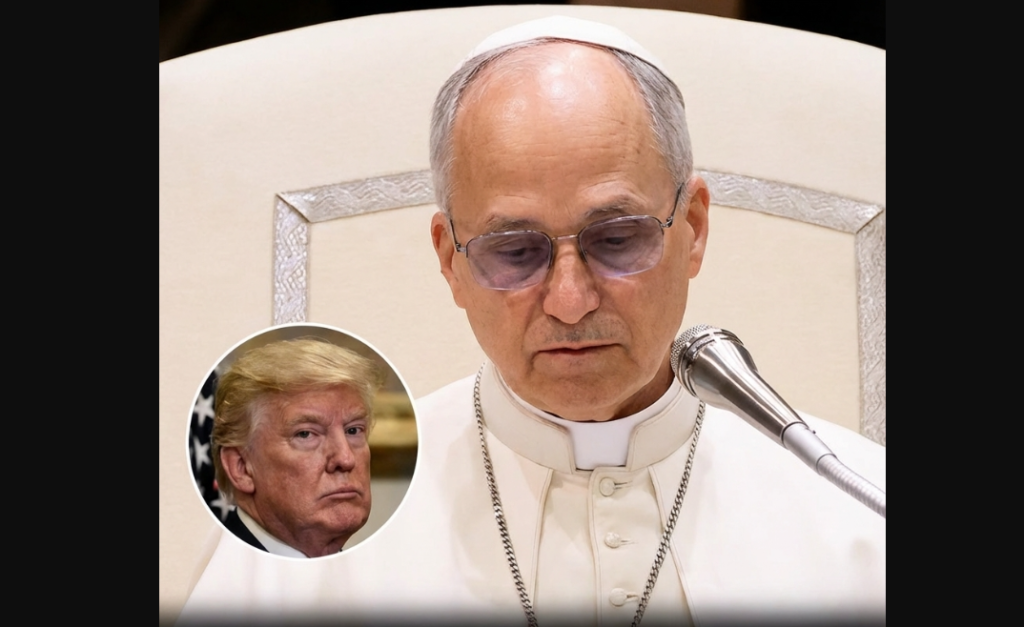
In a place defined by centuries of ceremony, measured speech, and thoughtful ritual, an unexpected moment managed to capture global attention. Only a few days after his papacy began, Pope Leo XIV offered a response so brief and so deliberate that it immediately became the focal point of international conversation.
During a highly watched Vatican press conference, surrounded by reporters seeking insight into the direction of his leadership, he was asked a question that resonated strongly with audiences in the United States: did he have a message for America? He paused, smiled gently, and answered with a single word—simple, intentional, and undeniably memorable.
That word was “Many.” He followed it with a traditional blessing before continuing with the event, yet the impact of the moment lingered long after he spoke. Within moments, the clip spread through social platforms, circulated by viewers who replayed it in fascination.
News outlets expanded on the exchange, discussing the meaning behind the remark and exploring why such a succinct response carried so much influence. At a time when public figures frequently rely on lengthy statements or prepared scripts, the Pope’s concise reply felt strikingly aligned with the communication style of a modern, digital audience. Many interpreted it as a gesture rooted in contemplation, encouraging reflection instead of prescribing a single interpretation.
Almost immediately, interpretations began to surface. Some listeners saw “Many” as a reference to the many strengths the United States holds within global leadership, including innovation, resilience, and influence. Others connected the word to the many responsibilities and challenges the country continues to face, from social tensions and economic pressure to questions surrounding unity and shared values.
Those familiar with Pope Leo XIV’s previous work highlighted that his years of ministry emphasized compassion, service, and community responsibility, which made the openness of his reply feel intentional rather than incomplete. By leaving space for interpretation, he encouraged people to consider his wider teachings and character.
The moment also underscored the changing nature of spiritual leadership in a world shaped by instant communication. A single word, spoken naturally and without fanfare, managed to ripple across continents and spark conversations among people who rarely engage with Vatican affairs. It demonstrated that influence can emerge through calm expression rather than elaborate messaging, and that even the shortest responses can encourage dialogue when delivered with purpose.
As Pope Leo XIV settles into his role, many observers expect his broader vision to unfold through upcoming decisions, pastoral visits, and formal addresses. His leadership style is still taking shape, and many anticipate that future statements will provide clearer guidance on his perspectives regarding global cooperation, social justice, and the responsibilities of nations. Yet this early moment continues to stand out. It serves as an example of how a thoughtful, concise expression can resonate widely in an age where attention is often scattered and rapid communication dominates daily life.
For now, his one-word reply has achieved something rare: it has brought people together in curiosity and reflection. It has sparked discussion across cultural, political, and spiritual boundaries, reminding the world that meaning is not always found in the length of a message, but in the intent behind it. In many ways, the moment illustrates how the quietest expressions can carry profound significance, inviting people to think, question, and listen more closely.