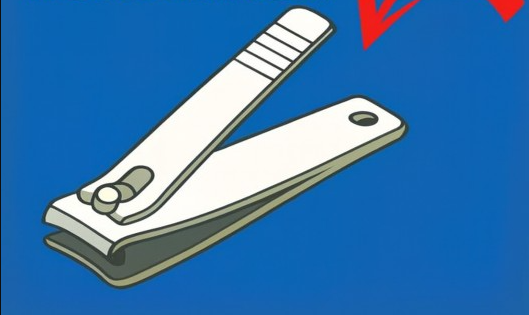
Most of us reach for a pair of nail clippers almost automatically, rarely giving them a second thought. They sit quietly in bathroom drawers, toiletry bags, or bedside tables, doing their job without ceremony.
Yet one small detail tends to catch the eye every time: a tiny round hole near the end. Many people notice it. Few stop to question it. It looks simple, even insignificant, but its presence is deliberate.
That small opening has survived decades of redesigns and material upgrades because it solves practical problems that people encounter more often than they realize. Once its purpose becomes clear, it is hard to see nail clippers as an ordinary object again.
At its core, the hole exists to make nail clippers easier to keep track of. Clippers are compact, lightweight, and notoriously easy to misplace. By adding a round opening, manufacturers made it possible to attach them to keychains, lanyards, zipper pulls, or metal rings.
This small design choice transforms clippers from a loose item into something that stays connected. For people who travel often, commute daily, or carry grooming tools in bags, this feature ensures the clippers remain accessible instead of disappearing into the depths of a pocket or suitcase.
Beyond portability, the hole also supports organization. Many people use it to hang nail clippers on hooks inside bathroom cabinets or on wall-mounted organizers. This keeps them clean, visible, and within reach, reducing clutter and saving time during daily routines. Some households even designate separate clippers for different uses, such as fingernails and toenails, and connect them together using a small ring through the holes. This simple method keeps tools grouped without needing additional storage containers.
The opening can also enhance control during use. Some users slide a finger through the hole while trimming, especially when working at awkward angles or dealing with thicker nails. This added grip can improve stability and precision, helping prevent uneven cuts or slips. While not everyone uses the hole this way, it demonstrates how a small feature can serve multiple purposes depending on individual habits and needs.
This thoughtful detail is not a modern invention. Early grooming tools from the late nineteenth and early twentieth centuries often included similar openings. At a time when people carried tools in pockets, pouches, or travel kits without modern organizers, having a way to secure small items mattered greatly. The hole allowed tools to be tied with string, leather straps, or metal loops, preventing loss during travel or daily work. As grooming tools evolved, this feature proved so useful that it remained part of the standard design.
Even as nail clippers began to incorporate new materials like stainless steel and ergonomic shaping, the hole endured. Designers recognized that functionality does not need to be complex to be effective. This single opening requires no extra parts, adds almost no cost, and does not interfere with the primary function of the tool. Its efficiency lies in its simplicity, which is why it continues to appear on clippers sold today.
Understanding this detail also highlights a broader truth about everyday objects. Many items we use daily contain features shaped by years of observation, problem-solving, and refinement. These elements often fade into the background because they work so well that we stop noticing them. The small hole in nail clippers is a quiet example of how design adapts to real human behavior: losing things, needing organization, seeking comfort, and valuing convenience.
The next time you pick up a pair of nail clippers, that tiny opening may stand out differently. It represents generations of practical thinking condensed into a single, circular space. It proves that good design does not need to announce itself loudly. Sometimes, it simply works, day after day, without asking for attention. And in that way, this small hole earns its place as one of the most understated yet enduring features in everyday personal care tools.