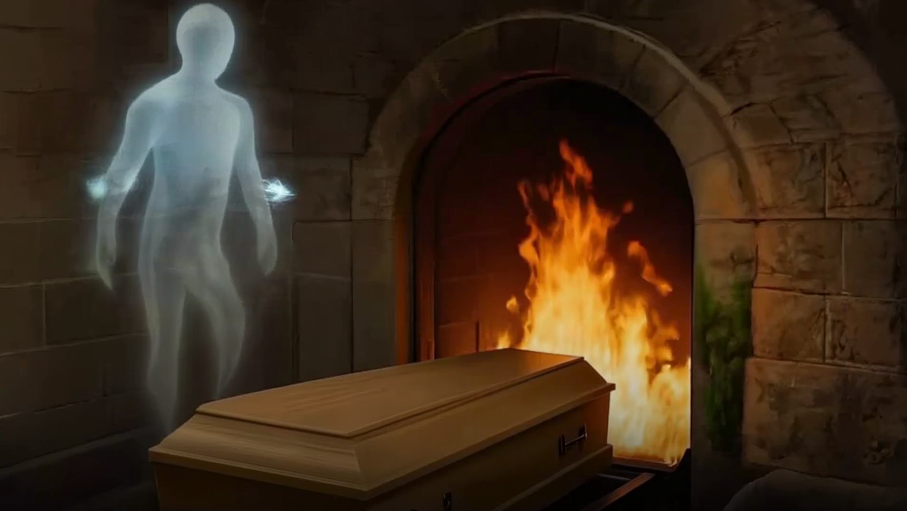
The passing of a loved one often initiates profound spiritual inquiries.
One of the most frequently asked questions concerns the fate of the soul following cremation.
The answer to this inquiry diverges significantly based on religious doctrines, cultural customs, and individual philosophical convictions.
While the physical process of cremation is comprehensively understood, the journey of the soul persists as an enigma, subject to diverse interpretations across centuries.
1. Hinduism and Buddhism: A Path to Liberation
In Hinduism, cremation stands as the preferred method for managing the deceased.
It is believed that the soul (atman) is eternal, merely departing the body at the moment of death.
The act of cremation facilitates the soul’s disengagement from its physical form, enabling its progression into the subsequent existence through the cycle of reincarnation (samsara).
Fire, within Hindu theology, represents a purifying element that liberates the soul.
Similarly, in Buddhism, cremation is a widely adopted practice.
Although Buddhism does not espouse the concept of a permanent soul, it teaches that consciousness endures within a cycle of rebirth.
Cremation is perceived as a pragmatic and symbolic means of acknowledging impermanence and supporting the transition into the next state of being.
2. Christianity: Faith in the Afterlife
Christian perspectives on cremation have evolved over time.
Traditionally, particularly within Catholicism, burial was favored due to theological convictions regarding bodily resurrection.
However, cremation is now broadly accepted across most Christian denominations, provided it is not chosen to disavow belief in the resurrection.
Christianity teaches that the soul is subject to Divine judgment, subsequently entering heaven, hell, or a state of anticipation (such as purgatory in Catholicism).
The soul’s journey is regarded as independent of the body’s condition, whether interred or cremated.
Ultimately, an individual’s faith and relationship with God determine the soul’s destiny—not the method of corporeal disposition.
3. Islam: Preservation of Dignity
Islam stringently prohibits cremation.
Muslims believe that the body should be interred promptly following death, in a simple and respectful manner.
The soul, according to Islamic doctrine, departs the body at death but maintains a connection to it until the Day of Judgment.
The prohibition of cremation is rooted in the conviction that the human body, even in demise, merits dignity and meticulous care.
Burial is considered a testament to respect and an act of submission to God’s will.
4. Secular and Spiritual Views
Many contemporary individuals identify as spiritual but not religiously affiliated, or they may adhere to a more secular worldview.
From these perspectives, cremation is often perceived as a natural reintegration of the body into the elements.
Some believe that the soul persists in a distinct realm, merges with the cosmos, or continues its existence through the memories and legacy left behind.
Others, particularly those with a scientific or humanist orientation, may not hold a belief in a soul at all.
For them, consciousness concludes at death, and cremation represents a personal or environmental preference rather than a spiritual consideration.
Conclusion: A Matter of Belief
Ultimately, the ultimate fate of the soul after cremation is a question each person must address through their unique beliefs, values, and traditions.
Whether interpreted as a release, a transition, or a return to nature, cremation transcends a mere physical process—it is a profoundly symbolic act intertwined with our understanding of life, death, and what may lie beyond.
Reflecting on the soul’s journey can offer solace, meaning, and tranquility in the face of loss, regardless of one’s belief system.