Old photographs hold a unique kind of power. They capture a single moment and preserve it across generations, allowing people to look directly into the lives of those who lived long before them. These images are more than visual records. They carry traces of daily life, personal identity, and the quiet details that defined an era.
When viewed carefully, old photographs reveal much more than what appears at first glance. Clothing, posture, and facial expressions all reflect the customs and expectations of the time. Even the way individuals are positioned within the frame can offer insight into family roles and social values. In many cases, these images communicate stories that go beyond what written records can fully describe.
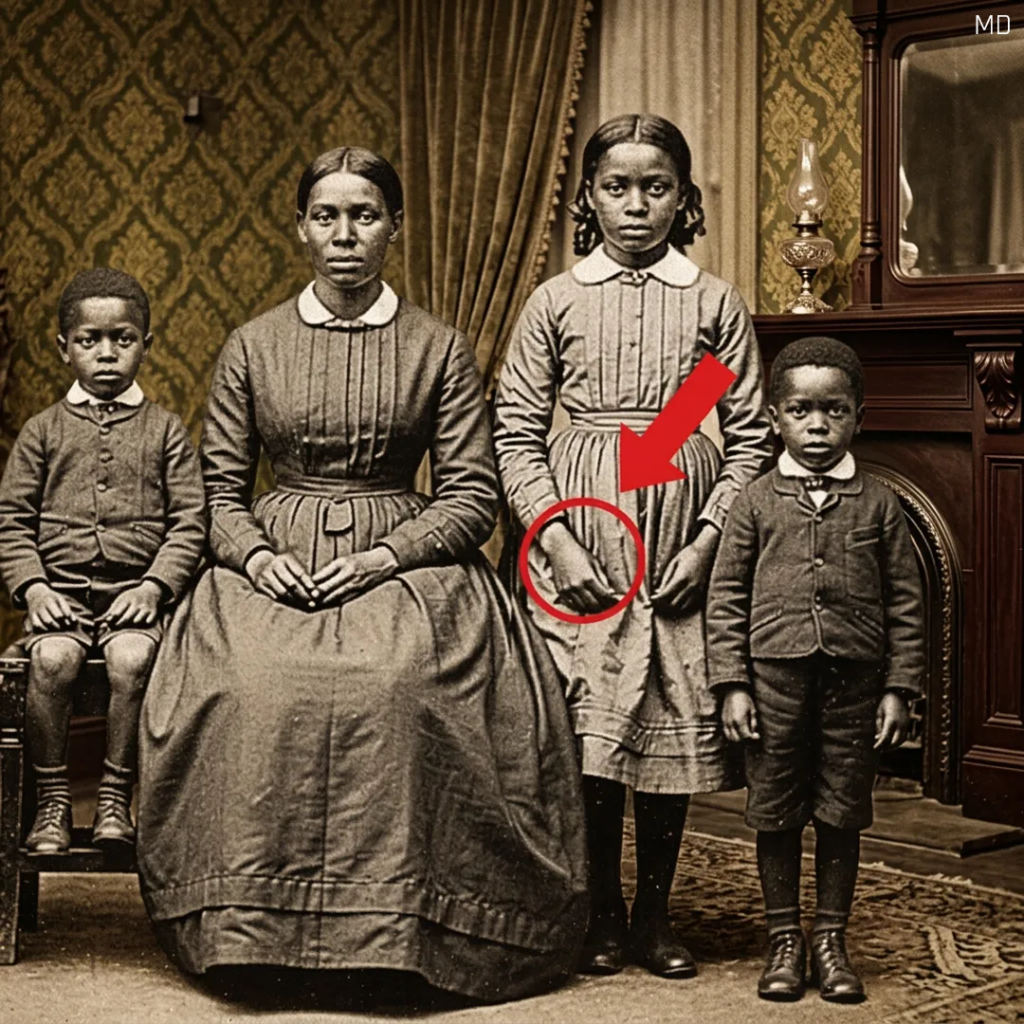
One photograph taken in 1872 has drawn attention for this very reason. At first, it appears to be a traditional family portrait from the 19th century. A mother sits upright in a studio chair, her posture formal and composed. Her expression is serious, reflecting the style commonly seen in portraits of that period.
On either side of her stand two young boys, dressed neatly in formal clothing. Their appearance suggests care and attention to detail, as families often prepared carefully for such photographs. Standing beside the mother is an older daughter, positioned in a way that completes the symmetry of the image.
The composition feels balanced and intentional. Like many portraits from that era, it seems designed to present a sense of unity, stability, and dignity. Everything appears carefully arranged, from the placement of each individual to the way they face the camera.
However, when the photograph is examined more closely, a small detail begins to stand out. The girl’s right hand appears different from the others in the image. Her fingers seem shorter or shaped in a way that suggests a congenital condition.
In the 1800s, photography required patience and precision. Exposure times were longer, and subjects needed to remain still for extended periods. Because of this, every element in a portrait was carefully considered. Details captured in these images were not accidental. They reflected deliberate choices made by the photographer and the family.
During that time, physical differences were often kept out of view due to social expectations. Many families felt pressure to present an image that aligned with accepted standards. For this reason, the presence of this visible detail in a formal portrait invites reflection.
Instead of concealing their daughter or adjusting her position to hide her hand, the family chose to include her exactly as she was. This decision gives the photograph a deeper meaning. It reflects a quiet sense of acceptance and belonging that may not have been common during that period.
The image suggests that the family valued her presence as part of their story. Rather than focusing on appearance alone, they chose to present themselves as a complete unit. This choice adds emotional depth to what might otherwise seem like a standard portrait.
Today, this photograph serves as a reminder that behind every historical image are real people with personal experiences. Each photograph carries layers of meaning that can be discovered through careful observation.
It also highlights how families have always found ways to express care, pride, and connection, even within the expectations of their time. Small details, when noticed, can reveal powerful insights about the choices people made and the values they held.
What may initially appear to be a simple image can become a meaningful reflection of human experience. It shows how moments preserved in time can continue to speak across generations, offering a deeper understanding of both the past and the enduring nature of family bonds.