Most license plates are created solely to identify a vehicle, blending into everyday traffic without drawing attention. Some plates, however, carry symbols that hold deep meaning. Among the most significant is the gold star.
This symbol is not decorative, nor is it used in a vague symbolic sense. It represents profound loss, enduring honor, and a family’s sacrifice. A gold star license plate identifies the driver as an immediate family member of a U.S. service member who died while serving in the military. It stands as a quiet, respectful acknowledgment of devotion and remembrance, visible not to seek attention but to honor a life given in service.
The gold star tradition traces its origins to World War I, when families searched for meaningful ways to show public support for loved ones serving overseas. In 1917, Army Captain Robert L. Queisser designed what became known as the Blue Star Service Banner to represent his sons on active duty.
The idea spread rapidly, and homes across the country displayed banners with blue stars hanging in their windows as a sign of support. When a service member died, the blue star was replaced with a gold one, turning the banner into a symbol of loss, honor, and gratitude from the nation.
That same year, the gold star received formal recognition. Woodrow Wilson authorized mothers who had lost sons in combat to wear black armbands bearing gold stars. This gesture acknowledged the depth of their sacrifice and helped establish the gold star as a powerful and lasting emblem of military loss.
As time passed, families who shared this painful experience sought connection and community. Their collective strength led to the formation of American Gold Star Mothers, Inc. in 1928. The organization continues to support grieving families, advocate for veterans, and foster unity among those who carry this profound form of loss.

In 1936, United States Congress designated the last Sunday of September as Gold Star Mother’s Day, a day meant to honor mothers who lost children in military service. Over time, the observance expanded to include all Gold Star families, acknowledging spouses, siblings, and children who carry this heavy burden.
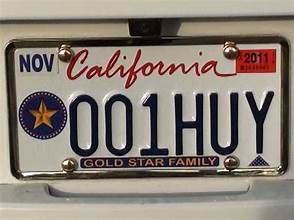
Today, many states issue gold star license plates to eligible family members. These plates accompany people through daily commutes, errands, and quiet moments on the road, serving as continual reminders of sacrifice and love. They are more than identification markers. They are symbols of remembrance, strength, and enduring commitment. Each gold star represents a life given in service and a family reshaped forever by loss.
Every plate carries a story. Every star honors someone who wore a uniform and gave everything. And for those who recognize the symbol, seeing it becomes a moment of reflection—an acknowledgment that freedom carries a cost felt deeply by real families, every single day.