When I was young, summers at Grandma’s farmhouse felt endless, warm, and untouched by time. The house stood at the edge of a quiet rural road, bordered by open fields that rolled outward like a painted horizon. Mornings began with sunlight slipping through thin curtains and the distant sound of birds calling to one another.
I spent hours outside, tracking shadows, chasing grasshoppers, and listening to the steady rhythm of cicadas as if they were part of the land itself. Inside, Grandma moved through the rooms with an unhurried calm. She baked bread that filled the kitchen with comfort, told stories that lingered long after the sun went down, and made ordinary moments feel meaningful through her presence alone.
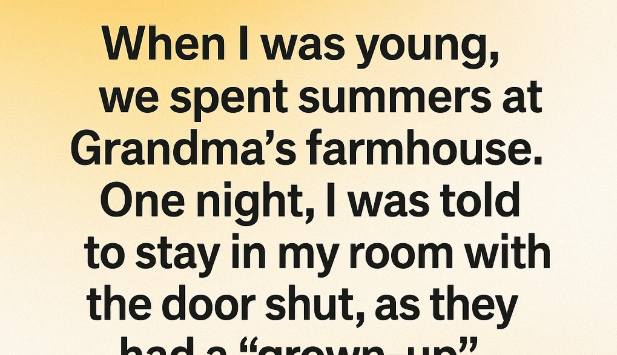
That sense of safety and simplicity stayed with me until one evening changed the tone of that summer. I remember being guided gently toward my bedroom and told to stay there, the door closed, because the adults needed to talk about a “grown-up matter.” The words sounded harmless, yet the air felt different.
Voices traveled through the walls in hushed tones, serious and heavy, unlike anything I had heard before. I sat on the edge of the bed, listening without understanding, aware only that something important was unfolding beyond my reach. Not long after that summer ended, our visits to the farmhouse stopped. There was no clear explanation, only a quiet shift that felt final.
As years passed, the farmhouse became a memory rather than a destination. Life moved forward with school, work, and new routines, and I assumed the distance was simply part of growing up. No one spoke poorly of Grandma, but conversations about her were brief and carefully worded.
At family gatherings, her name surfaced rarely, and when it did, it felt as though everyone was choosing their words with caution. I learned not to ask questions, sensing that whatever answers existed were not meant for me at the time. When Grandma eventually passed away, I felt a layered grief—not only for her loss, but for the unanswered space she left behind.
The farmhouse was sold soon after, closing the door on the last physical connection to those summers. Still, that night with the closed bedroom door stayed with me, an unfinished thought that never quite faded. It lived quietly in my memory, waiting for context.
Years later, clarity arrived unexpectedly during a casual conversation with a distant relative. There was no dramatic confession or emotional confrontation. Instead, there was a simple explanation shared without fanfare. My grandmother, it turned out, had faced significant financial and emotional challenges after a series of personal hardships. She chose to keep those struggles private, determined not to burden others or appear vulnerable.
The decision she made involving the farmhouse sparked disagreement within the family, not because of wrongdoing, but because of differing views on responsibility, pride, and independence.
That “grown-up matter” I overheard as a child was not something dangerous or scandalous. It was about a woman trying to preserve her dignity while navigating difficult circumstances. The tension that followed led the family to create distance, believing it would prevent further strain. It was a choice rooted in protection, even if it carried unintended consequences.
Understanding this reshaped how I remembered her. Grandma was never a mystery meant to be hidden away. She was a person carrying weight quietly, choosing strength over explanation. Looking back, I see how often adults underestimate the resilience required to make hard decisions without support or recognition. The silence that followed was not meant to erase her influence, but to shield everyone involved from prolonged conflict.
Now, when I think of those summers, the ending no longer overshadows the experience. I remember the warmth of the farmhouse, the lessons she taught without instruction, and the steadiness she modeled through everyday actions. The passage of time transformed confusion into understanding. Some stories reveal their meaning slowly, and when they do, they bring clarity rather than resentment. What remains is compassion, gratitude, and a deeper respect for the people who quietly shape our lives long before we understand how.