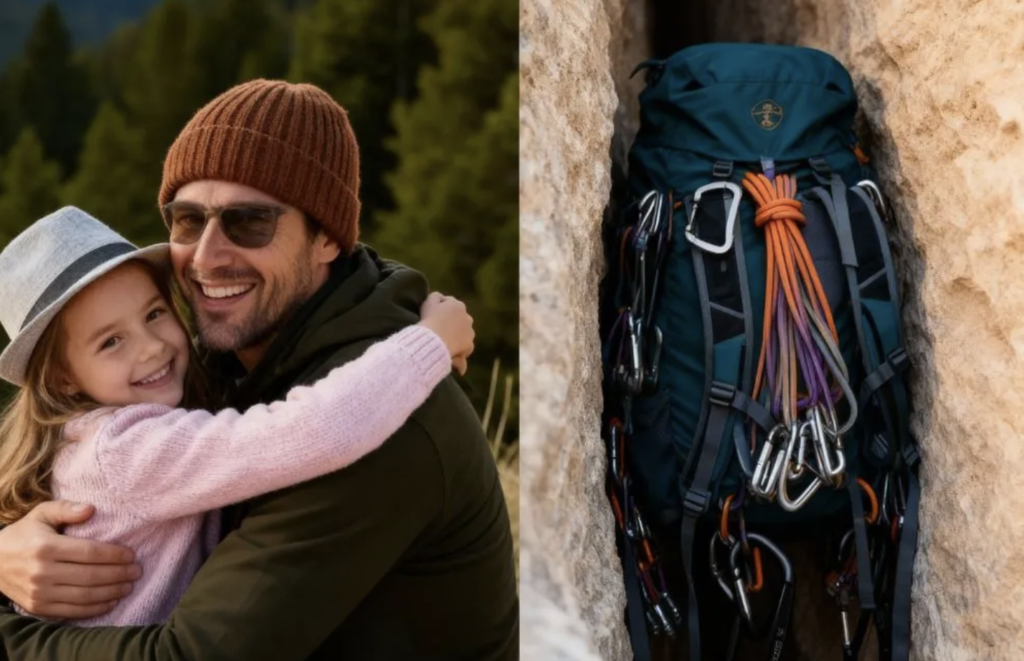
When people head into the mountains expecting a peaceful day outdoors, they rarely imagine their experience becoming an enduring mystery. For the family of Julián Herrera and his nine-year-old daughter Clara, a routine hike in the French Pyrenees in 2020 marked the beginning of a story that continues to draw attention years later.
The plan was simple. Julián and Clara set out on a familiar, well-marked trail, one that many hikers use without incident. As hours passed and they did not return, concern grew. What initially seemed like a delay gradually became something far more troubling. Search teams were mobilized quickly. Helicopters traced the ridgelines. Ground crews covered valleys and narrow passes. Volunteers joined professionals in scanning the terrain, step by step. Despite the scale of the effort, no sign of the father or daughter emerged.
As days turned into weeks, official searches slowed, then stopped. Families and observers held onto different possibilities. Some believed the pair might have found shelter beyond the usual paths. Others feared that a wrong step in the rugged landscape had led them into an isolated area from which escape was impossible. With no evidence to guide investigators, the mountains returned to their quiet routines.
Five years later, in late August, the stillness broke.
A couple from Catalonia, hiking near Roland’s Breach along a lesser-used route, noticed something unusual in a narrow opening between rocks. Curious, they shone a phone light into the crevice. A dusty backpack appeared, wedged tightly inside. As the woman brushed away debris, she noticed a name stitched onto the fabric.
It belonged to Julián.
Authorities responded swiftly. Images were sent to the gendarmerie, and a mountain rescue unit was flown to the location. Captain Morel, who had overseen parts of the original operation, carefully examined the backpack. Inside were common hiking items: a worn water bottle, packaged food remnants, and a folded map. One object stood out immediately. Clara’s small blue notebook rested among the contents, instantly reconnecting the case to its earliest days.
News of the discovery spread rapidly. Journalists gathered nearby, and the family waited in anxious silence. The crevice presented challenges. It was narrow, deep, and twisting, with limited visibility. One interpretation suggested that Julián may have attempted to guide Clara through difficult terrain in search of safety, leading to an accidental entrapment.
As examination continued, details began to raise new questions. The backpack appeared less weathered than expected after years of exposure. The map inside carried a pen marking that did not match the original materials reviewed in 2020. This indicated that someone had altered it later.
The following day, rescuers descended further into the crevice. Roughly eight meters down, they found a piece of red fabric caught against the stone. It matched the jacket Julián had worn. Its placement suggested deliberate positioning rather than damage from movement. Deeper still, a food wrapper surfaced bearing an expiration date two years beyond the disappearance.
This detail pointed to activity at the site long after 2020.
The crevice opened into a small pocket of space large enough to hold a temporary shelter. Beneath layers of dust lay a thermal blanket, an empty container, lengths of rope, and a second notebook. Time had faded much of the writing, though certain words remained legible: “waiting,” “can’t climb,” “we hear voices.” The phrases suggested endurance under strain.
One incomplete line implied Julián had been injured and wanted Clara to stay safe above him. Neither of them appeared in the shelter.
On a nearby wall, rescuers observed sets of three small scratches repeated dozens of times. The markings suggested careful counting, possibly tracking days over the course of a month.
Another unexpected element soon emerged. Near the top of the crevice, a modern rope was anchored in place. It did not match rescue equipment or belong to the hikers who made the discovery. This suggested another visitor had accessed the site.
Further exploration led to a steep passage above the shelter. Investigators found faint footprints that appeared recent and lighter than those of an adult. Under loose stones nearby, they recovered a small star-shaped pendant known to belong to Clara.
Soon after, a metal first-aid kit was located on a dry ledge. Though rusted, it had been placed carefully. Inside were bandages, supplies, and a note sealed in plastic. The handwriting matched Julián’s. The message asked anyone who found it to care for Clara if she had managed to leave the area. It mentioned someone returning to them in a way that caused distress and limited safe movement. The note ended with a plea for protection.
Attention then turned to Julián’s past. Investigators revisited a known conflict with a former coworker from a photography project. This individual had been present in the region during the original timeframe, information not previously disclosed. He stated he attempted to help and later left the area without success.
Searchers followed a possible exit route from the crevice leading into forested land far from the main trail. Evidence of an older campsite appeared there: stones arranged from a fire, a worn knife, food wrappers, clothing fragments, and one small shoe belonging to Clara.
The absence of further remains suggested movement rather than tragedy. Investigators began to consider that Clara may have continued onward, possibly receiving assistance along the way. Isolated mountain communities sometimes care for those who arrive without formal identification, allowing situations to remain unnoticed.
Today, the case remains open. Each discovery brings new layers of understanding and new uncertainties. One possibility continues to offer hope: that Clara reached safety beyond the original search zone.
The Pyrenees have witnessed countless journeys across centuries. The Herrera story now belongs among them, unfolding slowly, awaiting its conclusion. Somewhere within those mountains, the final chapter may still be waiting to be found.