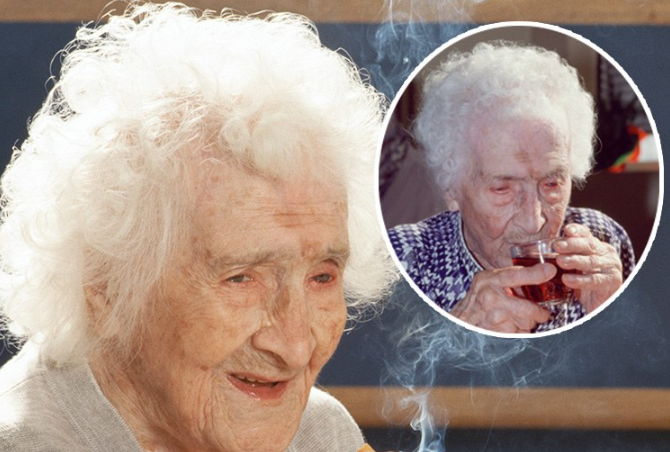
Jeanne Louise Calment is remembered worldwide as the longest-lived human being ever verified through complete and carefully examined documentation. Born on February 21, 1875, in the warm and historic town of Arles in southern France, she lived an exceptional 122 years and 164 days, finally passing away on August 4, 1997.
Her life continues to fascinate scientists, historians, medical researchers, and the general public because her longevity was accompanied by a personality and lifestyle unlike any other. Jeanne’s story is supported by a vast collection of reliable records, including birth certificates, marriage documents, census entries, legal files, and extensive photographic evidence. Experts in demography and longevity have studied these materials for decades and agree without hesitation that Jeanne Calment holds the undisputed record for the longest confirmed human lifespan.
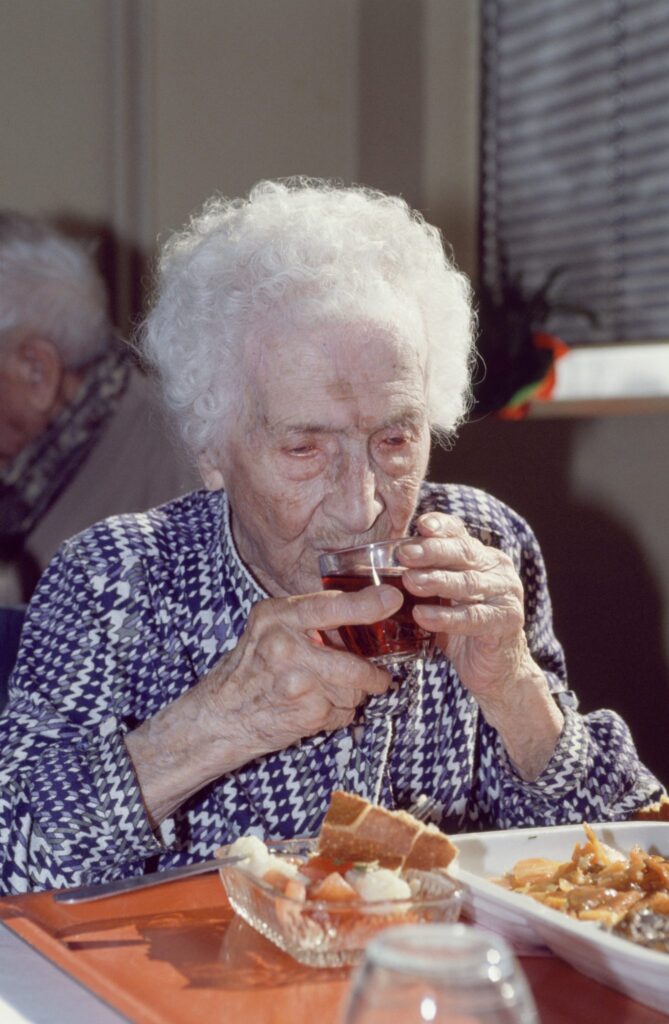
The Guinness World Records recognizes her as the oldest verified person in history, and she remains the only individual whose age has been confirmed beyond 119 years. Her extraordinary lifespan stands in a category of its own, representing a rare phenomenon that modern science continues to explore. Jeanne’s life stretched across three separate centuries, allowing her to witness technological, cultural, and political transformations that reshaped the world in ways few people could ever imagine.
She was born during a period marked by a largely pre-industrial France, when electricity was still a novelty and the nation was recovering from the Franco-Prussian War. By the time she reached the end of her life in 1997, the globe had endured two world wars, entered the space age, connected through telephones and computers, and taken its first steps into the digital era. She saw the invention of the light bulb, observed the building of the Eiffel Tower, and lived long enough to hear discussions about the internet. Her perspective on history spanned eras that most individuals only read about.
What makes Jeanne’s story even more intriguing is the unexpected nature of her lifestyle. Many people attribute long life to strict diet rules, intense physical training, or the complete avoidance of indulgence. Jeanne’s habits seemed to follow a different path. She loved chocolate—often consuming more than two pounds weekly—and enjoyed desserts with enthusiasm. She drank wine, especially port wine, and remained loyal to cigarettes from the age of 21 until she reached 117. Despite these choices, she maintained remarkable health and avoided many of the conditions commonly associated with aging.
Her resilience suggests that longevity arises from a combination of genetic strengths, environmental factors, emotional wellbeing, and lifestyle balance. Even with her indulgences, she stayed active. Jeanne rode her bicycle well into her nineties and continued walking around Arles long after many peers had become fully dependent on assistance. At 100 years old, she personally visited homes across her town to thank people for birthday wishes. This habit of staying socially connected, physically active, and mentally engaged may have played an important role in her extraordinary vitality.
Jeanne’s humor was another defining feature of her life. She had a relaxed, lighthearted way of moving through challenges and often used jokes to keep stress from affecting her. On her 120th birthday, she told reporters, “I see badly, I hear badly, I can’t feel anything, but everything is fine.” Her outlook reflected an emotional resilience that researchers now associate with a slower aging process. Gerontologists believe that people who manage stress effectively may protect themselves from chronic inflammation, cellular aging, and other physical consequences linked to long-term worry.
Her physician and biographers have emphasized that her calm approach to life appeared nearly instinctive. She focused on what could be controlled and released what could not, avoiding unnecessary tension. Modern studies increasingly support the idea that emotional wellbeing, social connection, and purpose play a central role in health and longevity.
Genetic factors likely contributed as well. Research on supercentenarians shows that many possess rare genetic markers related to lower inflammation, stronger cardiovascular function, and enhanced DNA repair. Jeanne’s exceptional resistance to age-related diseases suggests she may have carried biological traits that protected her in ways scientists are still trying to understand.
She remained mentally sharp far longer than most people her age. Jeanne recalled details from as early as the late 1800s and continued sharing stories with visitors, journalists, and researchers. Cognitive engagement—reading, talking with others, and staying curious—is strongly linked to long-term brain health. Jeanne’s active mind reflected a lifetime of learning, conversation, and community involvement.
Her presence fascinated the media, who documented her humor, charm, and unique perspective. These interviews and photographs contributed to her status as a cultural symbol of endurance and human possibility. She became a figure who inspired discussions about aging gracefully and living fully.
By the time she reached her final years, Jeanne had already surpassed every known record of human lifespan. She lived independently until 110 before moving into a care facility, where she continued to socialize, enjoy small pleasures, and maintain her sense of humor. When she passed away at 122, she left behind more than a record—she left a legacy of insight into the human spirit.
Jeanne Calment’s life demonstrates that longevity is shaped by more than food choices or exercise routines. It is influenced by genetics, emotional resilience, community, curiosity, moderate enjoyment, and a peaceful approach to life’s challenges. Her story continues to inspire people who seek healthy aging, reminding the world that a long life can be filled with joy, connection, humor, and meaning.