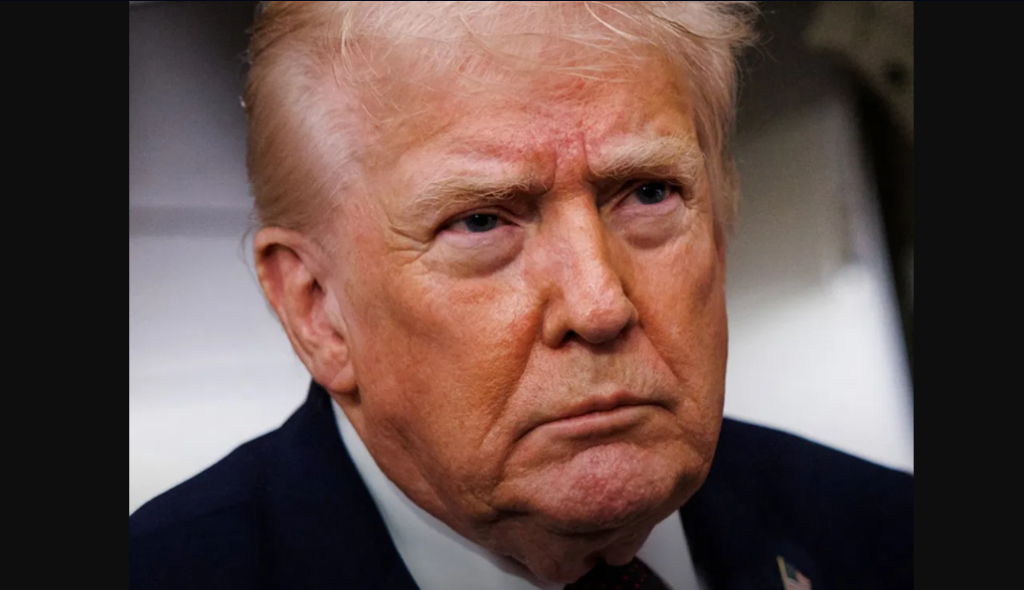
In a recent interview conducted inside the Oval Office, Donald Trump appeared to struggle to recall a previous public pledge involving direct payments to Americans. The exchange quickly drew attention because it involved a proposal he had earlier linked to revenue generated from tariffs. The moment unfolded during a conversation about economic policy and government finances, turning unexpectedly awkward when the topic resurfaced.
The situation became more pointed when The New York Times journalist Katie Rogers reminded the president of his earlier promise to issue $2,000 payments to most Americans. The plan had been presented as a way to share the financial gains from tariffs with middle- and lower-income households.
When confronted with the reminder, Trump appeared uncertain. He paused and asked aloud whether he had actually made such a statement, responding with, “I did do that? When did I do that?” The question signaled confusion and prompted a brief silence in the room as reporters waited for clarification.
After collecting his thoughts, Trump explained that he may have been thinking about a different initiative. He referenced a $1,776 bonus proposal for service members, suggesting that the two ideas had become intertwined in his recollection. Despite this clarification, he did not fully withdraw the earlier promise.
Trump went on to state that the $2,000 payments could still occur later in the year. He emphasized his belief that revenue from tariffs would be substantial enough to support such payouts. According to his remarks, the funds generated through trade measures would provide flexibility for additional financial relief.
The original pledge tied the payments directly to tariff income, framing them as a benefit made possible by the administration’s trade policies. While no precise schedule has been established, Trump reiterated to reporters that the inflow of tariff money made the idea feasible. He suggested that payments could be distributed toward the end of the year if conditions aligned.
However, financial experts and budget analysts have raised questions about whether the available revenue could realistically cover the cost. Estimates indicate that sending $2,000 checks to most Americans would require approximately $600 billion. This figure significantly exceeds current tariff collections.
According to data cited by the Committee for a Responsible Federal Budget, tariff revenue had reached roughly $90 billion as of September 30. While notable, that amount falls far short of the estimated cost needed to fund the proposed payments at scale.
Beyond questions of funding, legal uncertainty also surrounds the tariffs themselves. Several measures remain under challenge, and the issue is expected to be addressed by the U.S. Supreme Court. A ruling against the administration could require the government to refund collected tariff revenue, potentially eliminating the source Trump cited to support the payments.
Economic concerns add another layer of complexity. Using tariff revenue for direct payments has raised alarms about inflationary pressure. Injecting large sums of money into the economy could increase consumer spending at a time when price stability remains a priority.
Treasury Secretary Scott Bessent has publicly expressed concern about the inflationary impact of distributing such funds. He encouraged Americans to consider saving rather than spending any potential payments, highlighting the need for caution in managing economic stimulus.
Republican lawmakers have echoed similar worries. Some have pointed out that while inflation has moderated compared to previous years, it has not fully disappeared. They argue that large-scale payments funded by tariffs could undermine progress made in stabilizing prices.
As discussions continue, the proposal remains uncertain. The president’s comments left open the possibility of future payments while offering no definitive plan or timeline. The episode has added to broader debates about fiscal responsibility, trade policy, and the practical limits of using tariff revenue for direct economic relief.
For now, the $2,000 payment proposal exists in a space shaped by political messaging, legal review, and economic caution. Whether it evolves into action will depend on court decisions, revenue realities, and the administration’s ability to reconcile ambition with feasibility.