When a nation faces a tragedy, the pursuit of accountability often intertwines with profound questions about justice, retribution, and the boundaries of legal authority. The assassination of conservative activist Charlie Kirk has not only shaken the United States but also rekindled a fierce debate over one of the nation’s most divisive issues: the death penalty.
As political figures, law enforcement, and mourning communities navigate the aftermath of Kirk’s death, attention has turned to Utah—a state where capital punishment remains not only permissible but, in some instances, uniquely distinctive.
The Arrest That Ignited the Conversation
On September 12, authorities from federal and state agencies revealed the arrest of Tyler Robinson, a 22-year-old Utah resident, in connection with Charlie Kirk’s assassination. Officials disclosed that Robinson was apprehended after a family member alerted law enforcement, guiding investigators to evidence linking him to the shooting at Utah Valley University.
The announcement of his arrest spread swiftly, prompting a national dialogue about the form of justice that would follow.
Former President Donald Trump, among the first to publicly acknowledge Kirk’s death, was unequivocal in his stance. In a Fox News interview, he declared:
“I expect he’ll be found guilty, and I believe he should face the death penalty for his actions.”
His statement underscored a stark reality: in Utah, capital punishment is not merely a legal option—it includes a method that stands out in contemporary America.
Utah’s Distinctive Capital Punishment Framework
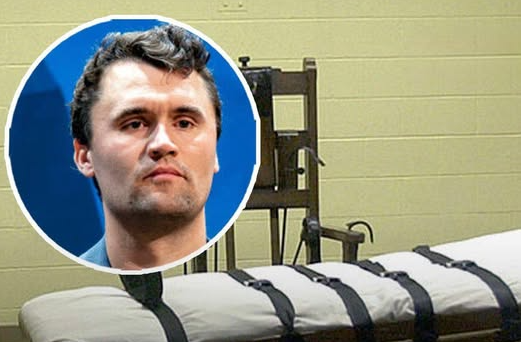
Utah is among the 27 states where the death penalty remains lawful. While lethal injection is the primary execution method, Utah distinguishes itself by preserving the firing squad as an alternative.
This practice, tied to the state’s historical roots, evokes both intrigue and condemnation. To some, it is a harsh vestige of a bygone era; to others, it offers a more straightforward and reliable approach compared to lethal injection.
Since the U.S. Supreme Court reinstated capital punishment in 1976, Utah has conducted eight executions. Only a few utilized lethal injection, while others—including the 2010 execution of Ronnie Lee Gardner—employed the firing squad, a method that continues to draw global curiosity whenever it reemerges.
Legal Criteria for the Death Penalty in Utah
Utah’s laws stipulate that not every murder qualifies for capital punishment. Prosecutors must establish aggravated murder, which requires specific conditions, such as:
-
The killing posed a significant risk of death to others beyond the victim.
-
The act was carried out with premeditation and intent.
-
The murder targeted a public figure or was driven by political motives.
In Robinson’s case, early indications suggest prosecutors are building a case around these factors. An affidavit referenced by MSNBC noted that a state official believed Robinson’s actions—firing into a crowded university courtyard—placed numerous bystanders at serious risk of death.
The bullet that struck Charlie Kirk in the neck was fired in an area with nearly 3,000 people present. If substantiated in court, this fact alone could meet Utah’s criteria for aggravated murder.
A Governor’s Firm Stance
Even before Robinson’s arrest, Utah Governor Spencer Cox emphasized the state’s readiness to enforce its laws to the fullest extent.
“To the individual responsible for this act: we will locate you, we will prosecute you, and we will ensure accountability to the maximum degree allowed by law,” Cox stated during a press conference.
He added a pointed reminder: “Let me be clear—Utah still upholds the death penalty.”
His remarks served not only as a warning to the suspect but also as a declaration to the public: Utah remains steadfast in its commitment to capital punishment, particularly in a case as prominent and politically charged as Kirk’s assassination.
Trump’s Push for Execution
Former President Donald Trump’s call for the death penalty intensified the already fervent discussion. Trump’s consistent advocacy for capital punishment is well-documented, with frequent endorsements of swift executions for crimes like terrorism, drug trafficking, and violent offenses.
However, his prompt intervention in Robinson’s case, shortly after the arrest, raises concerns about political influence on judicial processes. Could a former president’s public demand for execution sway prosecutors, judges, or jurors? Critics warn it could compromise the case’s impartiality before it reaches trial.
For Kirk’s supporters, Trump’s stance resonated as a commitment to justice and loyalty—a vow to honor Charlie’s life and legacy through the strongest possible response.
The Slow Path of Utah’s Death Row
While Trump and Cox speak with urgency, the reality of capital punishment in Utah unfolds more gradually.
Currently, four men reside on Utah’s death row, each entangled in decades-long appeals. No execution has occurred in the state since 2010. Legal challenges, evolving public sentiment, and human rights concerns have slowed executions across the nation.
Utah’s recent experience highlights these complexities. Earlier this year, inmate Ralph Menzies was scheduled for execution by firing squad on September 5. However, the Utah Supreme Court intervened after medical evaluations revealed that Menzies’ advanced dementia rendered him unaware of the reasons for his punishment.
Menzies was convicted for the 1986 murder of Maurine Hunsaker, a 26-year-old mother of three. His case demonstrates how appeals and health-related issues can postpone executions indefinitely, even in cases with established guilt.
For Robinson, a conviction and death sentence would likely lead to a prolonged journey through appeals, with no guarantee of resolution.
Firing Squad vs. Lethal Injection
Utah’s retention of the firing squad as an execution method fuels much of the fascination with its death penalty system. Critics denounce it as outdated and inhumane, while supporters argue it is faster and less susceptible to the errors sometimes seen in lethal injection.
Under Utah law, lethal injection is the standard method, but the firing squad is permitted if lethal injection drugs are unavailable or if the inmate chooses it. The state defends the practice as constitutional, emphasizing its historical precedent and perceived dependability.
To many outside Utah, the concept of a firing squad feels anachronistic. Within the state, however, it is not merely a legal provision—it is a symbol of Utah’s resolute approach to justice.
The Significance of Robinson’s Case
As of now, Robinson has not been formally charged in court. Should prosecutors seek the death penalty, his case will challenge Utah’s system in ways unseen for over a decade.
Critical questions remain:
-
Will the political weight of the case expedite Robinson’s prosecution?
-
Will forensic evidence, such as engraved bullet casings and surveillance footage, secure a conviction?
-
Will Robinson’s defense team raise claims of mistaken identity, mental health challenges, or investigative bias?
-
Most crucially, will Utah proceed with an execution?
The National Context
Charlie Kirk’s assassination arrives at a time when the death penalty is increasingly debated across the United States. Although 27 states maintain capital punishment, executions have significantly declined over the past two decades. States like Virginia, Illinois, and Colorado have recently abolished the practice altogether.
Opponents argue that the death penalty is expensive, error-prone, and disproportionately applied. Supporters maintain that it deters crime and delivers justice for the most egregious offenses.
In Utah, these debates are no longer abstract. Robinson’s arrest has thrust the state into a high-stakes case that will draw both national and global attention.
Closing Thoughts
The assassination of Charlie Kirk was more than an act of violence—it was a challenge to America’s legal and ethical foundations. For Utah, it marks a pivotal moment where history, politics, and justice converge.
If Tyler Robinson is convicted, prosecutors may pursue the death penalty, aligning with the demands of both Donald Trump and Governor Spencer Cox. Whether that sentence is carried out—by lethal injection or firing squad—depends on years of legal proceedings and appeals.
What is undeniable is that Utah’s death penalty debate is no longer theoretical. It is now bound to the memory of a young activist whose life was cut short, a suspect whose fate awaits judgment, and a state whose laws position it as one of the few in America where justice might still conclude with a firing squad.