It is easy to think of legs as simple tools for walking, running, or climbing stairs. Across style conversations, fitness discussions, and everyday observations, many people also treat them as subtle indicators of posture, lifestyle, and personal presentation. From runway models to people who spend their days in the gym, leg shape has influenced clothing choices, favored poses, and even movement habits.
These interpretations are playful instead of scientific, and they tend to spark curiosity because legs reveal balance, structure, and physical rhythm in a way that makes every silhouette unique. Viewing these ideas with a lighthearted perspective allows us to explore leg shapes as reflections of movement and style rather than turning them into judgments.
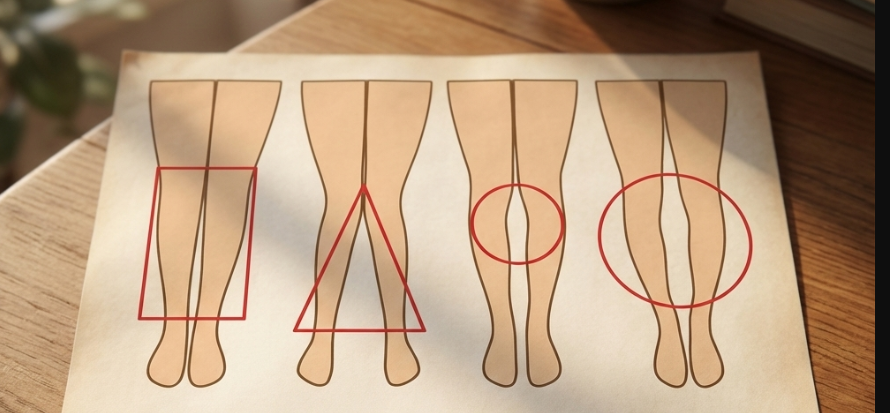
Many leg shapes commonly mentioned in popular culture arise from ordinary anatomy. Factors such as genetics, bone length, joint alignment, and natural muscle placement influence whether legs meet at the knees, the thighs, or the ankles. Every variation is far more common than people realize. Straight, parallel legs are often admired because they present a balanced sense of alignment that many associate with ease of movement.
The “diamond gap” shape results from spacing at the knees and is something numerous people have without being aware of it. The widely discussed “thigh gap” relates mostly to pelvic width and not physical conditioning, which is why professionals often remind the public that it is not a universal feature and not a requirement for health. Shapes that involve mild bowing or inward angling come from joint positioning and can influence how someone stands, moves, or distributes weight throughout the lower body.
These structural differences also influence gait, which is one reason people attach personality or lifestyle interpretations to them in fun, non-serious ways. Straight, parallel legs are sometimes associated with grounded posture and steady confidence. Legs that angle inward can suggest gentle movement styles and a softer presence. Legs with natural curvature may create the impression of a lively, energetic stride.
These associations come from cultural habits rather than medical evidence, blending anatomy with imagination in a way that people find entertaining. Fashion trends often incorporate these shapes by guiding choices such as wide-leg trousers, athletic wear, fitted jeans, or flowing skirts that highlight the natural lines of the body. Fitness preferences can reflect leg shape as well, since activities like yoga, running, cycling, dance, and hiking build different types of muscle tone and influence how someone moves through space.
In the end, the shape of a woman’s legs carries no verdict about beauty, identity, or value. It is one expression of biological diversity, shaped throughout life by heritage, posture, activity, and growth. While some people enjoy pairing different leg shapes with personality traits or style recommendations, most variations are harmless, normal, and deeply rooted in natural structure. Strength training can build muscle, stretching can increase flexibility, and consistent movement can improve balance. These habits support comfort and health, though they rarely change the underlying alignment determined by bone structure.
What legs truly express is the individuality present in every body. Alignment, proportion, and movement patterns combine to create a blueprint unique to each person. Recognizing that diversity reminds us that strength, comfort, and confidence matter far more than trends or symmetry. The human body adapts, carries, supports, and moves through the world in countless ways, and leg shape is simply one visible part of that remarkable design.