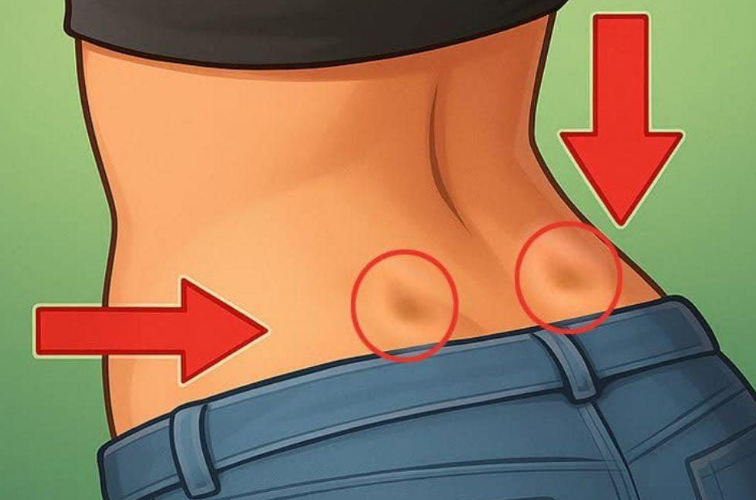
Have you ever spotted two small indentations on someone’s lower back, just above the hips, and wondered about their significance? Often called “Venus dimples” in women and “Apollo dimples” in men, these subtle features have intrigued scientists, artists, and curious minds for centuries. Some view them as an aesthetic charm, while others associate them with vitality, beauty, or even a stroke of genetic fortune. So, why do these dimples appear only in certain individuals?
The Anatomy Behind the Dimples
These back dimples form where the skin anchors to deeper structures via a short ligament. Positioned over the sacroiliac joints—where the pelvis meets the spine—they are not something you can develop through exercise or effort. Their presence depends on the natural configuration of your body’s structure and how the skin connects to underlying tissues. Essentially, whether you have these dimples is determined long before birth.
The Role of Genetics
The primary reason some people have back dimples lies in their DNA. These indentations are an inherited trait, meaning if one or both parents have them, their children are more likely to have them too. According to researchers, the arrangement of ligaments and skeletal alignment differs among individuals. For some, this alignment creates visible dimples, while for others, the ligaments sit differently, leaving no trace of these marks.
Body Composition and Visibility
Although genetics are the main factor, body shape can affect how prominent the dimples appear. Individuals with leaner physiques or lower body fat tend to display these dimples more noticeably. Conversely, those with the genetic predisposition for dimples but higher fat in the lower back may find them less visible. This explains why athletes or dancers, who often maintain lower body fat, frequently show more defined dimples.
Debunking Health Myths
Many myths swirl around these small back indentations. Some claim they indicate improved circulation, heightened fertility, or even enhanced physical performance. Others suggest they contribute to greater physical comfort. However, most of these ideas lack solid scientific support. What is clear is that back dimples pose no health risks—they’re simply a natural variation in anatomy, unique to each person.
A Timeless Symbol of Beauty
Though they serve no distinct medical purpose, back dimples have been celebrated across cultures for centuries. During the Renaissance, artists often emphasized these features in sculptures and paintings, portraying them as markers of elegance and allure. Today, their rarity and ability to accentuate the curves of the lower back and hips make them a point of admiration. Their uniqueness adds to their widespread appeal.
Can You Develop Back Dimples?
Given their popularity, many wonder if back dimples can be created through exercise. Since they stem from ligament placement rather than muscle development, no amount of training can produce them if your anatomy doesn’t support it. That said, strengthening core muscles and reducing body fat can enhance the visibility of existing dimples, making them stand out more clearly.
Final Thoughts
Back dimples appear in only some individuals because they are shaped by genetics and anatomical structure, not by lifestyle choices or workouts. While they carry no proven health advantages, they are often seen as a mark of beauty and individuality. If you have them, it’s a reflection of your body’s unique design. If you don’t, your body simply showcases its distinctiveness in other ways.