Walk through almost any room in almost any home today and you will find at least one charger plugged into a wall. Phones, tablets, laptops, wearable devices, and various wellness tools all draw their power from cables and adapters that most households treat as permanent fixtures. For older adults in particular, these devices have become woven into the fabric of daily life: keeping family connections alive, managing health appointments, and tracking personal routines. They are reliable and useful, and most people give very little thought to how they are being powered.
That oversight is understandable. Chargers are not dramatic objects. They sit quietly in corners, hum along through the night, and rarely demand attention. The challenge is that the habits built around them, when left unexamined, can introduce real risks into an otherwise well-maintained home. Overheating, damaged wiring, worn outlets, and unnecessary electrical strain are all possibilities that most households never think about until something goes wrong.
The reassuring reality is that a few small, sustainable adjustments are all that stands between a home that manages its electrical load carelessly and one that handles it with quiet confidence.
Many homes built in earlier decades were designed for a fraction of the electrical demand that today’s average household places on them. Outlets and wiring from that era were engineered for lamps, televisions, and perhaps a kitchen appliance or two. The modern home is an entirely different environment, with streaming devices, smart speakers, charging stations, mobility aids, and medical equipment all drawing from the same infrastructure.
That infrastructure is working harder than it was ever intended to work. For homeowners, this is not only a safety consideration but a financial one. Protecting the wiring and outlets in a home is part of protecting the home itself, which for most families represents the most significant investment of a lifetime.
“A few minutes of attention paid to home electrical habits can lower energy waste, extend the lifespan of devices, and bring real and lasting peace of mind to every person under the roof.”
Among the most frequent sources of electrical risk in the modern home is low-quality charging equipment. Inexpensive cables and adapters purchased at gas stations, discount retailers, or from unknown online sellers may appear functional on the surface. The concern lies in what they leave out.
Certified chargers from reputable manufacturers are built with internal protections that regulate voltage, manage temperature, and guard against power surges. These features exist because charging a battery is a process that requires precision, and a device that handles that process poorly can overheat, damage the phone or laptop it is connected to, or wear down the battery at an accelerated rate.
For older adults who rely on a phone or tablet to stay in contact with family or to manage healthcare appointments, a damaged device is far more than an inconvenience. The cost of replacing it will always exceed the modest extra expense of purchasing a quality charger from the start. Buying from a trusted brand or directly from the device’s manufacturer is a simple and effective standard to hold.
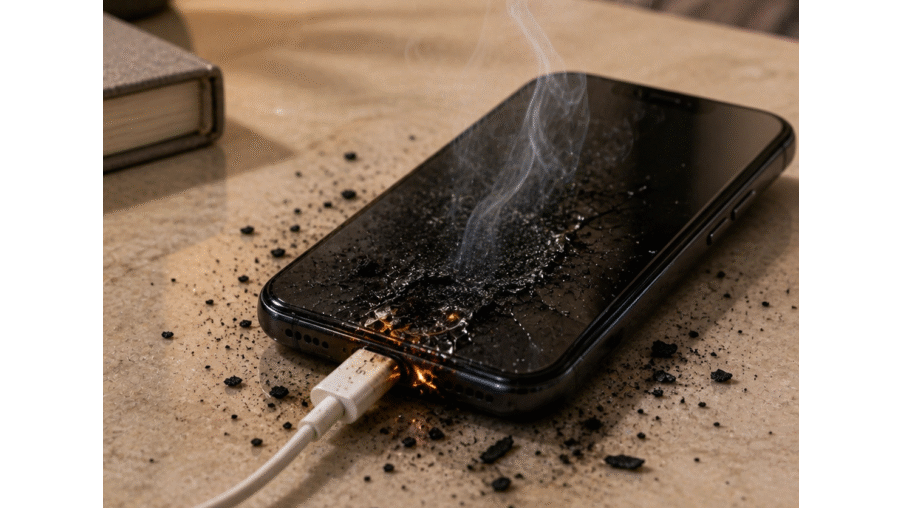
Cables in frequent use accumulate damage over time, and that damage is not always dramatic. A look at the charging cables in most homes will reveal at least one that is cracked near the connector, one with peeling insulation, and occasionally one where the metal inside has become visible through the outer coating.
These are not minor cosmetic issues. A damaged cable can produce small electrical sparks during connection or disconnection. Frayed wiring generates heat in ways that are not always visible, and heat that builds without escape is one of the more serious hazards in any household.
In homes where grandchildren visit and young hands explore freely, the importance of replacing worn cables immediately becomes even clearer. A cable that still functions is not necessarily a cable that is safe. Replacing it is one of the most affordable forms of household protection available.
Several charging habits have become so common that they no longer register as potentially problematic. Many households charge devices overnight on soft surfaces such as beds, couches, or cushioned chairs. Fabric and padding trap warmth. A device resting on a pillow while charging cannot release heat naturally, and the temperature it reaches over several hours can be far higher than the battery was designed to tolerate.
Placing a charging device on a hard, flat surface solves this entirely. A wooden table, a glass countertop, a solid nightstand shelf: these surfaces allow warm air to move away from the device freely, which is exactly what the battery requires.
Leaving devices plugged in well beyond the point of a full charge is another habit worth adjusting. Modern devices are designed to limit charging at capacity, and yet the continuous flow of electricity through a fully charged battery over many hours does accumulate wear. Unplugging once the device is full is a small action that protects the battery and reduces energy consumption at the same time.
The condition of the outlets in a home deserves the same attention as the devices connected to them. In homes more than twenty or thirty years old, outlets can loosen with age. A charger plug that feels wobbly or falls out on its own is communicating something worth listening to. Loose electrical connections generate heat over time, even when nothing appears wrong from the outside.
A licensed electrician can identify these concerns quickly and address them before they develop into larger problems. If an outlet has ever felt warm to the touch, or if an unfamiliar smell has been noticed near a charger, those are signals that warrant a professional evaluation.
Surge protectors offer another reliable layer of protection, particularly in older homes. They absorb power fluctuations during storms or utility variations and distribute that protection to everything plugged into them. For seniors who rely on medical equipment at home, a quality surge protector is a practical necessity rather than an optional upgrade.
A growing number of older adults share their homes with adult children, grandchildren, and sometimes multiple generations under one roof. The warmth and richness that arrangement brings is real and significant. It also means more devices, more cables, and a greater demand on outlets and wiring than any single-generation household would typically place.
In these households, paying attention to how many devices share a single outlet becomes genuinely important. Quality power strips used correctly offer a workable solution, provided they are not overloaded and not stacked on top of one another. Running cables under rugs, where heat cannot escape, is a practice worth eliminating. Hanging cords over doorframes, where they are regularly pinched or pulled, creates wear in ways that compound over time.
Teaching grandchildren to unplug a charger by gripping the plug rather than pulling the cord is a small lesson with a long reach. Showing them why liquids and electronics need distance from one another is another. These are the kinds of practical habits that travel forward through a person’s entire life, and older adults are uniquely positioned to be the ones who pass them on.
Electronic devices change over time in ways that are worth monitoring. An older phone or tablet that grows unusually warm during charging is communicating something meaningful. A battery that drains far more quickly than it once did may be approaching the end of its useful cycle. Both of these are worth addressing through a trusted repair professional rather than ignoring in the hope that the situation will stabilize on its own.
For older adults who depend on a specific device for daily contact or for medical management, keeping a backup charger and cable on hand is a genuinely practical form of preparedness. If one cable fails unexpectedly, a replacement is immediately available, and the ability to reach family or call for help is never interrupted.
There is a particular kind of comfort that comes from knowing a home has been looked after with care. That the outlets are sound. That the cables running through the rooms are clean and undamaged. That the chargers trusted each evening are operating the way they were designed to operate.
For older readers especially, that peace of mind has a value that goes well beyond the practical. It is the feeling of sitting in a familiar room and knowing that the space around you has been thoughtfully maintained, that the people you love most are safe within it, and that the small details of everyday life have been given the attention they deserve.
Home electrical safety does not require large investments or dramatic changes. A few quality cables. A reliable surge protector. A daily habit of unplugging what is not in use. These small choices, made consistently, create a home that supports and protects everyone living in it. That is a form of care worth practicing every day.