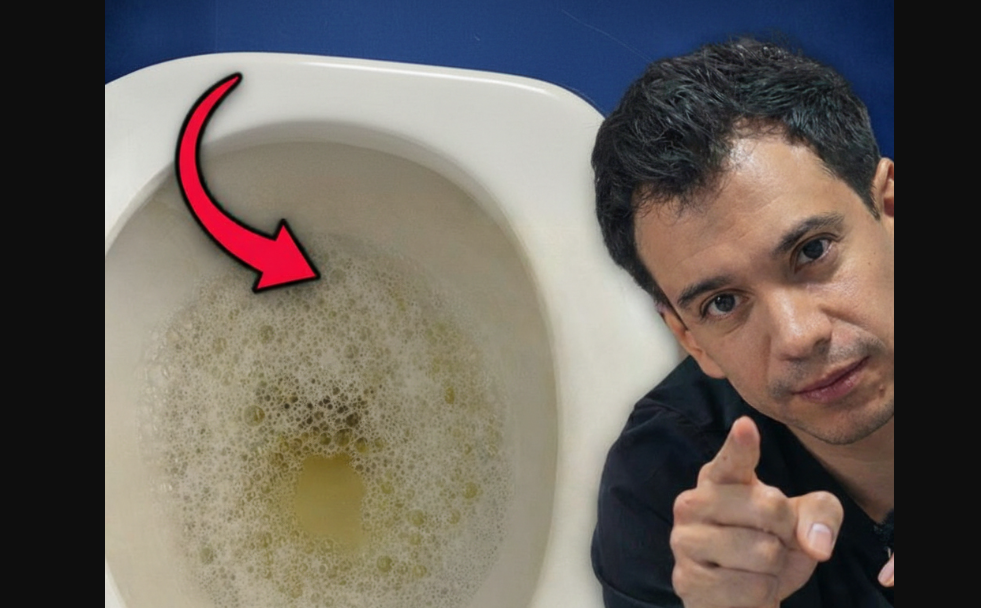
Many people notice foam in their urine from time to time and assume it is nothing unusual. It is easy to attribute it to the force of urination, mild dehydration, or a habit they have seen throughout their lives. While occasional bubbles are common, foam that appears in large amounts, lingers, and shows up repeatedly can signal something more serious happening inside the body. In many cases, it may be an early indicator of stress on the kidneys.
Foamy urine is not insignificant when it becomes persistent. In medical settings, dense and lasting foam often points toward protein escaping through the kidneys—an issue that deserves attention, especially when it continues over days or weeks.
Why does urine become foamy?
Proteins naturally bond with water and can create foam, much like what happens when whisking egg whites or mixing soapy water. Under normal circumstances, the kidneys act as an incredibly fine filter, removing waste while keeping essential substances—such as proteins—where they belong. When this filtration barrier becomes strained or damaged, proteins begin to slip into the urine.
When these proteins reach the toilet bowl, they tend to form thick, stable foam that does not fade quickly. A single instance might not mean much. The concern arises when the foam is:
• abundant
• recurring
• slow to disappear
• clearly different from typical bubbles
This pattern can be the body’s way of signaling that the kidneys need evaluation.
Proteinuria: a warning sign worth understanding
Protein in the urine, known as proteinuria, is not an illness itself. Instead, it is evidence that the filtering structure of the kidneys is being harmed. It is like a fine net beginning to tear—materials that once stayed inside begin to escape.
Proteinuria is more widespread than many people realize. Among individuals with high blood pressure, roughly one out of three may have some level of protein loss. Among those with diabetes, the lifetime risk of kidney damage reaches 30–40 percent. The numbers climb even higher in people living with obesity, metabolic disorders, or age-related health changes.
The challenge is that early kidney damage rarely causes pain or obvious symptoms. Proteinuria appears on the surface, while deeper injury progresses quietly. Many discover the problem when it has already reached a more advanced stage simply because early warning signs were missed.
Who should be especially alert?
Some people benefit from paying closer attention even before foam appears. Risk increases significantly if you:
• live with high blood pressure
• have diabetes
• have a family history of kidney concerns
• have autoimmune conditions
• frequently take anti-inflammatory medications
• have obesity or metabolic syndrome
In these situations, protein loss may begin long before it becomes visible.
Understanding how high blood pressure affects the kidneys
When blood pressure stays elevated, the kidneys endure constant strain. Over time, the fragile filtering structures, called glomeruli, begin to weaken. Pressure pushes against them day after day, and eventually they start to lose their protective tightness. As they become more permeable, proteins escape more easily.
This creates a cycle where damage encourages further damage, making careful monitoring essential for long-term kidney wellness.
Detecting the problem early
The good news is that proteinuria can be detected long before kidney function becomes severely impaired. Basic tests can identify early changes, including:
• routine urinalysis
• the albumin-to-creatinine ratio
• total urine protein measurement
• kidney function blood tests
Microalbuminuria—small amounts of albumin in the urine—is one of the earliest markers. Detecting it early gives you and your healthcare provider the chance to support kidney health before greater harm occurs.
Practical recommendations
• Pay attention to persistent foamy urine instead of dismissing it.
• If you have diabetes or high blood pressure, request regular urine testing even when you feel healthy.
• Maintain stable blood pressure and blood sugar levels with guidance from your care team.
• Limit the use of anti-inflammatory pain medications unless needed and supervised.
• Adopt supportive daily habits, such as hydration, balanced eating, and consistent activity.
• Schedule routine checkups when you have known risk factors.
Persistent foamy urine can serve as one of the earliest clues that the kidneys are under stress. When noticed and evaluated promptly, these issues can often be addressed before permanent damage develops. Taking these signs seriously today can protect your long-term health and preserve kidney function for the future.