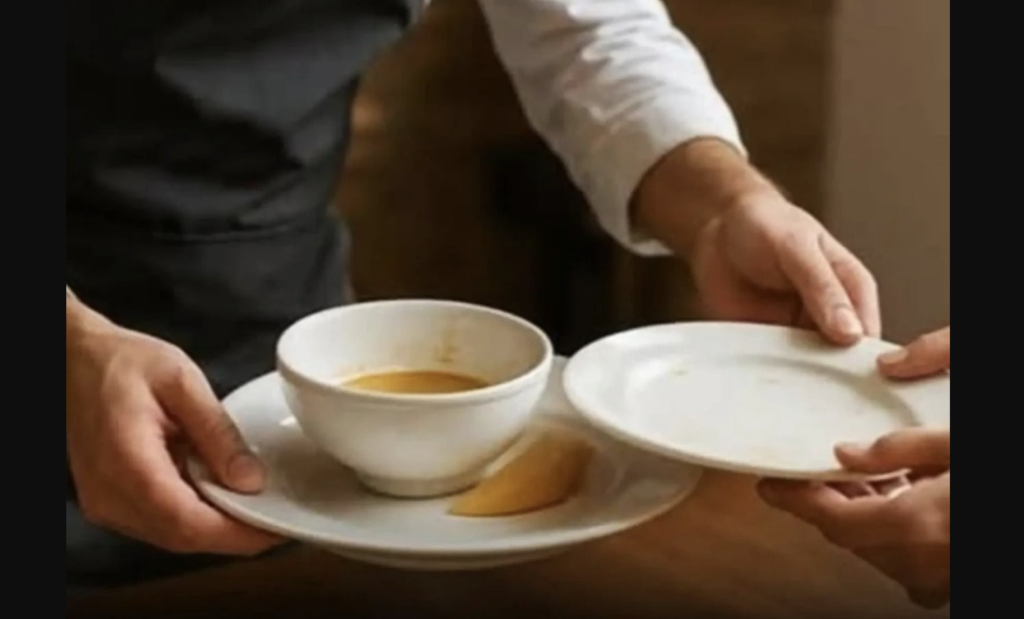
t’s a gesture many people perform almost automatically, without pausing to reflect on it. You’re sitting at a restaurant table, the meal is finished, and as the waiter approaches, you instinctively reach out to help gather a plate or stack a few dishes. It feels natural, almost unremarkable. You may have seen friends or family do the same, or perhaps you noticed it in someone you had never met before. Yet psychologists have long been interested in these small, everyday behaviors. They believe that moments like this can quietly reveal how we relate to others and how we move through the world. What seems like a minor courtesy may, in fact, say much more about who we are than we realize.
A clear signal of empathy
Helping a server clear the table goes beyond practicality. It reflects an ability to notice another person’s experience without being prompted. In a busy restaurant, waiters and waitresses juggle multiple tasks at once: orders, time pressure, customer expectations, and physical fatigue. When you step in with a small gesture of assistance, you demonstrate awareness of that reality. You recognize the effort involved and respond with consideration.
This kind of awareness sits at the core of empathy. It shows that you can imagine what another person might be feeling or managing, even when they never express it out loud. Psychologists often describe empathy as the capacity to perceive emotional and situational cues that are not directly stated. In this sense, lending a hand becomes a quiet acknowledgment of shared humanity.
Respect for roles, not hierarchy
Another aspect psychologists observe in this behavior is how a person views social roles. Restaurants are structured environments, with clear divisions between guests and staff. Some people see those roles as rigid boundaries, while others view them as practical arrangements rather than indicators of status.
When someone helps a waiter, it often reflects an internal belief that no role makes one person more valuable than another. The gesture communicates respect rather than superiority. It suggests comfort interacting with people from different backgrounds and professions without creating distance. This mindset tends to carry into other areas of life, shaping how a person treats coworkers, strangers, and service workers in general.
Emotional intelligence in action
Emotional intelligence involves more than understanding feelings; it also includes responding appropriately to a situation. Helping clear a table shows an ability to read context and act thoughtfully. You sense when the moment is suitable, you remain attentive to social cues, and you avoid turning the gesture into a performance.
People with strong emotional intelligence often engage in these small acts naturally. They do not require recognition or praise. The satisfaction comes from easing another person’s workload, even briefly. Psychologists note that this kind of behavior often correlates with strong interpersonal skills and a calm awareness of shared spaces.
Comfort with cooperation
Offering help in a restaurant also reflects comfort with cooperation. Some individuals hesitate to intervene, worried about overstepping or disrupting established routines. Others feel at ease contributing when they see an opportunity.
This comfort suggests a collaborative mindset. It signals that you see interactions as shared experiences rather than strictly divided responsibilities. In everyday life, this can translate into teamwork, adaptability, and a willingness to support others when circumstances allow.
A reflection of upbringing and values
Many psychologists point out that behaviors like this are often shaped early in life. Children who grow up observing adults treat service workers with kindness and respect tend to internalize those values. Over time, these lessons appear in subtle ways, including how someone behaves in public spaces.
Helping a waiter may reflect deeply held values around courtesy, gratitude, and mutual respect. It can also signal an understanding that dignity is not tied to occupation. These values often guide decisions far beyond a restaurant setting, influencing friendships, relationships, and professional conduct.
Not about approval or appearance
Importantly, psychologists distinguish this behavior from actions motivated by image management. Helping a server does not typically involve drawing attention or seeking validation. It often happens quietly, without expecting acknowledgment.
That lack of performative intent matters. It suggests authenticity. The gesture is driven by internal values rather than external reward. People who act this way often carry a consistent sense of self across different environments, behaving similarly whether or not anyone is watching.
Small actions, lasting impressions
Although it may feel insignificant, this small courtesy can leave a lasting impression on both sides. For the server, it can ease a moment of pressure or simply provide a brief sense of appreciation. For the person offering help, it reinforces habits of awareness and consideration.
Psychologists emphasize that character is often revealed not through grand gestures, but through repeated, quiet choices. Helping clear a table is one of those choices. It reflects empathy, respect, emotional intelligence, and a cooperative spirit—all expressed without words.
What it ultimately reveals
In the end, this simple action tells a story about how you relate to others. It suggests that you notice people, value shared effort, and respond thoughtfully to everyday situations. While it may seem ordinary, psychologists recognize it as a meaningful expression of character.
Sometimes, the most revealing moments are the ones we never think twice about.