This exercise may look like a quiz at first glance, but it is not designed to measure intelligence or personality. There are no right answers, no ranking system, and no tidy summary at the end. What it offers instead is a quiet shift in perspective—a mental exploration that bypasses logic and speaks directly to instinct, habit, and the deeper layers of self-understanding.
You are presented with a question that seems simple but carries weight: choose one everyday comfort you must live without permanently. Not temporarily, not as part of a challenge, and not as an occasional test of willpower. Permanently.
The moment your mind pictures that absence, your emotional reaction becomes more revealing than the choice itself. Some comforts immediately feel irreplaceable. Others seem easier to release. The intensity of your response hints at how you relate to familiarity, physical ease, control, and even your sense of identity.
As life progresses, comforts gradually shift from luxuries to stabilizing forces. They help regulate mood, anchor routines, and create a sense of safety. Imagining the loss of one of them invites you to confront what you rely on most and what you believe you could learn to live without.
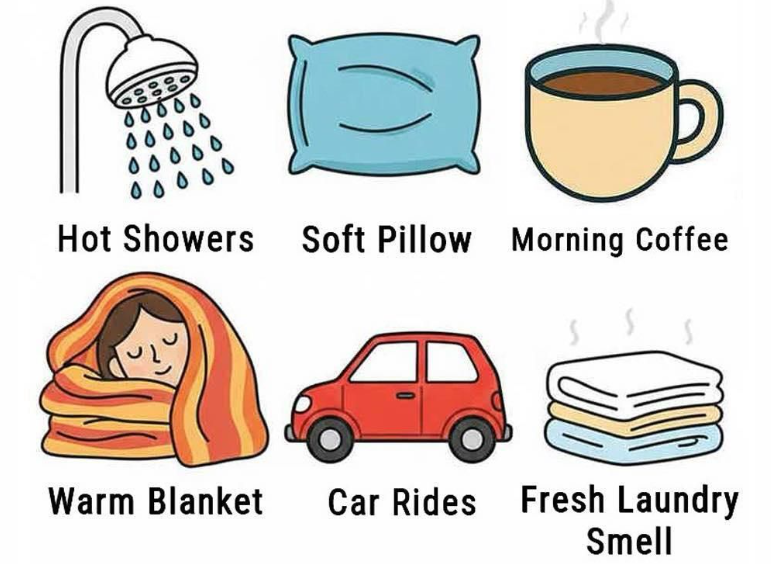
Below are the options—and the patterns they often reflect in the people who choose them.
Letting Go of Hot Showers
If you choose to give up hot showers, it often suggests a belief in mental toughness and the value of endurance. You may feel that overcoming discomfort builds strength and keeps you grounded. People who make this choice often pride themselves on discipline and resilience. They adapt easily to inconvenience and can push through difficult situations without allowing them to interrupt the rhythm of life.
However, this mindset may also come with a tendency to minimize the body’s need for comfort and warmth. Muscles and joints rely on heat for recovery, and over time the absence can become more burdensome than expected. This choice reflects inner strength, but also a habit of placing expectations on yourself that may overlook softness and physical care.
Letting Go of a Soft Pillow
Choosing to sleep without a comfortable pillow often points toward flexibility and emotional stability. You may feel equipped to function well despite imperfect conditions. Rest becomes a necessity rather than a ritual, and you are capable of adapting without complaint.
With that adaptability comes a tendency to prioritize efficiency over comfort. While you may not express dissatisfaction, the effects of ongoing physical strain can accumulate quietly. This choice reflects practicality and emotional steadiness, with a pattern of pushing personal comfort aside in the name of getting things done.
Letting Go of Morning Coffee
Giving up morning coffee is notable because it is a daily ritual strongly tied to rhythm and transition. Those who willingly choose this option often operate with natural motivation or consistent internal energy. They may rely less on external stimulants and more on purpose, routine, or calm mornings that arise from within.
This choice also reflects independence from social habits. In many environments, coffee is linked to connection and shared moments. Opting out means you find grounding in other ways and trust your own pace rather than cultural cues.
Letting Go of a Warm Blanket
Choosing to live without the comfort of a warm blanket often signals a preference for freedom and physical openness. You may dislike feeling restricted or confined and prefer simplicity over layers of coziness.
This choice reflects independence, a desire for lightness in your surroundings, and comfort with your own space. Emotional independence often appears here as well—self-reliance, ease with solitude, and a tendency to create warmth through movement rather than physical softness.
Letting Go of Car Rides
If you choose to give up car rides, you often value reflection and inner life more than speed or convenience. Walking, waiting, or moving slowly does not faze you. You may enjoy the mental space that comes from being unhurried, allowing thoughts to settle naturally.
This choice often relates to patience, introspection, and the belief that clarity matters more than efficiency. Car rides often function as private emotional spaces, and releasing them suggests confidence in your ability to find that same peacefulness elsewhere.
Letting Go of the Fresh Laundry Scent
People who would give up the scent of fresh laundry often view comfort in practical terms. Clean clothes are essential, but the sensory pleasure attached to them feels secondary. Function outweighs embellishment.
This choice reflects a straightforward, grounded approach to life. You value usefulness and consistency, and you rarely prioritize adornment over necessity. At the same time, you may occasionally overlook small joys that bring brightness to daily routines.
What This Exercise Really Reveals
The core insight does not lie in which comfort you release, but in the reason that choice felt manageable. Comfort is a form of emotional regulation. It helps steady the mind, soothe stress, and define transitions throughout the day.
Some people instinctively protect rest. Others protect energy, freedom, or routine.
There is no ideal answer. Only clarity.
If one option made you uneasy, that discomfort reveals something. If another felt surprisingly easy, that also reveals something. The purpose is reflection, not judgment.
Comfort is not a weakness. It is information.
Understanding which comforts matter most offers a clearer view of how you navigate life—and how you care for yourself as you move through it.