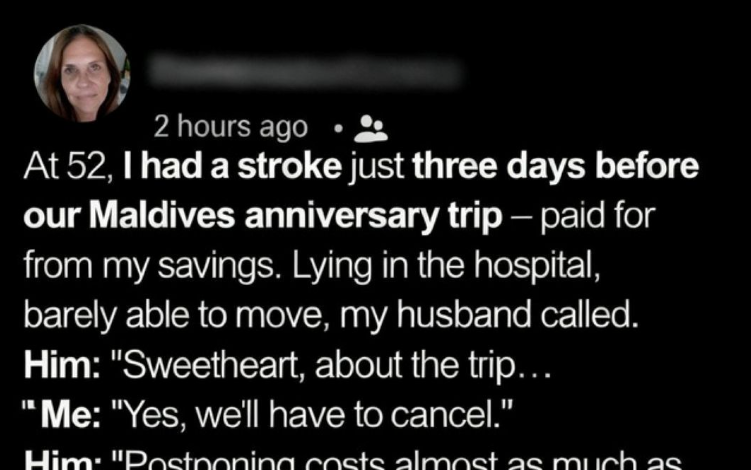
At the age of fifty-two, my life shifted in a way I never could have anticipated. It happened three days before an anniversary trip to the Maldives, a journey I had carefully planned and paid for with my own savings. That morning began like any other. I was folding laundry, thinking about warm sand, clear water, and the calm that comes from being far away from daily routines. Then, without warning, everything changed.
I woke up surrounded by bright hospital lights, disoriented and unable to move the way I normally could. My body felt heavy, distant, as if it no longer belonged entirely to me. Doctors spoke in measured, reassuring voices, explaining what had happened. A stroke. The words landed slowly. They talked about rest, rehabilitation, and uncertainty. I focused on small things, like trying to move my fingers, trying to stay present. In the middle of all that, my phone buzzed with my husband’s name on the screen.
I expected concern. I expected fear, maybe even panic. Instead, the conversation turned practical almost immediately. He asked how I was, but his tone quickly shifted toward schedules, expenses, and the upcoming trip. He explained that postponing it would cost money and that he hated the idea of wasting something already paid for. As I listened, still lying in a hospital bed, he mentioned the possibility of offering the trip to someone else. The words settled heavily. The pain I felt in that moment had nothing to do with my physical condition.
The days that followed moved slowly. Hospital life has its own rhythm—machines beeping softly, nurses checking vitals, therapists encouraging small movements that feel monumental at first. Friends reached out with kind messages and genuine concern. Each note reminded me that I mattered, that my recovery mattered. My husband called, but less often. When he did, the conversations felt rushed, distracted, as if he had somewhere more important to be.
Lying there, learning to sit up and eventually stand again, I had time to think. I thought about the years behind me, about moments when I had chosen convenience over honesty, peace over confrontation. I realized that the shock I was processing was not only about a missed trip. It was about seeing my life clearly, without the noise of routine to soften the edges. Recovery began to feel like something deeper than physical healing. It felt like awareness.
One afternoon, after a long therapy session, I made a phone call of my own. My hands trembled slightly, but my voice stayed calm. I asked questions I had avoided before. I listened carefully to the answers. Nothing dramatic was said, yet everything became clear. Sometimes distance reveals itself when life forces you to slow down. With the guidance of a hospital social worker and the support of family members who showed up without hesitation, I started planning what came next.
The focus shifted from vacations to paperwork, from travel plans to practical decisions. It wasn’t fueled by anger or a desire for revenge. It was grounded, steady, and centered on my well-being. For the first time in a long while, I was making choices with myself at the center of them, not as an afterthought.
Weeks passed. Strength returned gradually. I learned to walk again, first with help, then on my own. Confidence followed in quiet ways. I laughed more easily. I slept better. I began imagining a future shaped by intention instead of habit. The trip I missed faded into the background, no longer a symbol of loss but a marker of change.
Healing taught me patience. It also taught me courage. Life does not always unfold according to our plans, and sometimes the moments we look forward to are replaced by ones we never asked for. Yet those moments often carry the lessons that matter most. I learned that choosing yourself is not selfish. It is necessary.
The biggest turning points are not always found in distant destinations or celebratory milestones. Sometimes they arrive quietly, urging us to pay attention, to value our own worth, and to move forward with clarity. My recovery gave me my strength back, but more importantly, it gave me my sense of self.