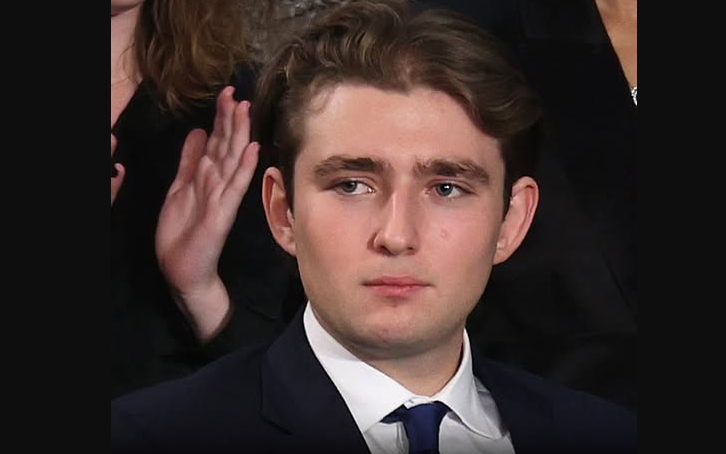
Public debates about military service often appear during times of international tension. When global conflicts dominate headlines, people naturally begin asking questions about leadership, responsibility, and sacrifice. In recent weeks, a new discussion began circulating across social media platforms, and the name that unexpectedly entered the conversation was Barron Trump.
The discussion did not originate from official political statements or policy announcements. Instead, it grew organically from online commentary as users debated how military decisions affect ordinary citizens. Some individuals expressed frustration about the broader topic of political leadership during times of conflict. Others questioned how responsibility and risk are distributed when governments authorize military action abroad.
In this context, Barron Trump’s name appeared frequently in posts and hashtags. The discussion did not focus on him personally as much as it reflected wider concerns about fairness, accountability, and the relationship between political authority and military service. As with many online debates, the conversation quickly expanded and took on a life of its own.
Much of the debate centered on historical memories of past wars and how political figures have interacted with military service throughout American history. Many people recalled earlier discussions about draft policies, deferments, and the responsibilities of public leaders. These topics have resurfaced repeatedly during different periods of international conflict, making them familiar points of discussion for many Americans.
To understand the conversation fully, it is helpful to clarify how military service currently works in the United States. At present, the country does not operate under an active military draft. The armed forces rely on volunteer service members rather than mandatory conscription. This means that individuals choose to join the military rather than being automatically required to serve.
There is, however, a system known as the Selective Service System. Young men are required to register with this system when they reach the age of eighteen. Registration does not mean immediate military service. Instead, it functions as a contingency plan that could be used only if Congress and national leaders ever decided to reinstate a draft during a national emergency.
Because Barron Trump is approaching the age range associated with Selective Service registration, some social media users mentioned his name while discussing the broader concept of national service. Their comments reflected frustration about leadership decisions rather than a literal expectation that any specific individual would be deployed.
These discussions also revived conversations about historical draft deferments that occurred during the Vietnam War era. During that period, many young men sought medical, educational, or occupational deferments that delayed or prevented military service. Those policies have remained part of public debate for decades and continue to influence how people interpret modern political decisions.
Another aspect of the online conversation involved physical eligibility standards used by the U.S. military. Some posts speculated about whether height or other physical characteristics could affect someone’s ability to serve. Military branches do maintain physical standards, including guidelines for height, weight, vision, and overall health. These standards help determine what roles individuals may qualify for within the armed forces.
However, those standards do not automatically prevent someone from serving altogether. Height limitations, for example, often apply only to specific positions that involve equipment constraints, such as aircraft cockpits or armored vehicles. Individuals who exceed certain measurements might be directed toward other roles where those restrictions are less relevant.
Because of these details, experts emphasize that social media commentary often oversimplifies how military eligibility works. In reality, enlistment decisions involve a structured evaluation process that includes medical examinations, physical fitness testing, and administrative review.
Another point frequently raised during the debate is the broader concept of shared responsibility during times of conflict. Many people believe that national decisions about military engagement carry serious consequences that affect families across the country. For that reason, discussions about leadership often intersect with questions about personal sacrifice and accountability.
Others argue that focusing attention on the relatives of political figures does not contribute to meaningful dialogue. They believe conversations about policy, diplomacy, and national security should remain separate from discussions about private family members. From this perspective, debates that involve political families can sometimes distract from larger issues affecting international stability and national defense.
Despite these differences in opinion, the online discussion illustrates how quickly public attention can shift when global events unfold. In the modern digital environment, images, statements, and hashtags can circulate worldwide within minutes. What begins as a small online conversation can quickly expand into a widespread debate involving thousands of voices.
Public curiosity about leadership decisions is not new. Throughout history, citizens have questioned how governments approach war, peace, and military commitments. What has changed is the speed at which those conversations now unfold. Social media platforms allow individuals from different backgrounds to share opinions instantly, often turning complex policy questions into highly visible public debates.
In many ways, the discussion surrounding Barron Trump reflects broader emotions about uncertainty in the world. International conflicts naturally create anxiety, and people search for ways to express their concerns. Sometimes those concerns appear through direct policy discussions. Other times they appear through symbolic debates about fairness and responsibility.
Political analysts often note that such debates reveal deeper feelings within society. They show how citizens interpret leadership, evaluate national priorities, and consider the personal impact of global events. While online commentary can sometimes become heated, it also demonstrates how engaged people remain with questions about governance and national security.
Ultimately, decisions about military service are determined through established legal frameworks, not social media trends. Eligibility, enlistment, and potential drafts are governed by federal law and structured military procedures. These systems exist to ensure consistency and fairness when evaluating who may serve.
The broader conversation continues to evolve as international developments unfold. For many observers, the debate serves as a reminder that questions about leadership, responsibility, and public service remain deeply important topics within democratic societies.
While opinions vary widely, one thing remains clear: discussions about military service and national policy often reflect the values and concerns of the public. In times of uncertainty, people naturally seek answers about how decisions are made and who ultimately carries their consequences.
As global events continue to shape public conversation, debates like this highlight the ongoing relationship between citizens, leaders, and the institutions responsible for national defense. Understanding that relationship remains an essential part of informed public dialogue.