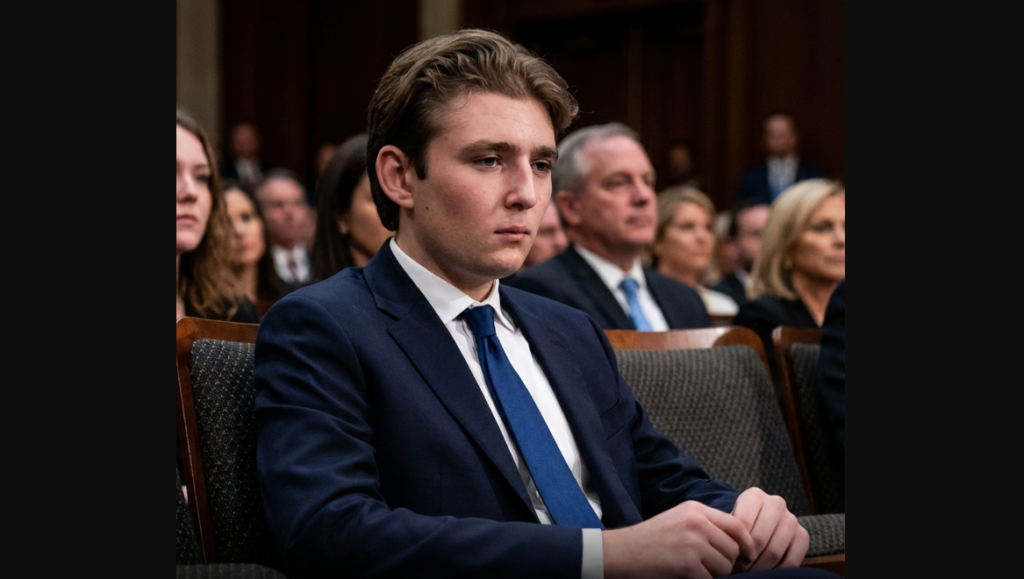
As debate over U.S. foreign policy continues across social media platforms, one unexpected name began trending: Barron Trump. Some users circulated hashtags suggesting that the president’s youngest son should serve in the military. These posts referenced long-standing public discussions about draft deferments during the Vietnam era and raised broader questions about fairness, responsibility, and public service.
The online reaction quickly grew into a larger conversation. Comment sections filled with arguments about family legacy, civic duty, and whether children of political leaders should share in the risks associated with military decisions. While emotions ran high, it is important to separate social media sentiment from the legal and procedural realities that determine military service.
The United States does not currently operate under an active military draft. Although young men are required to register with the Selective Service System at age 18, conscription would only occur if reinstated by Congress. Any such action would involve formal legislation and structured guidelines. Decisions about who serves are governed by federal law, not by online campaigns or trending hashtags.
In a voluntary enlistment system, eligibility follows clear standards. Every applicant undergoes medical screening, physical evaluation, and background checks. These requirements apply equally to all candidates, regardless of family name, political affiliation, or public status. Military service operates under regulations designed to maintain readiness, safety, and operational effectiveness.
One area that gained attention during the online discussions involves physical qualifications. The U.S. armed forces maintain height and weight standards for enlistment and for specific occupational specialties. While individuals of exceptional height are not automatically excluded from service, certain positions impose maximum height limits due to equipment design and safety constraints.
For example, roles involving aircraft cockpits, submarines, or armored vehicles may require personnel to fit within confined spaces. In some branches, height limits for particular positions are set at approximately 6 feet 8 inches. These measurements are based on engineering specifications and mission requirements rather than personal characteristics. The objective is to ensure that service members can perform duties safely and effectively within the equipment provided.
Beyond physical measurements, medical fitness plays a significant role in determining eligibility. Vision standards, hearing thresholds, cardiovascular health, and orthopedic stability are evaluated during the enlistment process. These assessments ensure that individuals can meet the physical demands of training and deployment. Psychological evaluations may also be conducted to confirm readiness for service responsibilities.
It is also worth noting that military service includes a wide range of roles. Combat positions represent one part of a much larger structure that encompasses logistics, intelligence, engineering, healthcare, cybersecurity, and administrative operations. Each specialty carries distinct qualification criteria.
Public discourse about fairness in military service often reflects deeper concerns about leadership accountability. Historically, questions about political families and military participation have surfaced during times of conflict. These discussions tend to reappear when foreign policy decisions draw public scrutiny.
However, legal frameworks remain consistent. The Department of Defense establishes eligibility standards. Congress determines whether a draft exists. Individual service branches manage recruitment and assignment. Public opinion does not alter these structured processes.
In the current environment, military service in the United States remains voluntary. Many service members choose enlistment as a career path, motivated by personal goals, educational opportunities, family tradition, or a sense of duty. Their decisions are shaped by formal guidelines rather than online commentary.
The broader takeaway from the trending discussion is that civic engagement often intersects with emotion. Social media platforms amplify voices quickly, creating rapid cycles of debate. While these conversations can raise valid questions about policy and responsibility, the mechanics of military service follow established procedures.
Ultimately, eligibility for military service is determined by law, medical evaluation, and physical standards. Public figures and their families are subject to the same regulatory framework as any other citizen. Online trends may influence conversation, though they do not dictate enrollment decisions.
Understanding this distinction provides clarity in a fast-moving digital environment. Policy debates belong in legislative chambers and formal forums. Military qualification decisions rest within structured systems designed to ensure fairness, safety, and operational readiness.