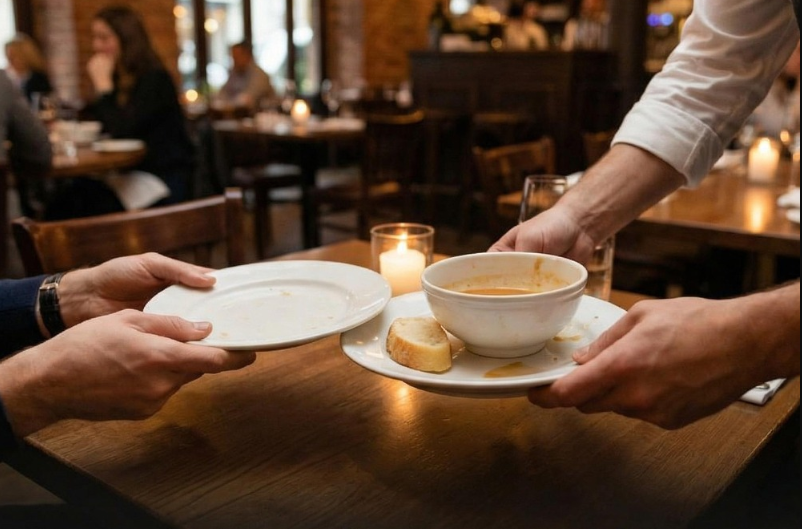
In the warm hum of conversation, the gentle clink of silverware against plates, and the soft glow of pendant lights over linen tablecloths, certain small scenes shine brighter than the rest. One of them appears almost too simple to notice: a guest calmly gathering a few empty dishes and passing them to the server with a calm, friendly smile. The movement happens in a heartbeat, yet it carries more meaning than most grand displays.
In spaces where everyone naturally focuses on their own meal and company, those who reach out to assist reveal an effortless sense of awareness and goodwill. Instead of sitting back while servers navigate tight corners and overloaded trays, these guests move with quiet purpose, guided by empathy and an inner sense of fairness. Such subtle actions often point to deeper qualities—thoughtfulness, generosity, and a genuine wish to make the shared environment feel easier and more pleasant for everyone present.
Researchers who study human behavior note that this kind of spontaneous support comes from truly seeing service work as valuable and demanding effort. Guests who lend a hand frequently understand the physical strain and emotional energy required to care for tables all evening, either from their own past experiences in similar roles or from an instinctive respect for the labor involved.
When they neatly stack used glasses, slide plates toward the edge for easier pickup, or clear a little room before the next course arrives, they show appreciation in the most direct way possible. They transform the ordinary act of eating out into a gentle collaboration where both guests and staff contribute to the comfort of the moment. This perspective lies at the core of cooperative behavior: voluntary, considerate choices that lift the experience for others without expecting praise or reward.
This natural inclination to help also reflects a quiet confidence and strong emotional awareness. Individuals who feel at ease in social settings pick up on small signals—the server’s quick pace, the wobbling stack of dishes waiting to be carried, or the brief pause near the table—and respond smoothly.
Their timing feels effortless, never forced or intrusive. Studies on prosocial tendencies show that people who offer this kind of thoughtful assistance usually act from an inner sense of fulfillment rather than a desire for recognition. The act becomes a soft expression of personal values lived out in everyday moments. It also reveals a grounded humility, an understanding that no one stands above the work required to keep a restaurant running smoothly.
Cultural background, family habits, and individual preferences naturally influence how people behave in public dining spaces. Some guests prefer to relax completely and let the staff handle every detail, and that choice carries its own validity. What truly matters is the spirit behind the action.
When someone offers help with sincere warmth, the atmosphere lightens for everyone nearby. These brief, almost invisible gestures of courtesy lower tension, invite smiles, and create tiny ripples of connection in an otherwise busy evening. In settings where servers often face hurried demands and occasional disregard, a moment of genuine cooperation feels like a breath of fresh air. It reminds everyone at the table—and often the staff themselves—that thoughtfulness expressed in the smallest ways can shift the entire mood of a room.
Moments like these prove that consideration does not demand elaborate effort or loud announcement. A simple act of gathering plates or making space speaks volumes about character and care. Over the course of an evening, these quiet contributions add up, turning an ordinary dinner into something warmer and more human.
They foster gratitude on both sides of the table and leave lasting impressions long after the meal ends. In a fast-moving world, such gentle habits reinforce the idea that mutual respect and small kindnesses remain powerful forces, capable of making shared spaces feel welcoming, balanced, and genuinely pleasant for all who pass through them.