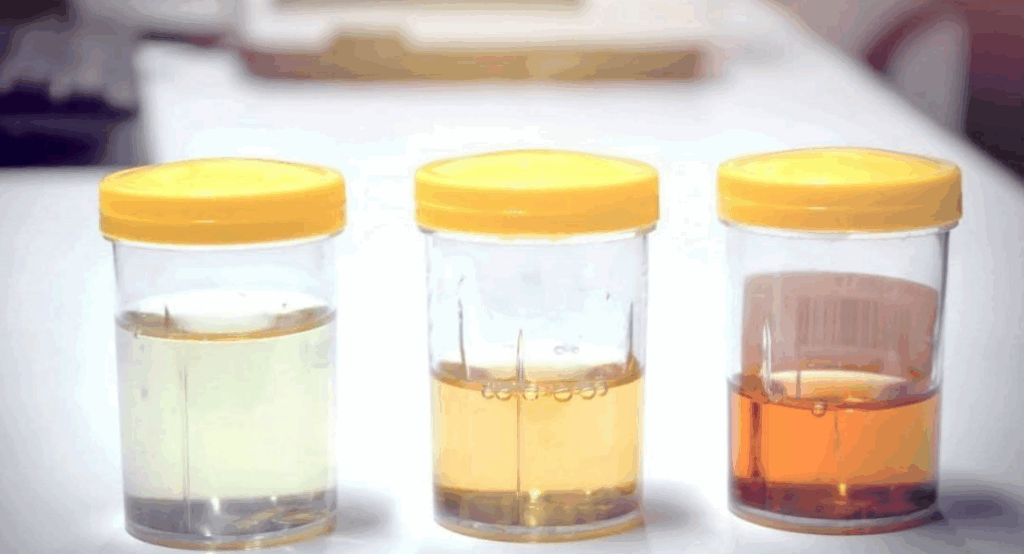
Every day, you likely flush the toilet without a second glance. Yet, your urine serves as a vital health indicator, offering insights into everything from hydration status to serious medical conditions. While most color variations are benign, some signal urgent issues that demand attention.
As a urologist with experience analyzing over 10,000 urine samples, I’ll explain what your urine reveals about your health — and when it’s time to hydrate or seek emergency care. This guide provides clear, science-based information, free of myths or alarmist claims.
🚽 The Urine Color Guide: A Quick Health Snapshot
(Use a clear cup under bright light for an accurate assessment)
Pale Straw
✅ Optimal hydration
-
Supports healthy kidney function
-
Effectively clears toxins
Action: Maintain your current habits!
Dark Yellow
⚠️ Mild dehydration
-
An early indicator of low fluid intake
-
Often seen after exercise or caffeine consumption
If it persists >24 hours despite water intake: -
Drink 16 oz of water immediately
-
Include electrolytes if you’ve been sweating heavily
Honey/Amber
🔥 Severe dehydration
-
Indicates kidneys are under strain
-
Increases risk of kidney stones
If accompanied by: -
Dizziness
-
Dry mouth
-
Reduced urine output
Action: -
Seek IV fluids (ER if vomiting)
-
Avoid alcohol or caffeine until fully hydrated
Orange
🟠 Dehydration or potential liver issue
-
Common cause: Dehydration (concentrated urobilin)
-
Rare but serious: Bilirubin buildup (liver or bile duct obstruction)
If you notice: -
Pale, clay-colored stools
-
Yellowing of eyes or skin
-
Abdominal discomfort
Action: -
Request a liver panel blood test
-
Stop alcohol and acetaminophen use immediately
Pink/Red
❤️ Possible blood presence
-
Harmless causes: Beets, berries, or rhubarb
-
Serious causes: UTI, kidney stones, or tumors
If you experience: -
No dietary triggers
-
Painful urination
-
Persistence >24 hours
Action: -
Order a urinalysis and urine culture
-
Consider a CT scan if no infection is detected
Brown/Cola
⚫ Medical emergency
-
Possible causes: Rhabdomyolysis (muscle breakdown), severe liver disease, or fava bean toxicity
If accompanied by: -
Muscle pain
-
Tea-colored urine
-
Nausea or vomiting
Action: -
Head to the ER immediately
-
IV fluids are critical to protect kidneys
Blue/Green
💙 Rare but possible
-
Causes: Food dyes (e.g., blue Gatorade), Pseudomonas UTI, or medications (e.g., amitriptyline)
If you notice: -
Foul odor
-
Fever
-
No dietary triggers
Action: -
Request a urine culture
-
Antibiotics may be needed if bacterial
Cloudy
☁️ Potential infection
-
Common causes: UTI, STI (e.g., chlamydia or gonorrhea), or kidney stones
If you experience: -
Burning during urination
-
Frequent urges to urinate
-
Pelvic discomfort
Action: -
Start antibiotics
-
Request an STI test if sexually active
Purple
🟣 “Purple Urine Bag Syndrome”
-
Linked to catheter-associated UTIs
-
Primarily seen in elderly or nursing home patients
If using a catheter and urine turns purple: -
Replace the catheter
-
Begin antibiotics
🔬 Debunking Common Urine Color Misconceptions
Here are three frequently misunderstood urine colors and the facts behind them:
-
“Beet-Red” Pee: Not Always Blood
Myth: Red urine always signals cancer.
Truth: Foods like beets, blackberries, or rhubarb can cause temporary pink or red urine, resolving within 24 hours.
Doctor’s test: A dipstick test confirms if blood (hematuria) is present.
When to act: If redness persists >48 hours after avoiding trigger foods. -
“Vitamin Glow” (Bright Yellow)
Myth: Neon urine means vitamins are effective.
Truth: Riboflavin (vitamin B2) in multivitamins causes fluorescent yellow urine, indicating excess excretion, not absorption.
Solution: Opt for methylated B vitamins for better absorption and less waste. -
“Morning Concentrate” (Dark Yellow)
Myth: Dark morning urine signals kidney failure.
Truth: Overnight dehydration is normal, but urine should lighten within 30 minutes of drinking water. Persistent darkness is a concern.
Doctor’s rule: Check if urine lightens after one glass of water. If not, seek evaluation.
🚨 5 Urgent Signs Requiring Immediate ER Attention
These urine changes demand prompt action:
-
Brown/cola urine + muscle pain → Rhabdomyolysis (risk of kidney failure within 12 hours)
-
Red urine + no food triggers + back pain → Possible kidney stone or tumor
-
Orange urine + pale stools + itchy skin → Bile duct obstruction (may require surgery within 48 hours)
-
Cloudy urine + fever + chills → Pyelonephritis (kidney infection)
-
Sudden dark urine after intense exercise → Rhabdomyolysis (common in high-intensity athletes)
💡 Tip: Persistent foamy urine suggests protein leakage, a sign of kidney damage. Request testing within 72 hours.
💧 Personalized Hydration Strategy
Forget the generic “8 glasses a day” advice. Here’s how to tailor your water intake:
-
Weigh yourself before bed and upon waking.
-
Lost >1% of body weight overnight? You’re dehydrated.
Example: A 150-lb person losing >1.5 lbs needs 20 oz of water before breakfast. -
Check urine 2 hours after drinking: It should be pale straw. If not, add electrolytes.
Data: Chronic dehydration affects 75% of adults, increasing kidney stone risk by 30% (American Journal of Kidney Diseases).
🧪 Essential Tests to Request
Don’t accept vague reassurances. Demand these tests for specific symptoms:
-
Red urine (no dietary triggers): Urine cytology + CT urogram (rules out bladder cancer, 90% curable if caught early)
-
Dark urine + fatigue: Liver panel + bilirubin fractionation (detects hepatitis or bile duct stones)
-
Cloudy urine + burning: Urine culture + STI PCR test (standard UTI tests miss 30% of STIs)
-
Foamy urine: 24-hour urine protein test (gold standard for kidney damage)
Note: If a doctor dismisses persistent symptoms as “dehydration,” seek a second opinion. Early-stage kidney cancer is often overlooked.
🌿 3 Foods to Support Urine Health
Incorporate these into your diet for better kidney and bladder function:
-
Cranberry Extract (Not Juice)
Why: Proanthocyanidins prevent UTI-causing bacteria from adhering to bladder walls.
Dose: 500 mg daily (avoid sugary juices). -
Parsley
Why: Acts as a natural diuretic to help flush kidney stones.
Tip: Blend parsley stems into smoothies for maximum nutrient benefits. -
Watermelon
Why: Citrulline enhances kidney filtration by 22% (Journal of Nutrition).
Dose: 2 cups daily (frozen is effective too).
💫 Final Note: Your Urine Speaks Before Symptoms Do
That dark yellow stream may signal more than dehydration. That pink hue might not be from last night’s beets.
👉 Your urine acts as an early warning system, alerting you to issues before they escalate.
Next time you use the bathroom:
✅ Take 5 seconds to observe the color
✅ Look for bubbles or cloudiness
✅ Note any unusual odors (e.g., ammonia may indicate infection)
The gap between a simple urine test and a costly kidney transplant?
👉 It’s visible in your toilet bowl.
🩺🚽
Your kidneys work tirelessly for you. Return the favor with a quick glance.
Disclaimer: This guide is for informational purposes only. Always consult a urologist for persistent changes rather than relying on self-diagnosis.