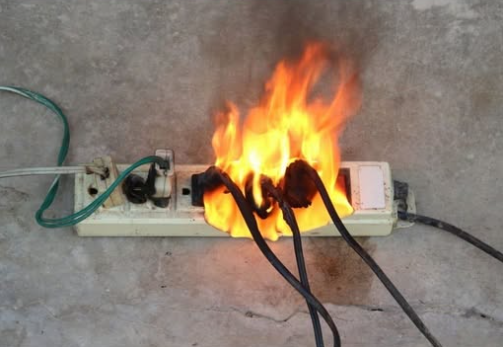
Power strips offer a convenient and cost-effective way to expand the number of outlets for your electrical devices. However, using them improperly can lead to significant hazards that every household should understand.
When you connect high-energy devices or overload a power strip, you increase the risk of malfunctions. This can result in damage to your appliances, unexpected power outages, or even dangerous fires. I learned this lesson firsthand after an alarming incident in my own home. Since then, I’ve been meticulous about how I use power strips. Below, discover nine devices you should never plug into a power strip and tips to ensure safe usage.
Check the Power Strip’s Maximum Capacity First
Before listing the devices to avoid, it’s critical to understand one key detail. Every power strip has a maximum power rating, typically noted on the power cable itself.
The first step before connecting any devices is to review this rating. Then, calculate the total power consumption of all devices plugged into the strip by adding their individual wattages.
How Do I Determine a Device’s Power Consumption?
You might wonder how to find the power usage of your devices. Similar to power strips, most electrical appliances display their wattage on a label or in the user manual. For example, suppose your power strip has a maximum capacity of 3500 W. If you plug in an oven (2500 W), a vacuum cleaner (800 W), and a kettle (250 W), the total comes to 3550 W (2500 + 800 + 250). This exceeds the power strip’s limit. In this case, the solution is straightforward: unplug one device to bring the total wattage below the power strip’s maximum capacity. Failing to do so can create serious safety risks.
Now, let’s explore the nine devices you should avoid plugging into a power strip.
1. The Oven
Ovens rank among the most power-hungry household appliances. Even if you use your oven infrequently, connecting it to a power strip is a mistake. Instead, always use a dedicated wall outlet to prevent hazardous overheating.
2. The Refrigerator
You might assume a refrigerator’s moderate energy use makes it safe for a power strip. That’s a common misconception. Refrigerators require a constant electrical supply, running 24/7, which places continuous strain on a power strip. This also applies to freezers. Always connect these appliances directly to a wall outlet to ensure safety.
3. The Washing Machine
Washing machines consume approximately 1150 kWh annually, making them highly energy-intensive. Plugging one into a power strip is not advisable, as it risks short circuits or overheating. The same applies to tumble dryers, which also demand significant electricity. Use a wall outlet to keep these devices safe.
4. Auxiliary Heaters
Portable heaters are useful for keeping your home warm, but they must be plugged directly into a wall outlet. Connecting them to a power strip can quickly overload the strip, creating a dangerous situation.
5. The Microwave
Don’t underestimate the energy demands of a microwave. On average, it consumes about 70 kWh per year, which is substantial for a compact appliance. To avoid potential issues, plug your microwave into a wall outlet rather than a power strip.
6. The Coffee Maker
A coffee maker may seem like a low-power device, but it consumes around 165 kWh per year. This makes it surprisingly energy-intensive. For safety, always connect your coffee maker to a wall outlet.
7. The Toaster
Toasters, despite their small size, can use between 500 and 1000 W annually, especially if used daily. This significant energy draw means you should avoid plugging a toaster into a power strip and opt for a wall outlet instead.
8. Multiple Power Strips
If you need to connect many devices, you might be tempted to link multiple power strips together. This is a dangerous practice. Daisy-chaining power strips can easily exceed the maximum power capacity, increasing the risk of electrical fires.
9. The Internet Box, Computer, and Television
Devices like internet routers, computers, and televisions may not consume much electricity, but they are highly sensitive to electrical fluctuations, such as surges. To protect them, avoid using a power strip unless it includes a surge protector. Better yet, plug these devices directly into a wall outlet.