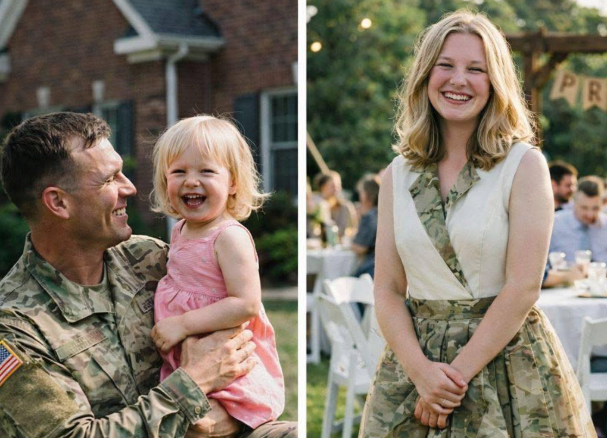
My dad was the school janitor, and for most of my life, that fact followed me everywhere. My classmates whispered it in hallways, laughed about it behind my back, and sometimes said it out loud without hesitation.
At home, it was always only the two of us. My mom passed away when I was born, so my dad, Johnny, became everything—parent, provider, and constant support. He packed my lunches before early shifts, made pancakes every Sunday, and even learned how to braid my hair by watching videos so I wouldn’t feel different.
At school, people saw him differently. They reduced him to a role, ignoring everything else he was. I heard the comments often enough to know them by heart. I kept my reactions to myself during the day and saved my feelings for when I got home.
My dad always understood, even when I said nothing. He had a way of noticing the small changes in my mood. He would sit across from me and remind me that a person’s worth isn’t defined by how others choose to speak about them. Those conversations stayed with me.
Over time, I made a quiet promise to myself. I wanted to make him proud in a way that would rise above every careless remark I had ever heard.
Then everything changed again.
During my final year of school, my dad was diagnosed with cancer. He continued working as long as he could, determined to maintain some sense of normal routine. Even when he was tired, he tried to reassure me that everything was under control.
He often spoke about one thing in particular. He wanted to see me at prom. He imagined the moment clearly—me getting ready, walking out the door, and stepping into a future he believed in for me.
A few months before that night arrived, he passed away.
The news reached me in the school hallway. I remember the floor beneath me, the familiar environment suddenly feeling unfamiliar. After that moment, everything seemed to blur together.
In the weeks that followed, I moved in with my aunt. Her home was quiet and different, filled with a sense of care, though it didn’t carry the same feeling as the place I had known.
Prom season arrived quickly. Conversations at school revolved around dresses, plans, and expectations. I felt disconnected from all of it. That night had always been something my dad and I imagined together. Without him, it felt incomplete.
One evening, I opened a box of his belongings. Inside were the items he used every day—his wallet, his watch, and the shirts he wore to work.
As I held one of those shirts, an idea formed. If he couldn’t be there with me, I could find a way to carry him with me.
With my aunt’s help, I began working on a dress made from his shirts. It wasn’t easy. There were mistakes, adjustments, and moments where I had to start over. Through it all, my aunt guided me patiently.
Each piece of fabric held a memory. The shirt he wore on my first day of high school, the one from afternoons spent learning new things together, the ones tied to moments of comfort and reassurance.
When the dress was finished, I stood in front of the mirror and saw something meaningful. It wasn’t a traditional dress, though it represented something far more personal. It carried the presence of someone who had shaped my life.
On prom night, as I walked into the venue, the reaction was immediate. People noticed the dress, and some responded with laughter and comments that echoed the same attitudes I had heard for years.
I stood there, feeling the weight of the moment, though I didn’t step away. I explained why I had made the dress and what it meant to me. My words filled the space, even as some people chose not to understand.
Then something changed.
The music stopped, and the principal stepped forward. He spoke about my dad—about the years he spent supporting the school, fixing things quietly, and helping people without expecting recognition.
As he spoke, the room grew silent. One by one, people began to stand—students, teachers, and staff who had been helped by my dad in ways they had not fully realized before.
I looked around and saw the impact he had made, not through recognition, but through consistent actions.
The atmosphere shifted completely. The same room that had felt distant moments before now carried a sense of understanding and respect.
Later, when I had the chance to speak, I kept it simple. I shared that everything I had achieved came from the example my dad had set.
That night became something different from what I had expected. It was no longer about appearances or expectations. It became a moment of recognition—for him, for his work, and for everything he represented.
After the event, I visited his resting place. The evening was quiet, and the air carried a calm that allowed me to reflect.
I told him that I had brought him with me, in the only way I could.
He didn’t get to see me walk into that room.
Though in a way, he was there the entire time.