The top floor of the building was designed to leave an impression on anyone who stepped inside.
That was clear the moment the elevator doors opened. The marble floors reflected the light from towering glass walls, and the city stretched endlessly below, reduced to distant movement and muted sound. Everything about the space communicated authority and control. It was a place where decisions were made without hesitation, where outcomes were calculated with precision.
This was where people with influence gathered. Conversations here carried weight. Numbers discussed at the table represented more than business—they shaped outcomes far beyond the room itself.
That afternoon, a long conference table occupied the center of the space. Around it sat a group of men in carefully tailored suits, relaxed yet focused. Laptops displayed graphs and projections, while untouched cups of coffee cooled beside them. At the front of the room, a large screen showed figures that reflected vast financial stakes.
Near the entrance, quietly working, stood a woman holding a mop.
Her name was Rosa.
She moved with the kind of quiet efficiency that comes from experience. Over the years, she had learned how to work without drawing attention, how to remain in the background while ensuring everything around her stayed clean and orderly. Her goal was simple—finish her shift, collect her pay, and return home.
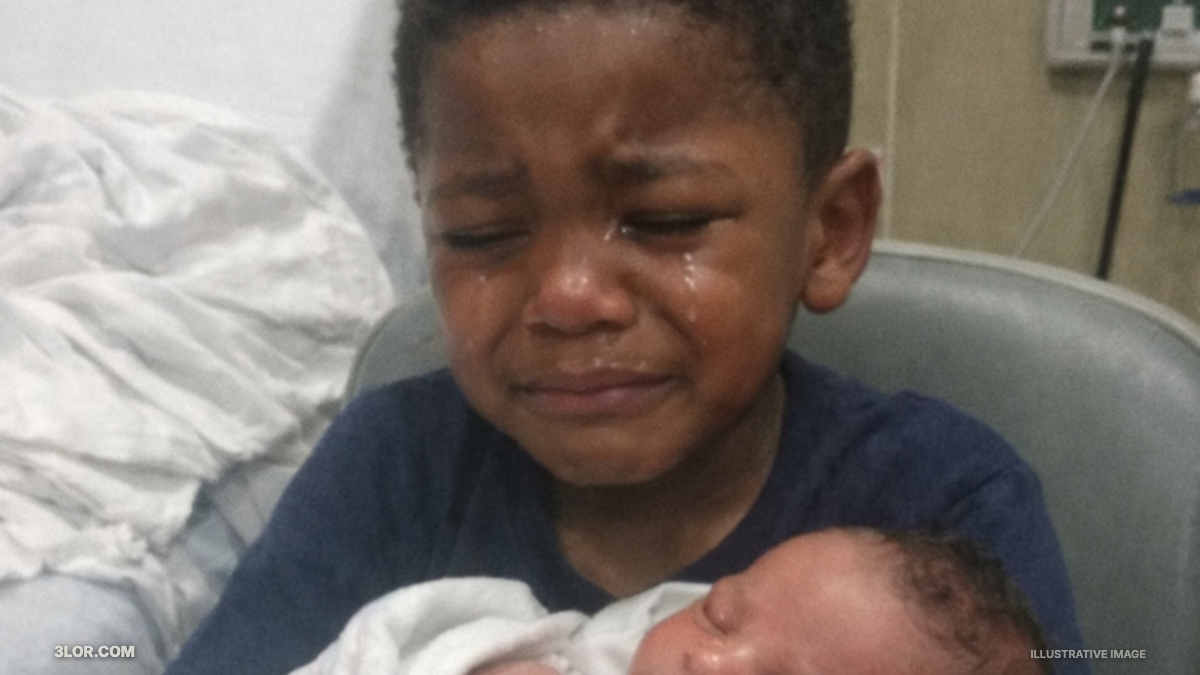
Beside her stood her young son.
He was not meant to be there. Circumstances had made the decision unavoidable. The babysitter had canceled, and missing work was not an option. Responsibilities waited at home, and she could not afford to fall behind.
The boy stood calmly, his small feet resting directly on the cool marble surface. He wore no shoes. They had worn out weeks earlier, and Rosa had been waiting for her next paycheck to replace them.
She kept her focus on her work, hoping they could pass through unnoticed.
In a room like this, attention often moves quickly.
The man seated at the head of the table noticed them first. He leaned back slightly, observing with interest, as though the meeting had taken an unexpected turn.
“It seems we have a visitor,” he said, his voice carrying across the room.
A few of the men glanced over. Some smiled faintly, others watched in silence.
Rosa lowered her gaze. “I apologize,” she said softly. “We can leave if needed.”
The man waved his hand lightly. “No need. We are nearly finished.” He paused, then added, “This could be interesting.”
The word lingered.
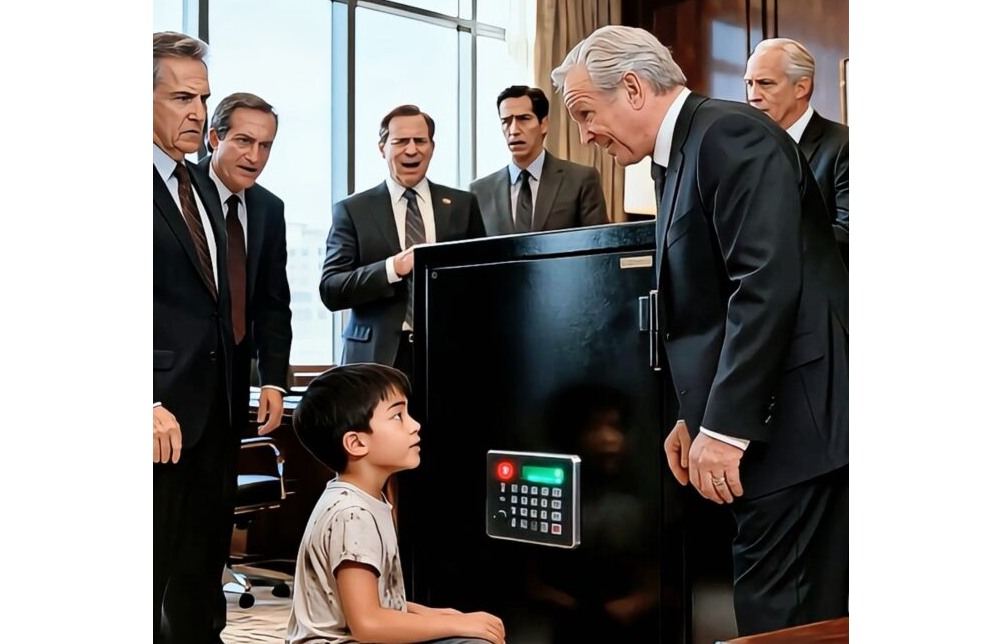
He stood and walked toward a large safe built into the wall. Its surface was solid, industrial, clearly designed to protect something of value.
“This safe,” he said, resting his hand against it, “is built with advanced security. Strong, reliable, and difficult to open.”
The room shifted its focus.
Then he turned toward the boy.
“I will make you an offer,” he said. “If you can open it, I will give you one hundred million dollars.”
A few quiet laughs followed, though not everyone seemed comfortable.
Rosa stepped forward slightly. “Please,” she said, her voice careful. “We will go.”
One man shrugged. Another leaned back in his chair. The moment stretched longer than it should have.
The boy did not react the way anyone expected.
He remained still, looking at the safe with calm curiosity. Then he stepped forward, his posture steady despite the attention around him.
“Can I ask something first?” he said.
The man at the table raised an eyebrow. “Go ahead.”
The boy looked at him directly. “Are you offering this because you believe I cannot open it,” he asked, “or because you believe you will not have to give anything away?”
The room fell quiet.
The tone had changed.
The man smiled, though it no longer carried the same confidence. “It is a simple challenge,” he replied.
The boy nodded thoughtfully. He moved closer to the safe, though he did not touch it. Instead, he turned back toward the group.
“My father once told me that security is not about locks,” he said. “It is about control.”
The man crossed his arms. “And how does that apply here?”
“It means the outcome is already decided,” the boy answered. “Because even if someone succeeded, you could decide it was not valid.”
No one responded.
The boy continued, his voice steady. “And it also means that what is being protected is not always what people think.”
Rosa watched, her heart racing.
“That is enough,” the man said, his tone sharper now.
The boy nodded. “Then I will answer your question.”
He looked around the room before speaking again.
“I do not need to open the safe,” he said.
The man tilted his head. “Why not?”
“Because the most valuable thing here is not inside it,” the boy replied.
A pause settled over the room.
“And what would that be?”
“The way people choose to treat others,” the boy said.
No one spoke.
The moment carried weight in a way that numbers on a screen never could.
The man turned slightly, his expression more serious now. The energy in the room had shifted, subtle yet undeniable.
The meeting ended soon after, with quiet movements and minimal conversation.
Rosa reached for her son’s hand, guiding him gently toward the exit. Her hands trembled, though her steps remained steady.
Before they reached the door, the man spoke again, this time in a lower tone.
“What would you want?” he asked.
The boy paused and turned back.
“I want my mother to be respected,” he said simply.
There was a moment of silence.
Then the man nodded.
Nothing dramatic followed. No applause, no announcement.
Yet something had changed.
Not because a safe had been opened or a reward had been claimed, but because a quiet truth had been spoken clearly, and everyone in the room had heard it.