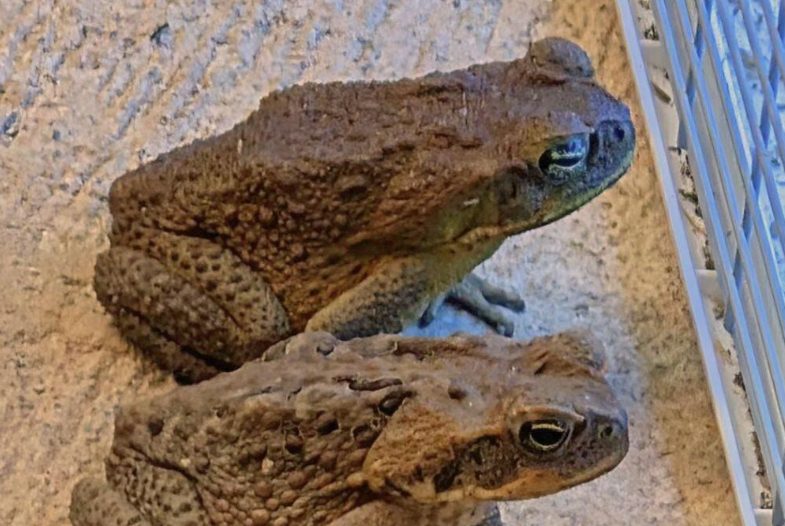
When a toad settles into your yard or near your home, it is responding to the environment you have created.
It does not arrive by accident.
It finds its way to places that offer shelter, moisture, and a steady source of food.
Soft soil, shaded corners, and the quiet rhythm of a lived-in space send a clear signal.
This is a place where life can exist comfortably.
At first glance, its presence may seem small or easy to overlook.
A still shape near a flower pot.
A quiet movement at dusk.
A brief appearance that fades into the background.
Yet that small moment often carries more meaning than expected.
A toad choosing to remain in your space reflects balance.
It suggests that your surroundings support natural cycles.
It shows that the environment allows life to settle and continue.
In that way, its presence becomes a quiet confirmation that something is working as it should.
Beyond symbolism, there is a practical side to this visitor.
Toads play a role in maintaining the natural balance of a garden or yard.
They feed on insects, helping reduce the need for chemicals or intervention.
Their activity supports a healthier environment without requiring attention.
They move silently, working in the background without disruption.
For many, this small creature becomes an unnoticed ally.
It contributes without asking for recognition.
It remains present without creating disturbance.
Its role is simple, though meaningful.
Across different cultures and traditions, the toad has been associated with deeper ideas.
It is often linked to transformation.
Its life cycle reflects change, moving from one stage to another in a visible way.
That process has led many to see it as a symbol of renewal and adaptation.
The toad exists comfortably in different environments.
It moves between water and land with ease.
This ability has often been interpreted as a sign of flexibility and transition.
It represents the idea that change can be natural, even when it feels uncertain.
Seeing a toad near your home can encourage reflection.
It can draw attention to areas of life that are shifting quietly.
Not all change is immediate or dramatic.
Some growth happens gradually, in ways that are easy to miss.
The presence of such a small creature can act as a reminder to notice those changes.
It can suggest that progress does not always require visibility.
Sometimes, it develops quietly, beneath the surface.
There is also a sense of patience connected to this symbol.
Toads do not rush.
They remain still, observing their surroundings before moving.
This behavior reflects a different pace, one that values timing over urgency.
In a fast-moving world, that perspective can feel grounding.
It offers a reminder that not everything needs to happen quickly.
Some processes require time to develop fully.
For those who pay attention to symbolic meaning, the toad can represent a shift in awareness.
It may signal a period of adjustment or growth.
It may also highlight the importance of maintaining balance in daily life.
At the same time, it is important to recognize the practical explanation.
Toads are drawn to environments that meet their needs.
Their presence often reflects natural conditions rather than hidden messages.
Both perspectives can exist together.
One focuses on ecological balance.
The other considers personal interpretation and meaning.
When combined, they offer a broader understanding of the moment.
The toad becomes both a natural presence and a symbol of something more reflective.
Observing it can encourage a pause.
A moment to notice surroundings.
A moment to consider what is stable and what is changing.
It can also highlight the connection between environment and well-being.
A space that supports small forms of life often reflects a level of care and attention.
That same care can extend into other areas of life.
In the end, the meaning of such a moment depends on how it is viewed.
It can remain a simple encounter with nature.
Or it can become something that invites thought and reflection.
Either way, the presence of a toad is not without value.
It represents balance, quiet contribution, and the ability to adapt.
It shows that even the smallest forms of life can play a role in shaping an environment.
And sometimes, those small moments are the ones that stay with us the longest.