The photograph shook in my fingers, the glossy print creasing beneath my thumb.
It wasn’t an old picture. The jacket Daniel was wearing—the navy canvas work coat with the brass zipper—was one I had bought him for his fifty-fourth birthday just two winters ago. The trees in the background were bare oak, framing the rusty metal siding of a boat launch I knew Daniel visited every spring up near Lake Lanier. He had told me he went there alone to clear his head after tax season.
“What is this?” I asked, my voice barely carrying over the muted murmur of the funeral home. “Who took this?”
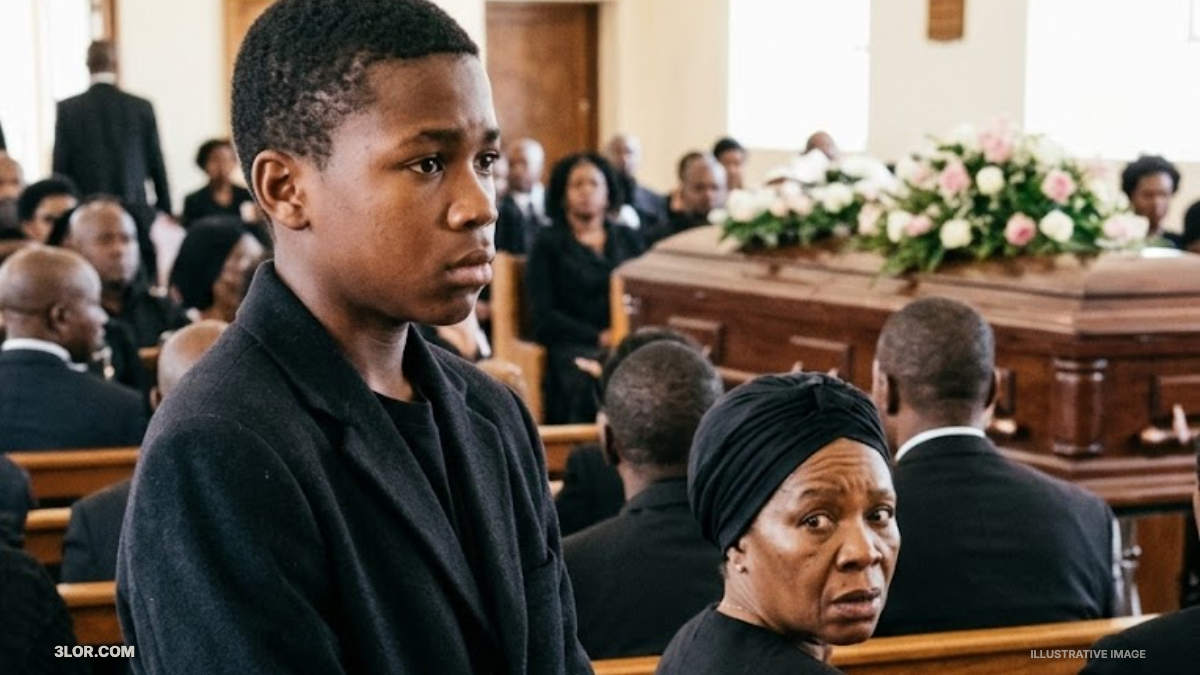
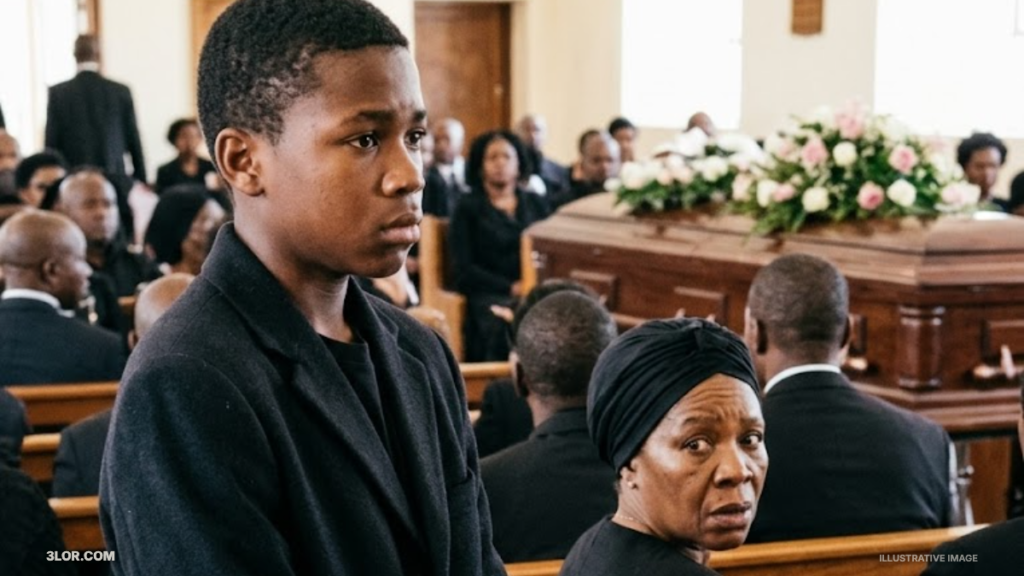
The boy didn’t blink. Up close, under the amber sconces of the parlor, the resemblance was undeniable. He had Daniel’s wide jaw, the slight crook in the bridge of his nose from a high school football fracture, and the exact amber flecks in his dark eyes.
“My mother took it,” the boy said. His voice was soft, cracking slightly at the edges, but firm. “Last April. Before she went into the hospice wing at Piedmont.”
A cold weight settled into my chest, heavy and suffocating. “Your mother?”
“Clara,” he whispered. “Clara Evans.”
The name didn’t ring a bell. I had known Daniel since we were twenty-two. We shared a joint checking account, filed joint returns, and spent every major holiday hosting my sisters and his cousins. I managed the household bills; he handled the property insurance and the yard. There had never been an unexplained withdrawal, never an odd late-night phone call.
“My name is Marcus,” the boy continued, reaching into the inner breast pocket of his coat. This time, he didn’t pull out a photograph. He pulled out a worn, tri-fold leather wallet—Daniel’s old spare wallet, the dark brown one that had gone missing from the hall closet three years prior. “He gave me this when I turned fourteen. He told me that if his heart ever gave out, I had to come directly to you. He said you were fair. He said you were the only person left who could open the safety box.”
Behind me, Daniel’s brother, Marcus senior, was laughing quietly with an insurance adjuster near the guest register. Neither of them was looking my way.
“Marcus,” I said, trying to anchor my hands against the polished edge of the casket. “Daniel and I don’t have a safety deposit box. We have a fireproof safe in the garage. Everything we own is in probate.”
Marcus shook his head once, deliberate and calm. “Not the bank on Maple Street. First Georgia Community Bank. The commercial branch on Fulton Industrial Boulevard. Box 414. He said the key was kept inside the spare tire compartment of his Buick.”
My breath caught. Daniel hadn’t driven the Buick in eighteen months. It was parked behind the toolshed under a blue tarp, supposedly waiting on a rebuilt alternator that he never got around to ordering.
I didn’t stay for the reception at the church hall. I told my sister I had severe migraines from the crying, handed her the funeral guestbook, and got into my Honda. I drove straight back to the quiet, empty house on Oakridge Lane.
The silence inside was deafening. Daniel’s muddy gardening boots were still sitting on the rubber mat by the back door. His reading glasses were folded neatly beside yesterday’s unread newspaper.
I didn’t turn on the kitchen lights. I grabbed the heavy flashlight from the pantry, walked out into the cold dusk, and pulled back the tarp covering the 2011 Buick. The latch on the trunk squeaked with disuse. I hauled out the carpet mat, unscrewed the plastic wing nut holding down the compact spare tire, and reached underneath.
Taped to the recessed steel floor was a magnetic key case. Inside lay a single, narrow brass key stamped with the numbers 414 and a business card for an estate attorney named Julian Vance.
The next morning at 9:15 AM, I sat in a windowless consultation room at the Fulton Industrial branch of First Georgia Community. The branch manager, a gray-haired woman named Mrs. Gable, slid a heavy, oblong metal box onto the mahogany desk, placed the brass key next to it, and stepped outside, pulling the heavy door shut behind her.
My hands were steady now. The grief had hardened into something cold, clinical, and precise.
I lifted the lid.
There were no stacks of illicit cash. No love letters written in secret.
The box contained three distinct legal folders, neatly labeled in Daniel’s tight, engineer’s handwriting:
A Certified Deed of Trust (Dated May 14, 2018):
A two-bedroom brick bungalow on Cascade Road in Atlanta, purchased outright for $182,000. The deed named Daniel as the trustee and Marcus Evans as the sole beneficiary upon reaching the age of twenty-one.
A Binding Child Custody & Paternity Settlement:
Filed under seal in Fulton County Superior Court twelve years ago. It stated clearly that Clara Evans and Daniel had conceived Marcus during a four-month period in 2008 when Daniel and I had briefly separated and lived in different counties. Daniel had legally acknowledged paternity on day one. But the crucial clause was on page four: Clara had agreed never to seek formal court-ordered support or contact my household in exchange for Daniel directly funding an irrevocable private trust for the boy’s education and living expenses.
An Irrevocable Commercial Escrow Account (First Georgia Wealth Management):
The balance sheet printed four days before Daniel’s heart attack showed an active principal balance of $314,200. The funds hadn’t come from our family income. The attached account history proved the money had been generated entirely from the sale of Daniel’s late grandfather’s timber acreage in Clinch County—land he had inherited as separate property before we were married and had never brought into our marital estate.
Beneath the folders lay a handwritten letter in a sealed envelope with my name on the front: Eleanor.
I opened it.
Eleanor,
If you are reading this, my heart finally quit, and Marcus came to find you. I know the fury you must feel right now. You have every right to curse my memory and walk away from this room.
I didn’t tell you because I was a coward. In 2008, when we almost divorced, I made a choice that changed another life forever. When we got back together, I swore I would fix our marriage and protect our peace. Clara never wanted my marriage to end, and she never wanted your life disrupted. But she was sick for five years, Eleanor. Cancer took her six months ago.
I kept Marcus housed, fed, and enrolled in school, but I kept him hidden in the dark like a shame I couldn’t admit to. He didn’t ask to be born into a secret. He didn’t do anything wrong. Everything in our home, every dollar we built together on Oakridge, belongs to you. It is entirely yours. But this account and the house on Cascade belong to him.
The trust document names you as the successor executor. Not my brother. Not a court-appointed stranger. You. Because in twenty-eight years, you are the only person whose integrity never wavered. Don’t punish the boy for the sins of a man who loved you both, but couldn’t face his own truth.
Daniel.
I sat in that cold room for forty minutes, reading every clause, checking every date, examining every stamp.
The brother, Marcus senior, had already called my home phone twice that morning asking about the Buick and whether Daniel had left any tools or equipment not listed in the standard will. He was already circling the estate like a vulture, looking for scraps. If he had found this box, he would have dragged the boy through court, challenged the trust, and drained the account in legal fees just to claim a percentage.
I took the folders, placed the deed and the trust documents back into my purse, locked the empty box, and handed the key to Mrs. Gable.
At 2:00 PM, I drove to the brick bungalow on Cascade Road.
The lawn was neatly cut. A small bicycle with flat tires was leaned against the porch rail. Marcus opened the door before I even knocked. He was still wearing the dark funeral trousers and a plain gray sweatshirt. Through the screen door, I could see an older woman, Clara’s elderly sister, sitting on a worn sofa sorting through prescription bottles.
Marcus looked at my face, trying to read what was coming. His shoulders were braced, expecting an eviction notice or the scream of an angry widow.
I didn’t yell. I pulled the Cascade Road deed from my bag and held it out through the open screen door.
“The house is yours,” I said, my voice steady, leaving no room for argument. “The taxes are paid through next December. The trust fund for your college tuition is fully intact at First Georgia Community Bank.”
Marcus took the paper. His eyes moved down the lines of text, his hands shaking just as they had at the funeral home. “You’re… you’re not fighting it?”
“Daniel gave you his word,” I replied, looking the boy dead in the eyes. “He was a coward about the truth, Marcus. But he wasn’t a liar about his debts. You don’t owe me an apology, and I don’t owe you a family. But as long as I am the executor of this trust, nobody—not his brother, not an attorney, and not a creditor—is touching a single dime of what he set aside for you.”
He swallowed hard, tears finally spilling over his lashes. “Thank you, ma’am.”
“Make sure you finish high school,” I said, turning back toward my car. “And keep the porch light on.”
Editorial Note: This account is published as a narrative exploration of family estate execution, private trust disputes, and legal fiduciary duties. Key names, identifying locations, and precise corporate identifiers have been altered to protect the privacy of the surviving family members.