Every November, the brass hinges on the front screen door of the old farmhouse outside Brookville, Pennsylvania, only swung wide once for Dane—usually around eleven in the morning, carrying a grocery-store pumpkin pie in a plastic clamshell and followed by his wife, Charla, in spotless city boots. By two in the afternoon, before the roasting pan had even soaked in the sink, their taillights were already disappearing down the gravel lane toward Pittsburgh.
This Thanksgiving, however, Dane arrived with a thick manila envelope resting on the passenger seat of his sedan, and Charla didn’t even step onto the porch before walking straight out to the pasture fence to snap photos of the pond and the weathered red barn.
For thirty-two years, Olive had kept that eighty-acre farm alive with her own two hands. After two years at business school in Clarion, she had returned home and worked the night shift setting type at the county newspaper for thirty-six years so she could run the farm during the daylight hours—baling hay on the back forty with her mother’s vintage tractor, paying the Jefferson County property taxes out of her own checking account, and mending barbed wire whenever the cattle pushed through. Even after her husband passed away—leaving his faded canvas barn coat still hanging on the peg inside her mudroom across the lane—Olive walked over to the main house every morning at six to cook oatmeal and sort blood-pressure pills for her ninety-three-year-old father, Arthur.
Dane, meanwhile, hadn’t mended a fence post since 1979 and limited his family duties to two five-minute phone calls a year.
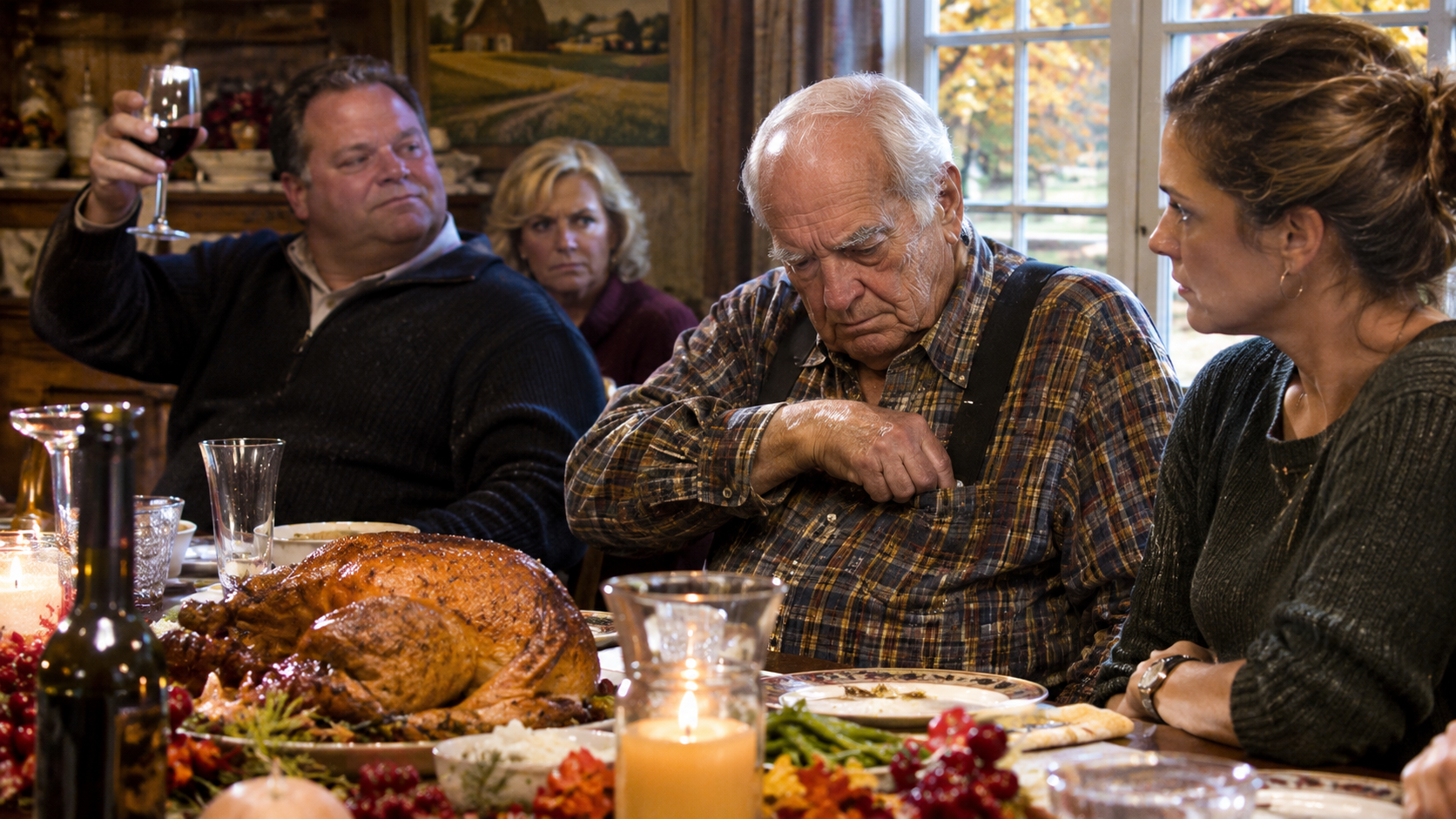
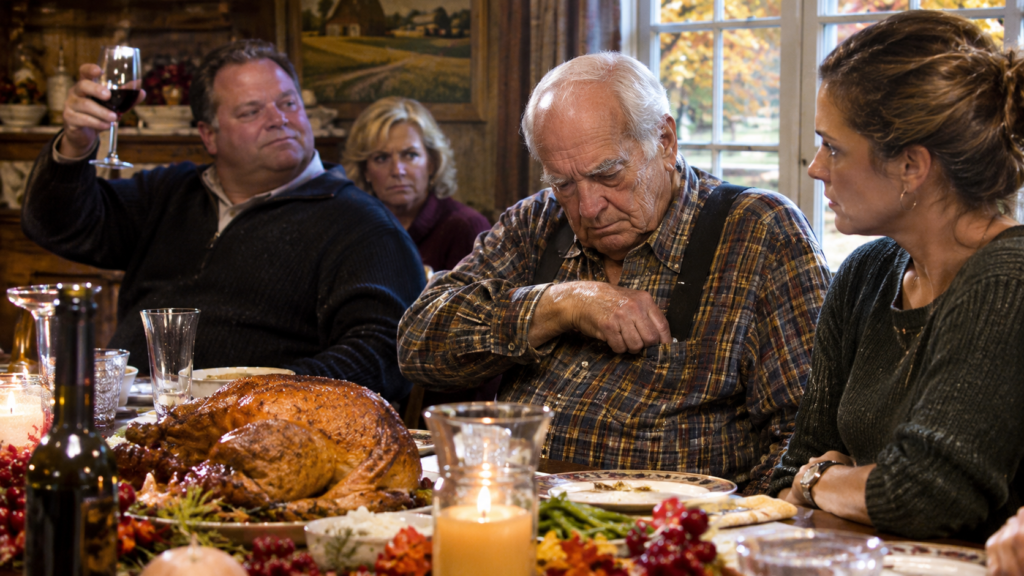
At noon, the family sat down around the linen tablecloth Olive’s mother, Evelyn, had embroidered decades earlier: Arthur at the head of the table, pushing his peas silently around his plate; Olive beside her daughter, Laurel, and her two grandsons; and Dane and Charla across from them, trading knowing glances between bites of turkey.
Just before dessert, Dane stood up and tapped his water glass with a butter knife. He announced with a broad grin that Arthur had signed the deed to the farm over to him the previous week—and that a commercial housing developer had already agreed to pay $900,000 for the acreage. Raising his glass toward Olive, Dane informed her she had until spring to find somewhere else to live, while Charla added sweetly that they would give her a few weeks to clear her “junk” out of the smaller cottage across the lane.
Under the table, Laurel gripped her mother’s wrist, whispering urgently not to make a scene in front of the boys or give Brookville gossip for the winter. Olive looked at her father, who kept his eyes fixed on his plate, and felt thirty-two years of quiet sacrifice press against her ribs.
Because there was one legal fact Dane had never bothered to learn—mostly because he had claimed he was “too busy at the office” to attend the reading of their mother’s will in 1994.
Before Evelyn died, she had deeded the entire eighty-acre farm solely to Olive in fee simple, granting Arthur a strict life estate—the legal right to live in the main farmhouse for the remainder of his days, with zero authority to sell, mortgage, or transfer a single square inch of the land. At the time, Arthur had begged Olive to keep the arrangement quiet so it wouldn’t crush Dane’s pride, assuring her the boy would never actually try to push his own sister off the ground she worked.
Looking across the table at Charla’s smug smile, Olive set her glass of apple cider down gently. “Daddy,” she said, her voice steady in the quiet room. “Are you going to tell them, or should I?”
Dane let out a short laugh, asking what there was to tell. Slowly, Arthur laid down his fork. His weathered fingers trembled as he reached into the breast pocket of his flannel shirt, bypassing his spectacles to pull out a soft, yellowed envelope whose corners had worn smooth from three decades of folding.
Olive recognized her mother’s neat cursive immediately. Arthur unfolded the single sheet of stationery, slipped on his reading glasses, and cleared his throat.
“Your mother made me write this down in front of her lawyer in September of ninety-four,” Arthur said, looking straight at his son for the first time all afternoon. “She told me if I ever stayed silent while you tried to take this place from your sister, I had to read it aloud at the table.”
In clear, uncompromising ink, Evelyn’s letter stated that she had witnessed firsthand which child stayed to care for the land and which child only showed up when there was something to take—confirming that Olive had held sole legal title to the entire farm since 1994, and that any deed Arthur attempted to sign was legally void under Jefferson County probate records.
Dane’s smile vanished. He reached abruptly for the manila envelope he had left on the sideboard, pulling out a quitclaim deed he had pressured Arthur into signing during a brief weekday visit when Olive was in town buying feed. “Wait a minute—Dad signed this in front of a notary! You can’t just—”
“A life tenant cannot convey title he does not hold, Dane,” Olive said calmly, reaching into her apron pocket and setting a certified copy of the 1994 recorded deed and title insurance policy next to the gravy boat. “You paid a notary to witness a worthless piece of paper. And if that developer already gave you earnest money, you’d better return his check before Monday morning unless you want to explain fraud charges to the county prosecutor.”
Charla stared from the yellowed letter to the county recorder’s stamp on Olive’s deed, her face flushing crimson as she realized the $900,000 windfall she had spent the morning photographing didn’t exist. Without touching the pie she had brought, she grabbed her purse, marched out the front door, and waited in the passenger seat while Dane stammered an apology to his father and hurried down the porch steps after her.
Once their sedan disappeared down the lane, the farmhouse grew peaceful again. Laurel let out a long breath, the boys asked for extra whipped cream on their pie, and Arthur reached across the corner of the table to pat Olive’s hand.
“Your mama always knew better than me, Olive,” he said softly.
Olive smiled, refilled her father’s coffee cup, and cut him the biggest slice of pie on the platter—knowing that come spring, the only thing moving onto the back forty would be the green tractor she had driven her whole life.
Editorial Note: While inspired by real-life family dynamics and property disputes, this story is a work of creative fiction written for entertainment purposes. Names, characters, and specific events have been dramatized.