These sometimes puzzling, almost ludicrous acts conceal a highly particular language. Furthermore, if your cat appears to ignore you before coming to rub affectionately against you, it’s possible that he considers you a full-fledged member of his territory. So, what do these attitudes actually mean? Let’s explore this interesting planet together.
He urinates standing up, tail wagging; it is not an accident.
When we find a small puddle of pee on a wall or piece of furniture, we frequently assume it is a mistake or a health issue. However, it is a form of communication. Contrary to popular opinion, marking territory is not limited to unneutered males; females and neutered cats can also do it.
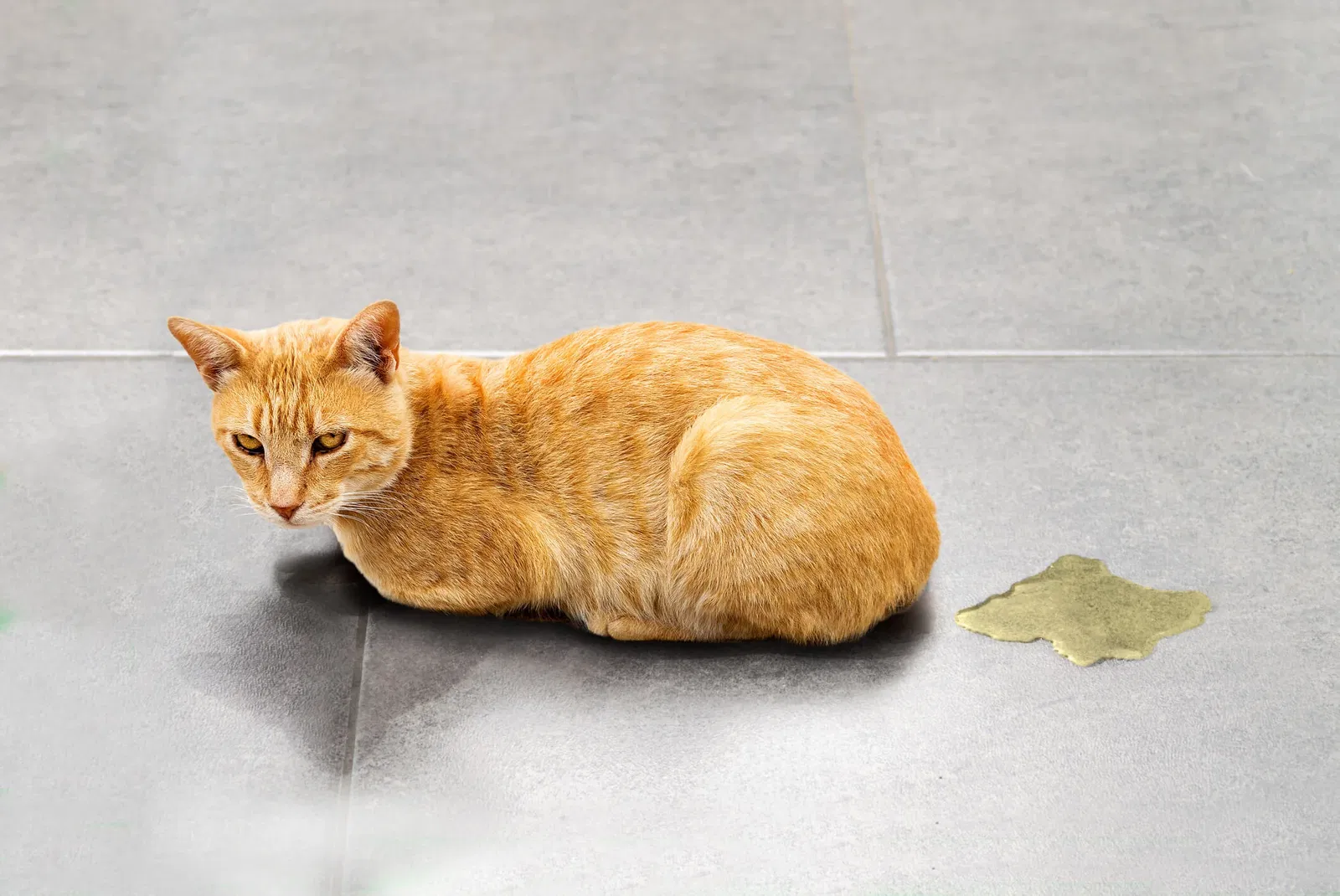
Consider a notice board on which a cat would place its smell “message.” This marking, which is often done high up, signals its presence to other cats, establishes boundaries, or indicates its emotional state. It may even mark again if it detects that an intruder has changed its signal.
Panting, saliva, and heat: How he cools himself
A panting cat? That’s an intriguing image. Unlike dogs, cats do not use their tongues to control their body temperature. However, when it is extremely hot, such as on a scorching afternoon in Marseille, some cats may pant to relieve the excess heat.
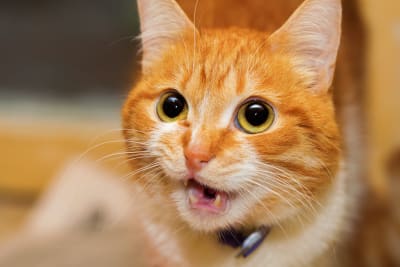
They also use another trick: licking their fur. The evaporation of saliva provides them with a short cooling effect, similar to rubbing a damp glove over your forehead in the middle of summer.
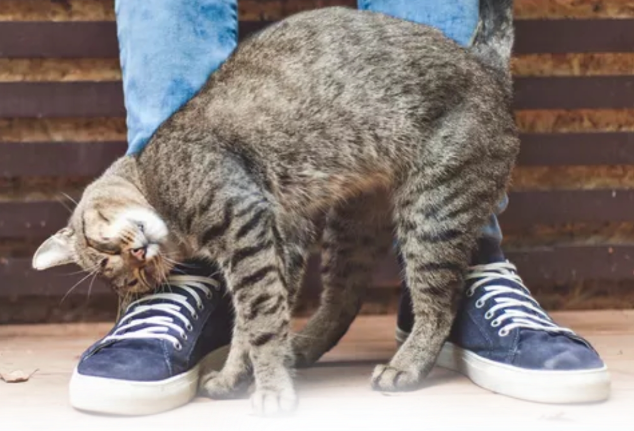
He rubs against your legs as a symbol of attachment.
Does your cat gently rub against your calves as soon as you arrive home? It is not only to meet you. This behavior is full with meaning: it mixes affection, acknowledgment, and… marking!
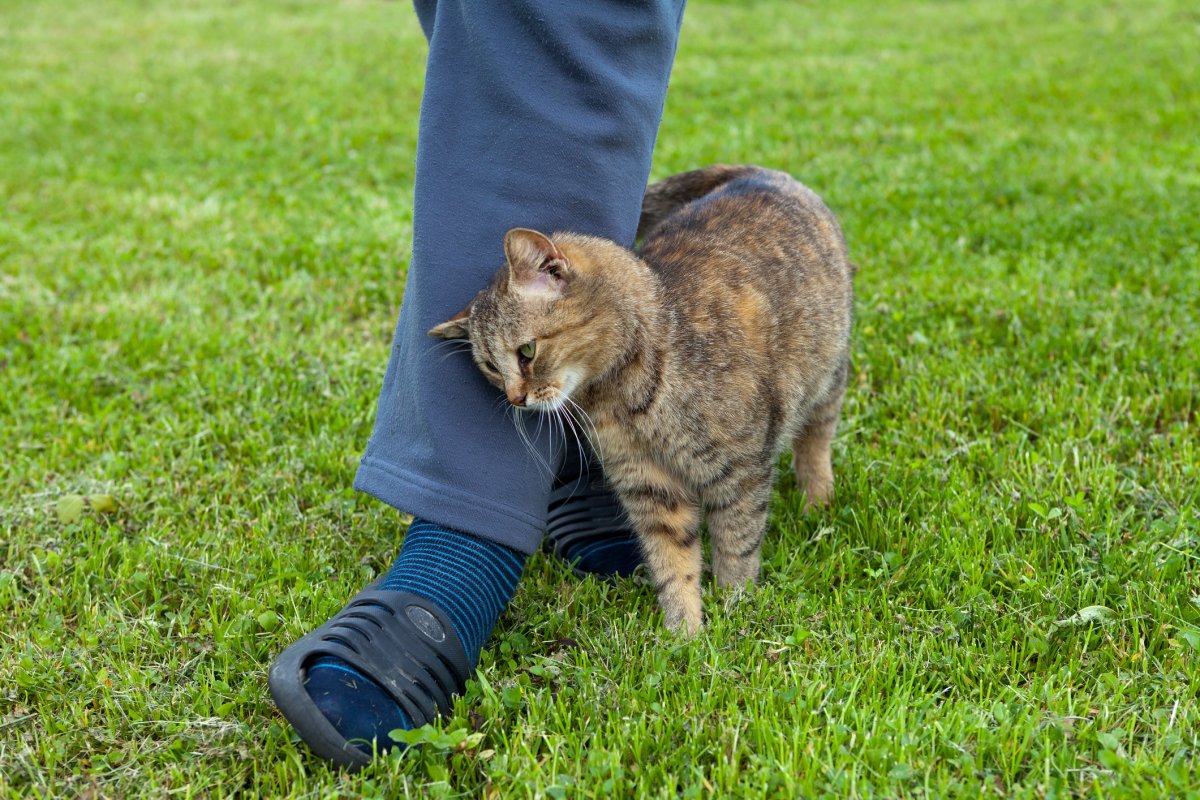
That’s because the parts he rubs against you—flanks, chin, and base of tail—are densely covered in pheromone glands. These invisible molecules constitute an olfactory identity card. You become the bearer of his scent, allowing him to communicate, “This human is part of my territory.”
Ears back and shifting eyes: it’s better to move away.
Does your cat have pinned-back ears, half-closed eyes, and a slight turn of the head? Be cautious: these are symptoms of an irritated or agitated cat. It’s their nice way of expressing, “Not right now, leave me alone.”
With whiskers pressed against the cheeks, you get a defensive cat who is more terrified than hostile. In this instance, be respectful of their space. This is not the time for cuddling.
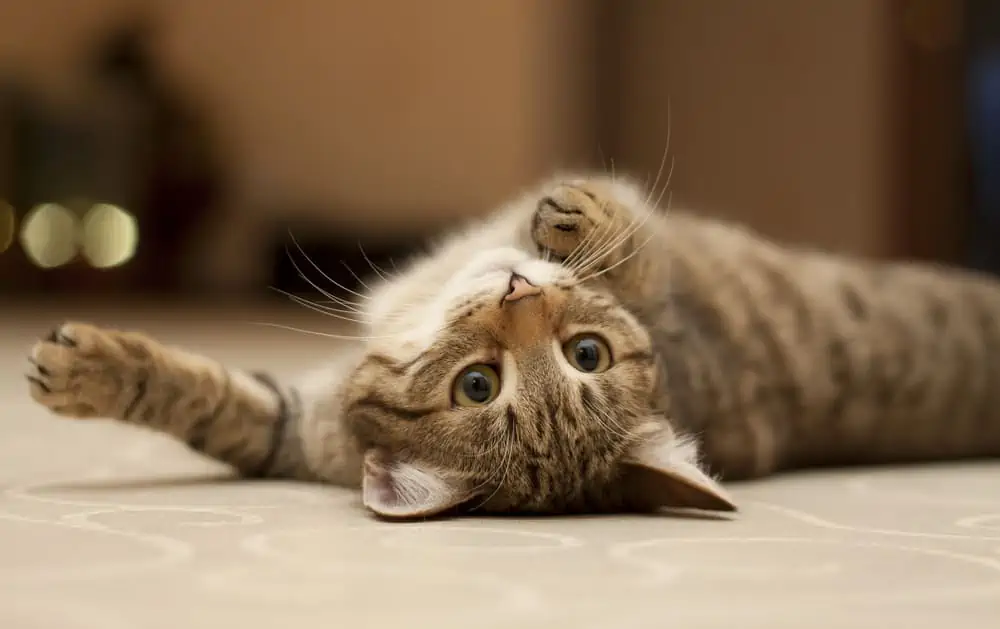
He stamps the ground before leaping: a hunter’s instinct
One final amazing activity is when your cat stops d3ad in its tracks, stares at a target (a fly, a toy, or a moving sock), and begins to stamp its front paws as if preparing for an Olympic jump. This “trembling” is not a malfunction; it is a period of intense focus preceding the attack.
His pupils dilate, and his ears twitch at the smallest sound. He examines the distance like a judoka would strategize. This ritual, acquired from his wild ancestors, demonstrates his inherent agility.
Our cats cannot speak, but they communicate constantly. Every gesture and attitude has meaning. Learning to decipher them strengthens your bond with them… and reveals an unexpectedly rich and delicate realm.