With its striking Arctic artwork, carefully chosen décor, and the steady, understated sound of a grand piano, the cocktail bar inside Greenland’s most luxurious hotel, the Hans Egede, has long projected an atmosphere of calm refinement. It is the type of place associated with quiet conversations and measured evenings, not public conflict or physical confrontations.
That expectation held true for years—until political ambitions from far beyond Greenland’s shores entered the public conversation.
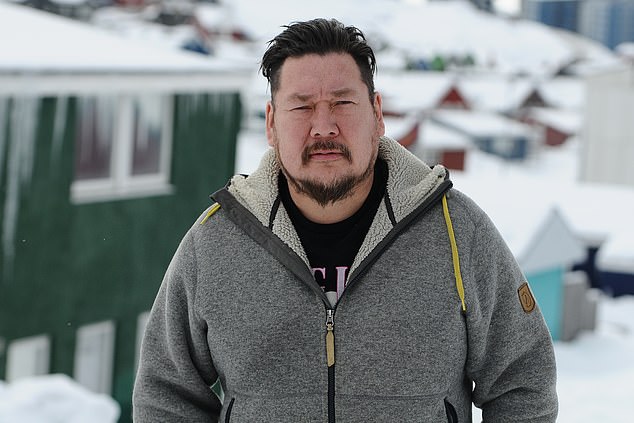
One evening in Nuuk, Jorgen Boassen, a local bricklaying company owner and outspoken supporter of the “Make Greenland American” movement, sat on a bar stool enjoying a beer. According to Boassen, the moment shifted abruptly. He says he was struck from behind with enough force to knock him to the floor, turning a quiet night into a violent encounter.
Boassen, 51, has a background in boxing and says he was able to defend himself during the altercation that followed. He describes the incident as part of a pattern rather than an isolated event. He maintains that since being recruited as a guide and informal ambassador for visiting Arctic envoys connected to Donald Trump, he has experienced repeated hostility.
When speaking with him one year earlier, Boassen’s pro-Trump social media posts were often met with humor or mild irritation from fellow Greenlanders. During that earlier period, Trump supporters handed out U.S. dollar bills and red MAGA hats on Nuuk’s icy streets, attempting to attract the interest of local teenagers. Many residents viewed the activity as temporary political theater rather than a serious proposal.
Boassen now says the atmosphere has changed dramatically. He believes tensions surrounding Greenland’s future have reached a level that feels deeply unstable. He describes the island as approaching internal conflict, using language that reflects fear rather than exaggeration.
The debate over Greenland’s status—remaining under Danish control or pursuing independence with closer ties to the United States—has intensified. Denmark has governed Greenland for more than three centuries, and discussions about sovereignty now reach deeply into private lives. Boassen claims families are experiencing severe divisions, with political beliefs creating lasting rifts.
He states that his own business has suffered consequences due to his views. According to Boassen, his bricklaying company was blacklisted, leading to its closure. He says other firms perceived as sympathetic to American involvement have faced similar treatment. He also claims he felt compelled to relocate temporarily to Denmark because people in Nuuk were reluctant to associate with him.
Boassen further says his personal relationship ended under the strain. He reports separating from his fiancée, who shared a home with him and their teenage daughter, due to strong opposition from her family toward his political stance. He also alleges that her departure from a senior role at Air Greenland followed shortly after his attendance at MAGA-related events in Washington.
“The Danes control most of the businesses here,” Boassen said, describing what he views as systematic pressure against those who favor cooperation with America. He characterizes the current environment as one shaped by fear and silence.
Greenland has one of the highest suicide rates globally, while serious violent crime remains uncommon. That context makes recent confrontations especially unsettling for residents. Boassen believes the island is entering a critical period as international attention increases.
Speaking publicly, Kuno Fencker, a pro-independence lawmaker, agrees that political divisions are deepening. He notes that families are struggling with internal disagreements. Fencker points to polling data showing broad support for independence, while acknowledging that independence does not automatically imply governance from Washington.
Fencker describes recent messaging from U.S. leadership as energizing and envisions a future arrangement similar to U.S. agreements with Pacific nations, allowing Greenland to retain sovereignty while permitting American investment and security cooperation. He argues that Denmark lacks the capacity to provide sufficient defense in the Arctic region.
Among ordinary residents, reactions remain mixed. Many express concern about cultural compatibility, environmental protection, and political tone. Greenland’s Inuit culture values restraint, subtlety, and collective responsibility. Loud rhetoric and aggressive posturing feel deeply unfamiliar to many locals.
Anxiety has also grown among residents such as Hedvig Frederiksen, a retired woman living near Nuuk International Airport. She describes heightened alertness whenever aircraft land, monitoring flight activity connected to the U.S. military base in northwest Greenland.
Hedvig’s views are shaped by personal and generational experience. She recalls stories of hardship under Danish administration, including exploitation of Inuit workers and deeply traumatic policies affecting young girls during her adolescence. These memories contribute to widespread support for independence among native Greenlanders.
Her daughter, Aviaja Fontain, supports full independence and expresses concern about cultural erosion under foreign influence. She speaks about preserving Greenland’s values and social norms in the face of external pressure.
At the same time, Hedvig acknowledges a long-standing respect for the American people, rooted in historical acts of support during World War II. Her perspective reflects complexity rather than certainty, shaped by survival, history, and hope.
As jets roar overhead and political debate intensifies, Greenland finds itself at the center of global attention. What unfolds next will be shaped not only by governments and leaders, but by families, communities, and the quiet resilience of those living on the world’s largest island.