For a long time, getting my nails done was something I genuinely looked forward to. It felt like a small but meaningful pause in the middle of a busy week—a chance to sit down, take a breath, and leave feeling a little more polished and confident. The atmosphere of the salon played a big part in that experience. The soft hum of tools, the quiet conversations, and the careful attention to every detail created a space that felt calm and welcoming.
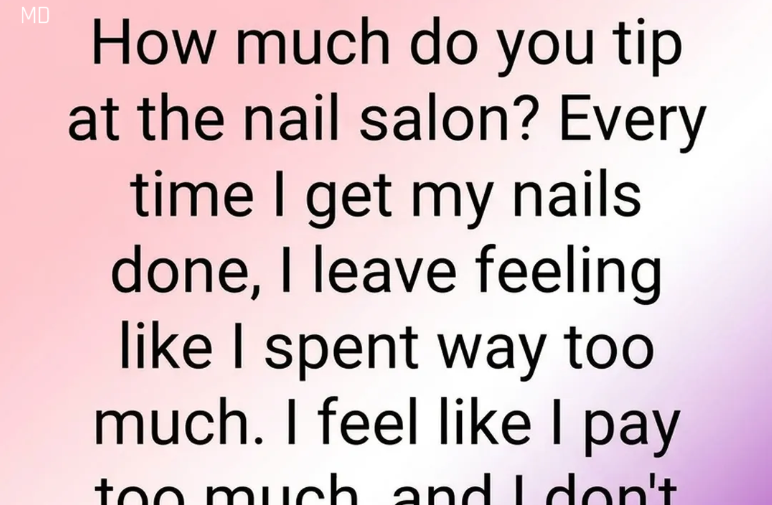
Over time, though, one question began to surface more often, especially as I approached the checkout counter at the end of each visit: how much should I tip?
In the beginning, I didn’t think about it very deeply. Like many people, I would add something extra as a way to show appreciation. It felt natural, part of the routine. Yet as the cost of services gradually increased, I started to feel less certain. I still wanted to recognize the technician’s effort and skill, though I also found myself wondering if I was spending more than I had planned each time I visited.
The technician worked with precision and care, shaping and polishing with steady focus. Every step required patience, attention, and a practiced hand. I respected that level of dedication. At the same time, the uncertainty about tipping began to affect the final moments of the visit. Instead of feeling relaxed and satisfied, I often found myself overthinking what to do.
Eventually, I decided to approach the situation differently. One afternoon, while my nails were being finished, I chose to ask directly. I asked the technician what most clients usually did when it came to tipping.
She responded with a warm smile and explained that there was no single expectation. Some clients leave around fifteen percent, others prefer twenty percent or slightly more, and some choose to round up the total in a way that feels comfortable for them. She emphasized that what mattered most was the intention behind the gesture. Appreciation, she said, was more important than any specific number.
Hearing that shifted my perspective in a meaningful way. I realized that I had been searching for a fixed rule when, in reality, tipping is a personal decision shaped by both gratitude and individual circumstances. It does not need to follow a strict formula to be meaningful.
From that point forward, I began to approach each visit with a different mindset. Instead of focusing on whether I was choosing the “right” amount, I focused on the experience itself. I allowed myself to enjoy the time, the care, and the result without letting uncertainty take over the moment.
A tip became what it was always meant to be—a simple expression of appreciation for the time, effort, and attention provided. It no longer felt like a source of stress or hesitation. Instead, it became a natural part of the interaction, guided by what felt reasonable and sincere.
This change also made me more aware of the value of open communication. Asking a simple question created clarity and removed the pressure I had been carrying. It reminded me that many situations become easier when approached with honesty and respect.
Over time, my visits to the salon returned to what they had always been meant to represent: a small break in the day, a moment of care, and a chance to step away from routine responsibilities. The experience felt lighter, more enjoyable, and more aligned with the reason I had started going in the first place.
Sometimes, the most helpful insights come through simple conversations. There is no need for rigid rules when understanding and flexibility can guide decisions more naturally. By shifting focus from uncertainty to appreciation, the experience became balanced again—both for me and for the person providing the service.
In the end, it wasn’t about finding a perfect answer. It was about finding a comfortable approach that respected both the service and my own perspective. And in that balance, the entire experience felt more genuine and rewarding.