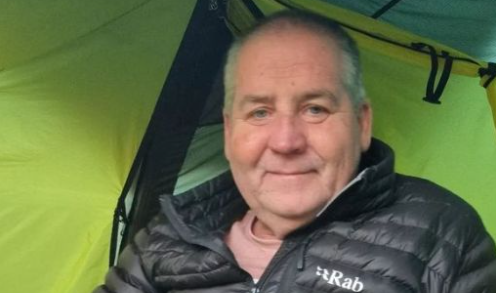
If you’d told me a few years ago that my favorite place in the world would be a little yellow tent, I probably would’ve laughed. Back then, everything was deadlines, meetings, noise—just constant hustle. I’ve got a family I love, but somehow I always felt half-there, distracted by everything and nothing.
Then, after my youngest moved out, something just snapped. I bought a used hiking pack and started wandering. At first, it was just weekend trips, but those weekends stretched longer and longer. Eventually, I realized my happiest moments were those mornings waking up to birdsong, sipping instant coffee from a plastic mug, wrapped in my sleeping bag as the sun cut through the fog.
So, I made a choice. Now, I travel alone. My tent is basically my address. Some days I hike ten miles, others I just read by a river, or talk to whoever passes by. There’s no schedule—no boss, no meetings, no constant reminders popping up on my phone.
My family gets it, mostly. I see them a few weeks every year, usually when the weather turns or I’m craving a proper roast dinner. My daughter worries, my son jokes that I’m a “hermit with Wi-Fi” (he’s not entirely wrong).
But honestly, I’ve never felt more at peace.
I didn’t expect it to feel this way. There’s a certain kind of clarity that comes with stepping away from the noise, from the expectations. And I think that’s what my family doesn’t fully understand. It’s not that I don’t love them. I do, more than anything. But somewhere along the way, I lost myself in the rush to please everyone, to be there for every birthday, every event, every phone call. I was always “present,” but not truly present. And when my youngest moved out, it felt like the last piece of the puzzle clicked into place—like I could finally breathe again.
At first, I wasn’t sure how it would work. I’d been so used to the comfort of my home, the familiarity of a real bed, the warmth of a kitchen full of my family’s laughter. But then something shifted. The simplicity of living in the wilderness, in that little yellow tent, made everything feel lighter. I didn’t need much to feel content. A warm fire, a hot meal, the sound of the wind rustling the trees—it was enough. And over time, I started to realize that I didn’t need the approval of everyone around me to feel like I mattered.
There’s something profound about solitude. Not loneliness, mind you, but solitude—the kind where you are alone with your thoughts, your dreams, and your soul. It’s in those quiet moments that I’ve done my best thinking. It’s in the silence of the forest that I’ve come to understand who I really am, beyond the titles of “mother,” “wife,” or “employee.”
I remember one morning, sitting by the fire with the sun rising over the mountains, I thought about how I got here. How, in my 40s, I’d found a new purpose in life, one that wasn’t tied to any job or role that the world had placed on me. It was just me, the mountains, and the freedom to choose my path every single day.
But as much as I found peace in the simplicity of it all, I wasn’t immune to guilt. When I left, I felt like I was abandoning my family. They didn’t say it outright, but I could see it in their eyes when I would come back for the holidays or a visit. There was a sadness, a feeling that maybe I was making a mistake. My daughter, in particular, was always asking if I was “coming home for good.”
And for a while, I wondered if maybe they were right. Maybe I was running away from something—some deeper issue I hadn’t yet faced. But the more I traveled, the more I realized something important: this wasn’t running away. This was finding myself again. It was reconnecting with the parts of me that I had lost touch with over the years.
I’ll admit, there were days when I missed the chaos of family life, when I felt the sting of missing out on birthdays or family dinners. I missed their voices, their laughter, their arguments over the last slice of pie. But then, I’d sit by the fire, watch the stars, and remember why I left—to be my own person again. To rediscover who I was, independent of everyone else’s expectations.
A year into my new life, I found myself sitting in a café in a small mountain town when a stranger sat down beside me. She looked to be in her 60s, with silver hair and the kindest eyes I’d ever seen. We struck up a conversation, and it turned out that she had lived in the same way I was living now—alone, traveling from place to place, finding peace in solitude.
She told me her story—how she had spent decades in a busy corporate job, raising kids, managing a household, and then one day, when she turned 50, she realized that she had lived someone else’s dream, not her own. She told me that she, too, had struggled with guilt at first. But over the years, she’d come to understand that she wasn’t abandoning anyone by living the life she wanted. Instead, she was teaching them how to live more freely. And, as much as she loved them, her life wasn’t meant to be defined by them.
That conversation was a turning point for me. I realized that I wasn’t selfish for seeking this life. I wasn’t running away from my responsibilities; I was just giving myself permission to live authentically. I was doing it for me, but also for them. Because by living the way I wanted, I was showing my children and my family that it’s okay to take a step back and reclaim your life when it’s time.
But then came the twist—something I never saw coming. My daughter, who had been the most concerned about me living alone, came to visit me in the mountains one weekend. She had been hesitant at first, but she told me she wanted to see what all the fuss was about. She wanted to understand why I had chosen this life.
I took her on a hike, showed her the little camp I had set up by the river, and we spent the weekend together, just like old times—cooking over a fire, talking late into the night, and laughing at the silliest things. But the most surprising part? She admitted something that shocked me.
“I get it now, Mom,” she said, her eyes softening. “I see why you left. It’s not about abandoning us. It’s about finding something for yourself. And honestly? I think I need to do the same.”
She had been running herself ragged trying to meet everyone’s expectations—her job, her friends, her partner. She told me that, after spending time with me, she realized she had lost touch with herself, just like I had years ago. And it was in that moment that I understood something important: by living the life I had chosen, I wasn’t just finding peace for myself—I was helping my family see that they, too, could choose their own paths, free from the weight of other people’s desires.
The true reward in all of this came not just from the solitude, but from the way it impacted my family. By carving out my own space in the world, I had shown them how to live with intention, how to make choices that put their own happiness first. It was a gift I never expected to give, but one that meant the world to me.
As time passed, my family began to visit me more often. My daughter, inspired by my journey, decided to take a leave of absence from her job and travel for a few months. My son, the jokester, started to join me for weekend hikes, laughing the whole way as we stumbled over rocks and slipped in the mud. Slowly, our relationships began to shift—not in the way I had originally feared, but in a way that felt more authentic, more real.
The karmic twist in all of this? By taking the leap and choosing to live my own life, I unknowingly gave my family the permission they needed to do the same. It wasn’t selfish; it was transformative.
So, if you’re feeling the pull to step away from the expectations of others, to live a life that feels right for you—go for it. You never know how it might change not just your life, but the lives of those around you. It’s not about running away. It’s about finding the courage to run toward something better for yourself.
And if you know someone who could use a little encouragement to follow their own path, share this with them. Let’s all remember that it’s okay to take a step back and live for ourselves every once in a while.