I was sixty-five years old when I finally used the debit card my ex-husband gave me on the day our divorce became official.
For nearly four years, it remained untouched inside a dusty shoebox at the back of my closet.
Not because I had forgotten about it.
Because I could not bring myself to look at it.
Some nights, after counting coins to purchase groceries, I would take out the box and stare at the card.
Other nights, after cleaning offices until my back ached with pain, I would hold it in my hand and wonder how thirty-seven years of marriage had ended with a piece of plastic and a four-digit PIN.
Then I would put it away again.
Because to me, it was not money.
It was the last thing Bob ever gave me.
And at the time, it felt like something I did not want to accept.
My name is Linda Harper.
For most of my life, I thought my story was straightforward.
I married my high school sweetheart.
We raised two children.
Built a home.
Argued about bills.
Celebrated birthdays.
Survived difficult years.
Nothing extraordinary.
A long marriage built on ordinary days.
Then, six weeks after our thirty-seventh wedding anniversary, Bob sat across from me at our kitchen table and calmly asked for a divorce.
There was no affair.
No dramatic betrayal.
No explosive argument.
That was almost more difficult to accept.
I kept waiting for a clear reason.
A substantial one.
He never provided it.
“It is what I need to do,” was all he said.
The weeks that followed felt unreal.
Our daughter, Chloe, begged him to explain.
Our son, Jake, stopped answering his calls.
Friends chose sides.
Family members whispered.
Meanwhile, Bob remained strangely calm.
Looking back, I realize something was different about him.
He had lost weight.
His hands trembled occasionally.
There were dark circles beneath his eyes.
At the time, I assumed it was stress.
I did not know those were signs.
I did not know he was already carrying a secret that would eventually explain everything.
The divorce was finalized in a Seattle courthouse on a gray November morning.
When the paperwork was complete, Bob handed me a debit card.
“Please keep this,” he said.
I stared at it.
“What is it?”
“A personal account.”
“I do not want your charity.”
His expression tightened.
For a moment, I thought he might finally explain everything.
Instead, he said, “Use it if you ever need to.”
Then he turned and walked away.
That was the last time I ever saw him.
Three months later, Bob moved to Oregon.
Six months after that, he stopped answering nearly everyone.
Even Chloe and Jake.
The few times they reached him, he claimed he was traveling.
Busy.
Tired.
Eventually, the calls became less frequent.
Then they stopped altogether.
Ten months after our divorce, an attorney contacted our family.
Bob had died in hospice care.
Stage-four pancreatic cancer.
The diagnosis had come shortly before the divorce.
By the time anyone outside his doctors knew, treatment options were already limited.
According to the hospice records, Bob had specifically instructed staff not to contact us until after his death.
At first, I was furious.
Then I was devastated.
Then I was angry again.
Because even knowing he had been dying did not answer the question that haunted me.
Why leave?
Why make us believe he had abandoned us?
The attorney offered no explanation.
Only a short note from Bob.
I’m sorry.
That was all it said.
For years afterward, life became a struggle.
I rented a small room above a garage.
Worked every job I could find.
Cleaned houses.
Stocked shelves.
Scrubbed floors.
The debit card remained inside the shoebox.
Unused.
My children offered help whenever they could.
I accepted some.
Refused most.
I told myself I was protecting my independence.
The truth was more complicated.
Part of me wanted to suffer.
Because suffering kept the anger alive.
And anger felt easier than grief.
Then one summer afternoon, nearly four years after Bob’s death, I collapsed while carrying groceries.
The doctor was direct.
“If you continue living like this, you’re going to end up back here.”
That night I sat alone in my apartment.
At midnight, I opened the closet.
At twelve-fifteen, I opened the shoebox.
At twelve-twenty, I finally admitted I was tired.
Tired of struggling.
Tired of being angry.
Tired of surviving.
The next morning, I went to the bank.
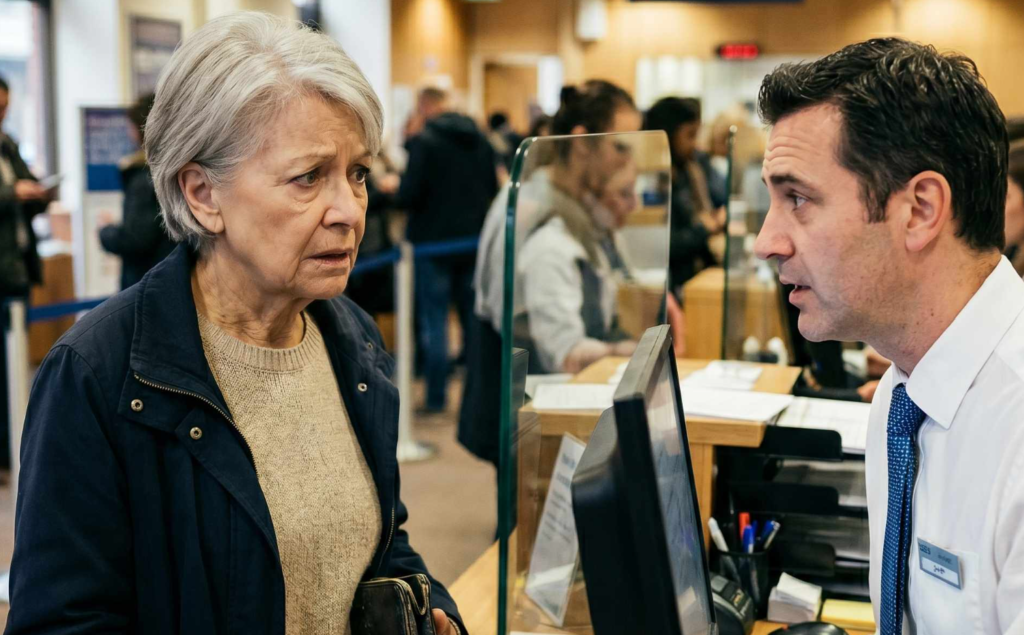
The teller checked the account.
Then she frowned.
“There are special instructions attached to this account.”
My stomach tightened.
“What kind of instructions?”
She handed me a phone number.
“An attorney manages the trust connected to it.”
Trust.
The word meant nothing to me at first.
An hour later, I was sitting across from a lawyer named Michael Harris.
The moment he heard my name, he nodded.
“I’ve been expecting this day.”
He opened a file cabinet and removed several folders.
Then he slid a statement across the desk.
I looked down.
And nearly stopped breathing.
The trust contained more than eight hundred thousand dollars.
My hands started shaking.
“There has to be a mistake.”
“There isn’t.”
“But Bob wasn’t wealthy.”
The lawyer smiled sadly.
“Actually, he was.”
Then he explained.
Five years before his diagnosis, Bob had sold his ownership share in a construction company he helped build.
Most of the proceeds had gone into investments.
When he learned he was dying, he transferred nearly everything into an irrevocable trust established solely for me.
“He wanted to make sure you were financially secure for the rest of your life.”
I stared at the papers.
Four years of struggle.
Four years of exhaustion.
And the means to escape it had been there all along.
The lawyer seemed to read my thoughts.
“He believed you would use the account immediately.”
A painful laugh escaped me.
“Then he didn’t know me as well as he thought.”
“No,” the lawyer said gently.
“I think he knew you exactly that well.”
Then he handed me a sealed envelope.
My name was written across the front in Bob’s handwriting.
I opened it.
And for the first time in years, I heard his voice again.
Not literally.
But every word sounded like him.
Linda,
If you’re reading this, then either you’re finally being practical, or your stubbornness has lost a battle with reality.
I smiled despite myself.
That was Bob.
The letter continued.
He explained that when doctors diagnosed the cancer, they warned him treatment would likely fail.
Even with insurance, the costs would be enormous.
The company sale had left him financially secure.
But a prolonged medical fight could consume much of what we had built.
More importantly, he remembered caring for his father during a long illness.
He remembered watching his mother sacrifice everything.
Her health.
Her friendships.
Years of her life.
He couldn’t bear the idea of me doing the same.
So he made a decision.
One he admitted might have been wrong.
He divorced me.
Not because he stopped loving me.
Because he loved me enough to believe I deserved a future that wasn’t defined by watching him die.
The next paragraph hit hardest.
I know I had no right to make that choice for you.
If I could apologize for only one thing, it would be that.
You deserved the truth.
You deserved the chance to decide for yourself.
The tears started then.
Because for the first time, he wasn’t defending himself.
He was admitting he might have failed.
And somehow that honesty mattered more than any explanation.
The letter ended with words I read three times before I could continue.
You were the best thing that ever happened to me.
Every good part of my life started with you.
I love you.
I always will.
I sat there crying long after I reached the end.
The lawyer quietly handed me another folder.
Inside were letters for Chloe and Jake.
Apologies.
Memories.
Stories they had never heard.
That evening, my children came over.
Together, we read every letter.
We laughed at old memories.
Cried over forgotten moments.
Argued about whether Bob had been brave or foolish.
In the end, we agreed on one thing.
He had been both.
For the first time, none of us saw him as a villain.
But neither did we see him as a saint.
We saw him as something far more human.
A frightened husband trying to protect the people he loved.
And making painful mistakes while doing it.
The following year changed everything.
I paid off debts.
Bought a modest home.
Started volunteering.
Spent more time with my grandchildren.
And eventually, I did something I never thought I’d do.
I forgave him.
Not because what he did was right.
Because carrying the anger had become heavier than putting it down.
On the fifth anniversary of his death, I visited our favorite diner.
The same diner where we’d shared countless breakfasts over three decades.
I sat in our usual booth and ordered coffee.
Rain tapped softly against the windows.
For a while, I sat there remembering.
Then a waitress approached.
“Excuse me,” she said.
“Are you Linda Harper?”
I nodded.
She smiled.
“I have something for you.”
She handed me a small envelope.
My heart stopped.
The handwriting on the front was unmistakable.
Bob’s.
Confused, I opened it.
Inside was a short note.
If you’re reading this, then you’ve made it farther than you think.
There’s one final gift waiting for you.
Not a secret.
Not a confession.
Proof that love can outlive a lifetime.
Ask for Eleanor.
I looked up.
Near the window, an elderly woman slowly stood and smiled at me.
And for the first time in years, I felt something stronger than grief.
Curiosity.
Because somehow, even after death, Bob still had one last story left to tell.