When we moved into our new home, we expected the usual adjustments that come with settling into a different environment. New streets, new routines, and new neighbors all take time to understand. At first, everything seemed normal, though it didn’t take long for one issue to stand out.
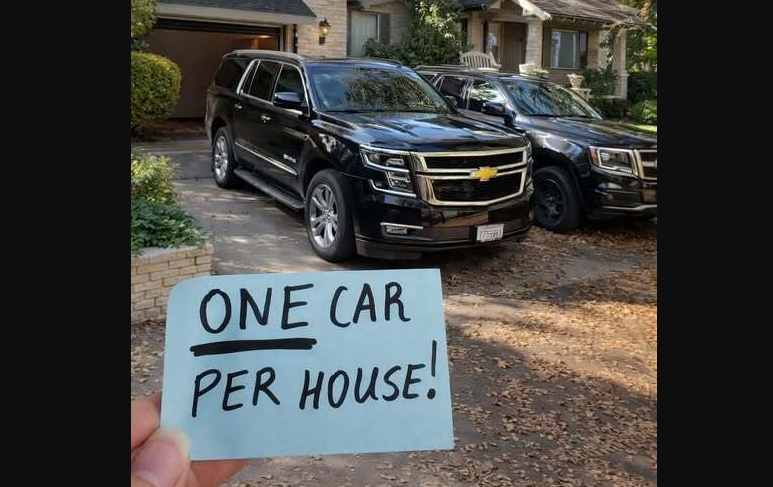
Our neighbor had strong opinions about parking. Even though there were no official restrictions on how many vehicles a household could have, she believed there should be a limit. Her expectations were not based on any written rule, though she acted as if they were firmly established.
The situation became more noticeable when we found a handwritten note placed on our windshield. The message was direct and left little room for interpretation. It demanded that we remove what she referred to as our “extra” car and included a warning about consequences if we did not comply.
We read the note and chose not to react immediately. Both of our vehicles were parked legally in front of our home, and there was no reason to believe we were doing anything wrong. At that point, it seemed like an overreaction that would likely pass on its own.
A few days later, the situation changed. Early in the morning, we were awakened by the sound of engines and metal moving outside. The noise was unusual enough to draw our attention immediately.
When we stepped outside, we saw both of our cars in the process of being attached to tow trucks. Nearby, our neighbor stood watching with a sense of satisfaction that suggested she believed she had resolved the issue.
She crossed her arms and spoke confidently, explaining that this was a lesson about following “the rules.” Her tone made it clear that she expected us to accept the situation without question.
I responded calmly, though I couldn’t hide a slight sense of disbelief. I pointed out that there had been a misunderstanding, one that would likely have consequences.
Both of our vehicles were part of a specific program that required special permits. These permits were clearly displayed, indicating that the cars were registered under guidelines that protected them from unauthorized towing.
The towing company, upon reviewing the situation more closely, recognized the mistake. They stopped the process and carefully detached the vehicles. The realization spread quickly among those present.
Our neighbor’s expression changed as she understood what had happened. The confidence she had shown earlier gave way to uncertainty. She admitted that she had not been aware of the details surrounding the vehicles.
I explained that situations like this require careful consideration before taking action. It is important to understand the circumstances fully rather than relying on assumptions.
The towing company left shortly after resolving the situation, and the street returned to its usual quiet state. What remained was a clear lesson about how misunderstandings can develop when expectations are not based on accurate information.
From that day forward, our neighbor’s behavior shifted noticeably. She no longer commented on parking or attempted to enforce her own ideas about how things should be handled. Interactions became limited, and the situation gradually settled into a more neutral routine.
Looking back, the experience highlighted how easily conflicts can arise over everyday matters. Parking, which might seem like a simple issue, can become complicated when different perspectives come into play.
It also showed that responding with clarity and patience can help resolve situations without unnecessary escalation. Rather than reacting emotionally, taking the time to explain the facts allowed the situation to correct itself.
In many cases, misunderstandings are not the result of intentional actions, but of incomplete information or assumptions. Addressing them calmly can lead to a better outcome for everyone involved.
The experience became a reminder that shared spaces require mutual understanding and respect. When those elements are present, even small challenges can be managed more smoothly.