What began as an ordinary lunch break unfolded into an experience she would remember for a long time. With limited time and a familiar routine, she reached for fresh ingredients and started assembling a simple salad.
Greens went into the bowl, followed by toppings chosen almost automatically. When she sprinkled what she believed to be quinoa across the leaves, nothing seemed unusual at first glance. The grains were small, brown, and blended easily into the mix, fitting the image of a healthy, quick meal prepared without much deliberation.
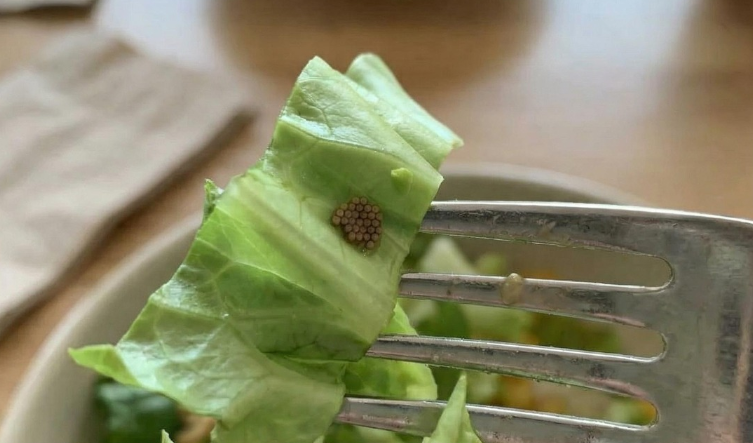
As she prepared to take a bite, a subtle sense of hesitation surfaced. Something about the appearance of the topping drew her attention. The particles appeared unusually uniform, scattered in a way that felt deliberate rather than random. She paused, fork hovering, and leaned closer to examine the salad more carefully.
That moment of awareness changed everything. What she initially believed was quinoa turned out to be clusters of tiny insect eggs attached to a single leaf of lettuce, closely packed and unmistakable once seen up close.
The discovery was deeply unsettling, and her appetite vanished immediately. She stepped back, set the bowl aside, and took a moment to steady herself. While the shock was real, food safety specialists note that situations like this can occur with fresh produce, particularly leafy greens grown outdoors.
Vegetables cultivated in open fields exist within natural ecosystems where insects are part of the environment. During harvesting and packaging, eggs or small insects can occasionally remain attached to leaves if washing and inspection steps are rushed or incomplete.
This type of finding does not automatically signal contamination or a serious health threat, especially when the food has not been eaten. In many cases, it points to produce that skipped thorough cleaning rather than unsafe farming practices. Fresh foods carry traces of the environments they come from, and that connection is often invisible until a moment like this brings it into focus. While unpleasant, such discoveries serve as reminders that natural foods are not manufactured in sterile conditions.
If an experience like this occurs while dining at a restaurant, food safety professionals recommend stopping the meal immediately and notifying staff in a calm, clear manner. Most reputable establishments take concerns seriously and respond with appropriate steps, such as replacing the dish, issuing a refund, and reviewing preparation procedures. These responses help maintain hygiene standards and ensure similar issues do not affect other customers. Clear communication allows restaurants to address problems promptly and responsibly.
When concerns are dismissed or handled carelessly, diners have additional options. Local health departments exist to oversee food safety practices and investigate reports related to hygiene and preparation standards. Reaching out to these authorities helps protect public health and encourages accountability. Many situations are resolved long before escalation becomes necessary, especially when staff respond with professionalism and care.
At home, preventing experiences like this begins with mindful food preparation. Even produce marketed as organic or pre-washed can still carry remnants from the field, including soil, small insects, or eggs. Packaging labels indicate reduced handling, not complete removal of every natural element. Taking time to separate individual leaves, rinse them thoroughly under running water, and inspect them closely adds an important layer of reassurance.
Some people choose to soak leafy greens briefly in clean water, gently agitating them to dislodge anything clinging to the surface. Others use salad spinners after rinsing to remove excess moisture while continuing to check each leaf. These steps may extend meal preparation slightly, yet they contribute to a greater sense of confidence when eating fresh foods. Developing these habits transforms routine cooking into a more intentional process.
Beyond safety, careful preparation deepens appreciation for where food comes from. Fresh produce travels through many hands and environments before reaching a kitchen. Recognizing that journey encourages respect for both the natural world and the effort involved in growing food. Awareness does not diminish enjoyment. It enhances it by allowing meals to be approached with confidence rather than assumption.
That unexpected discovery during lunch reshaped her habits moving forward. What began as a routine meal became a lesson in attentiveness, patience, and the value of slowing down. By paying closer attention to ingredients and preparation, everyday meals became more reassuring and enjoyable. Small pauses and careful observations often make a meaningful difference, turning an ordinary lunch into an experience that reinforces awareness, safety, and respect for the food we eat.