“Oh, I think it’s exactly the time,” I said quietly, stepping down off my front porch with the little pink spiral notepad still open in my hand.
Hugh looked between his wife’s pale face and my steady grip, his brow furrowing in confusion. “Marlee, what’s in that notebook? Why are you acting like you just saw a ghost?”
Marlee didn’t answer him. She lunged forward slightly, trying to snatch the notepad out of my fingers, her practiced, syrupy smile completely gone. “Give me that, Tressie. It’s private! You had no right going through my things!”
“You left it under the seat of my Chevy on Tuesday,” I replied calmly, turning the open page toward my son so he could see the neat, looped handwriting he had looked at on grocery lists and birthday cards for twelve years. “Read it out loud, Hugh. Your wife went to a lot of trouble planning how to handle me.”
Hugh took the notepad from my hand.
The morning air was crisp and quiet, broken only by the ticking of his truck’s cooling engine in the driveway. As Hugh’s eyes moved down the lined paper, the color slowly drained from his face, too.
What Was Written on the First Page
At the top of the page, underlined twice in blue ink, Marlee had written: Operation Mama — Budget & Childcare Breakdown.
Beneath it was a neat list of bullet points:
Tell her $700/mo is a “family discount” (covers our entire monthly car payment + utilities).
Do NOT mention we are canceling the daycare ($1,150/mo saved immediately).
Insist she watch all three kids M–F, 7:30–5:30 “to pull her weight” so she feels guilty saying no.
Keep her in the garage loft—if she has a real kitchen inside the main house, she’ll never leave.
If she complains about the stairs, remind her she has nowhere else to go on $1,480 Social Security.
Hugh stood frozen in the middle of my front yard, holding the pink notepad as if it had suddenly caught fire.
Beside him, the printed sheet of “House Rules” in its neat plastic sleeve slipped from Marlee’s fingers and fluttered down onto the grass.
“Marlee…” Hugh’s voice was barely a whisper. He looked up at his wife, then back down at the page. “You told me your mom was going to pay for the daycare deposit. You told me the $700 was just to cover the extra groceries and water bill.”
“Hugh, stop it, let’s get in the truck,” Marlee hissed, her cheeks burning bright red as she glanced nervously toward the street. “We’re not doing this out in the yard where the neighbors can hear!”
“There’s nothing left to load into your trailer anyway, Hugh,” I said, gesturing gently toward the empty porch behind me.
The Flatbed Around the Corner
Hugh blinked, looking past me through the open front screen door.
My living room was completely empty. The braided rug was gone. My late husband’s framed Army portrait was gone. Even the fern by the window had been moved.
“Mom?” Hugh asked, stepping closer, looking genuinely lost. “Where’s your furniture? Where are you going?”
Just then, the low rumble of a diesel engine echoed from the end of the block.
Around the corner came Mr. Crenshaw’s clean, dark-green flatbed truck, my oak dresser, my armchair, and my cedar hope chest strapped securely to the bed with bright yellow ratchet straps.
Mr. Crenshaw pulled smoothly up to the curb behind Hugh’s empty trailer, rolled down his window, and tipped his flat cap politely.
“Morning, Tressie,” he called out warmly. “Coffee’s still hot in the thermos if you’re ready to head uptown. Got your quilt tucked right behind the seat so it won’t catch any dust.”
“Thank you, Arthur,” I called back, feeling forty years of nursing-shift tiredness finally lift off my shoulders. “Just give me two minutes to say goodbye.”
The Keys Shaped Like a Hammer
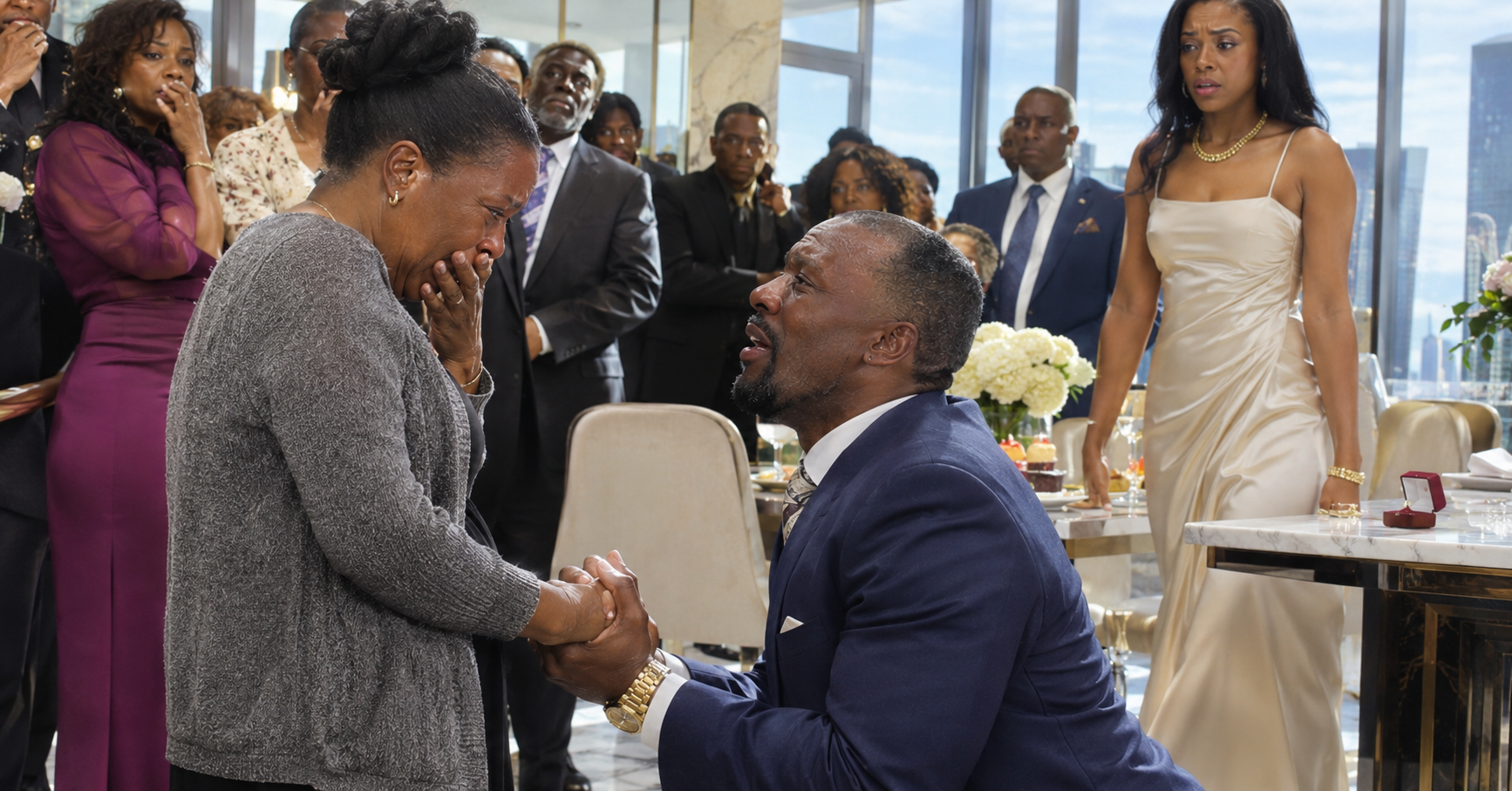
Hugh stared at Mr. Crenshaw’s truck, then back at me, his voice cracking slightly. “Mom, what is this? You’re moving in with Mr. Crenshaw?”
“I’m renting the upstairs apartment above his hardware store,” I corrected him gently, reaching into my cardigan pocket and pulling out the two brass keys on the small, hammer-shaped keyring. “Two real bedrooms, a sunny kitchen, inside stairs with a sturdy handrail, and windows big enough to let the morning breeze in. And he’s charging me five hundred and fifty dollars a month—with no chores attached.”
Hugh looked down at the pink spiral notepad still clutched in his hand. For the first time since we had sat at his kitchen table two weeks ago, he didn’t look at his phone. He didn’t look at Marlee. He looked at me—really looked at me—and saw the seventy-four-year-old mother who had worked double shifts at County General so he could go to college debt-free.
“Mom, I didn’t know about this list,” Hugh said quietly, his throat tight. “I swear to you, I didn’t know.”
“I believe you, honey,” I said, reaching up to pat his cheek. “That’s why I didn’t throw it in your face two days ago. You’re a good man, Hugh, and I love you and those three grandbabies more than my own life. Whenever you want to bring them by the shop on a Saturday morning for ice cream, my door is wide open.”
I looked over at Marlee, who was standing stiffly beside the passenger door of their truck, her arms crossed tightly over her chest, refusing to meet my eyes.
“I spent forty years taking care of people for a living, Marlee,” I said evenly, without raising my voice. “I’m retired now. If you need a full-time nanny, you’re going to have to pay one.”
I turned, walked down the front walk, and climbed into the passenger seat of Mr. Crenshaw’s truck.
As we pulled away from the curb and turned toward downtown, I looked once in the side mirror. Hugh was still standing in the middle of the yard, holding the pink notepad in one hand while the printed list of house rules blew across the grass behind him.
Editorial Note: This story was written with AI assistance. All names, places, and details have been changed to protect the privacy of the people involved.