My mom got pregnant with me in high school. My biological father bailed the same day she told him. No calls. No help. Nothing. She missed her prom, traded her glittery dress for diapers and double shifts, and studied for her GED while I slept. So when my own prom came around this year, I told her:
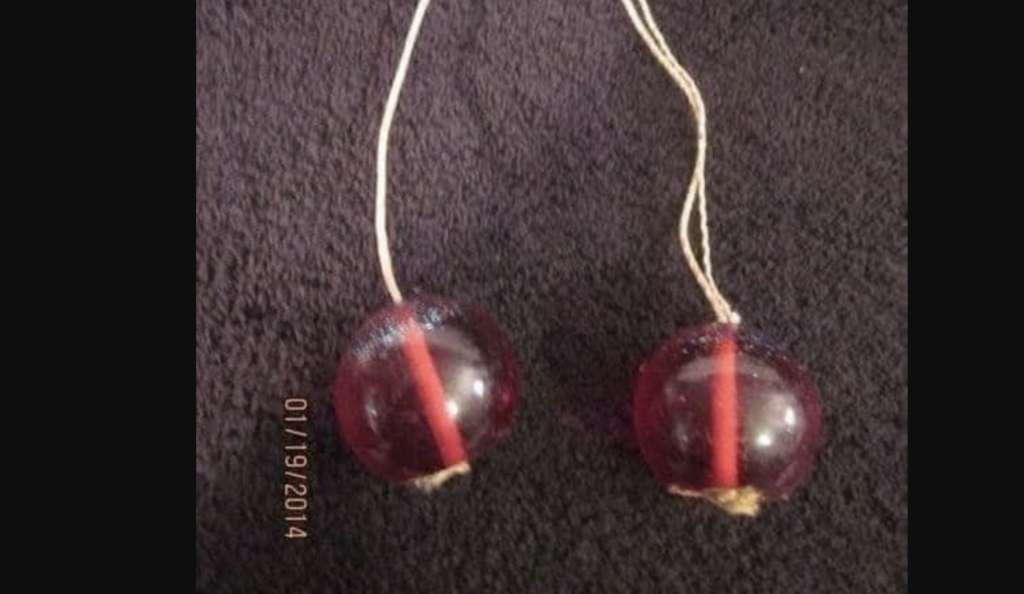
The entire internet worked together and still couldn’t figure out what it was. I wasn’t sure either, and neither were most people. Nearly ninety percent of those who saw it for the first time had no idea what they were looking at. The mysterious object that sparked so much curiosity turned out to be something many adults once knew well, but many younger people had never encountered. The answer was Clackers.
Clackers, sometimes called Lik Klaks, were among the most popular toys of the early 1970s and remain a beloved piece of nostalgia for vintage toy collectors today. At first glance, the toy looks simple, even ordinary. It consists of two hard plastic balls attached to the ends of a string, with a small ring or handle in the center. The fun comes from swinging the toy up and down so the balls repeatedly strike each other, creating a loud, rhythmic clacking sound that could be heard from across the street.
The toy was invented in 1969 by the well-known toy company Wham-O. This same company created some of the most iconic toys of the twentieth century, including the Hula Hoop, the Frisbee, and the Superball. When Clackers were released, their popularity exploded almost instantly. Children everywhere begged their parents for a pair, and playgrounds soon filled with the unmistakable clack-clack sound echoing through the air. In the first year alone, Wham-O sold more than ten million Clackers, making it one of the most successful toy launches of its time.
Part of the appeal was how difficult the toy could be to master. Beginners struggled to keep the rhythm going and often smacked their knuckles in the process. More skilled players could create complex patterns and speeds, turning the toy into a kind of performance. Informal competitions sprang up among kids to see who could clack the longest without losing control. For many, Clackers weren’t just a toy but a badge of patience and skill.
Unfortunately, their massive popularity was followed by growing concern. Some of the original plastic balls were prone to shattering after repeated impact. When they broke, sharp fragments could fly in every direction, causing injuries to hands, faces, and eyes. Reports of accidents increased, and many schools and public spaces banned the toy outright. Eventually, some local governments placed restrictions on their sale and use.
Wham-O tried to fix the issue by redesigning the toy with safer materials that were less likely to shatter. Although the updated version was safer, it never recaptured the magic of the original. By the mid-1970s, the craze faded, and Clackers gradually disappeared from store shelves.
Today, Clackers live on as a symbol of a different kind of childhood. Collectors seek out original versions, especially those in good condition with their original packaging. For many adults, holding a pair instantly brings back memories of long afternoons outdoors, the sound of plastic balls colliding, and the simple satisfaction of mastering something with your own hands.
In a world dominated by digital entertainment, Clackers remind us how little it once took to create excitement and connection. Sometimes, two plastic balls and a piece of string were more than enough to fill an entire summer with laughter.