If you have ever wandered through a forest after a storm and spotted something on the ground that looked like an egg from another planet splitting open, you may have encountered a stinkhorn mushroom. Known scientifically as Phallus impudicus and widely recognized under the name “stinkhorn,” this unusual fungus has earned its place among the most startling organisms found outdoors.
People who stumble upon one often freeze in surprise, unsure whether they are looking at a plant, an animal, or something else entirely. Its appearance and smell have sparked curiosity for centuries, raising the question: what exactly is this strange fungus, and why does it create such strong reactions?
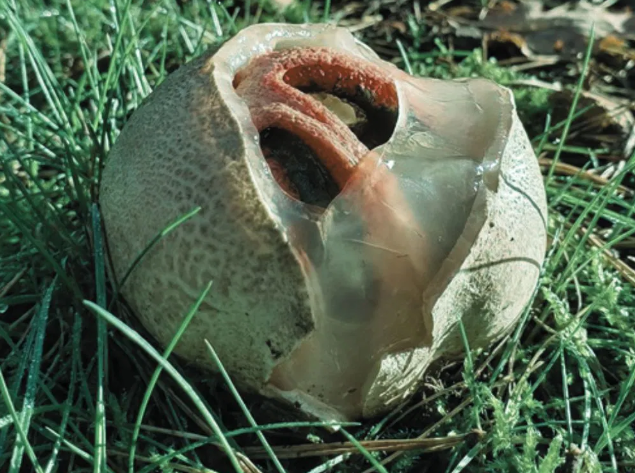
The life of a stinkhorn begins with a stage many hikers mistake for something left behind by wildlife. This early form, commonly called a “witch’s egg,” sits tucked into soil or moss like a firm, rubbery orb. When opened, it reveals a jelly-like interior surrounding the tightly folded structure that will soon erupt into the mature mushroom.
The odd shape and strange texture have inspired countless comparisons to alien pods or mysterious eggs, and it only becomes more surprising from there.
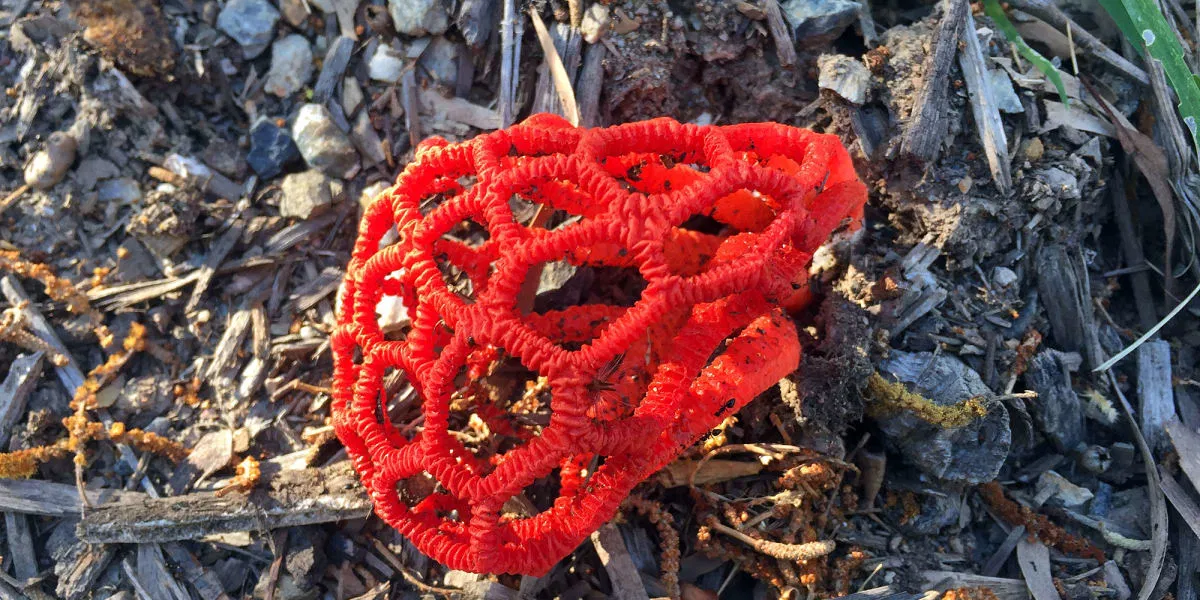
In a remarkably short period—sometimes in the span of a single night—the egg cracks apart. From inside, a tall, sponge-textured stalk pushes upward with incredible speed. Some stinkhorn species grow several inches within hours, making them one of the fastest-growing fungi known. This sudden growth is often what leads people to believe the mushroom appeared out of nowhere.
The sight may be startling, but the odor is what most people remember. Once the mushroom reaches full height, it releases a smell that many describe as a blend of decaying meat, garbage, and something distinctly sour. While unpleasant, this scent is part of a clever strategy.
The dark, sticky coating on the mushroom’s cap—called gleba—contains both spores and the powerful odor. Flies, beetles, and other insects that feed on carrion pick up the spores as they land on the slime. When they fly off, the spores travel with them, spreading the stinkhorn’s next generation far more effectively than wind ever could.
Although their appearance can be unsettling, stinkhorn mushrooms play a valuable role in the environment. They are saprophytes, meaning they break down fallen branches, dead leaves, and other organic materials that would otherwise accumulate.
By cleaning up the forest floor, they help enrich soil and maintain a balanced ecosystem. Their contribution is easy to overlook when confronted with their striking shape and powerful smell, yet their ecological importance is significant.
Most people’s reactions come from how unexpected they look. The tall, cylindrical form, combined with the slimy cap and the dramatic way they burst from their eggs, has led to memorable nicknames like “corpse fungus” and “devil’s egg.” Whenever someone posts a photo of one online, the image spreads quickly, often accompanied by disbelief. These mushrooms challenge our assumptions about what nature should look like, which is part of the reason they spark so much fascination.
Despite their frightening reputation, stinkhorn mushrooms pose no threat to humans. Touching them is safe, and they are not toxic. A few cultures even eat the egg stage, though mycologists caution against foraging due to the risk of confusing them with harmful lookalikes. For most people, the best experience is simply observing them without disturbing their growth.
So why do stinkhorns earn the label “terrifying”? Their sudden appearance, unusual form, slimy textures, and unmistakable odor push them far outside the familiar. Yet behind the shock lies an organism designed with extraordinary efficiency.
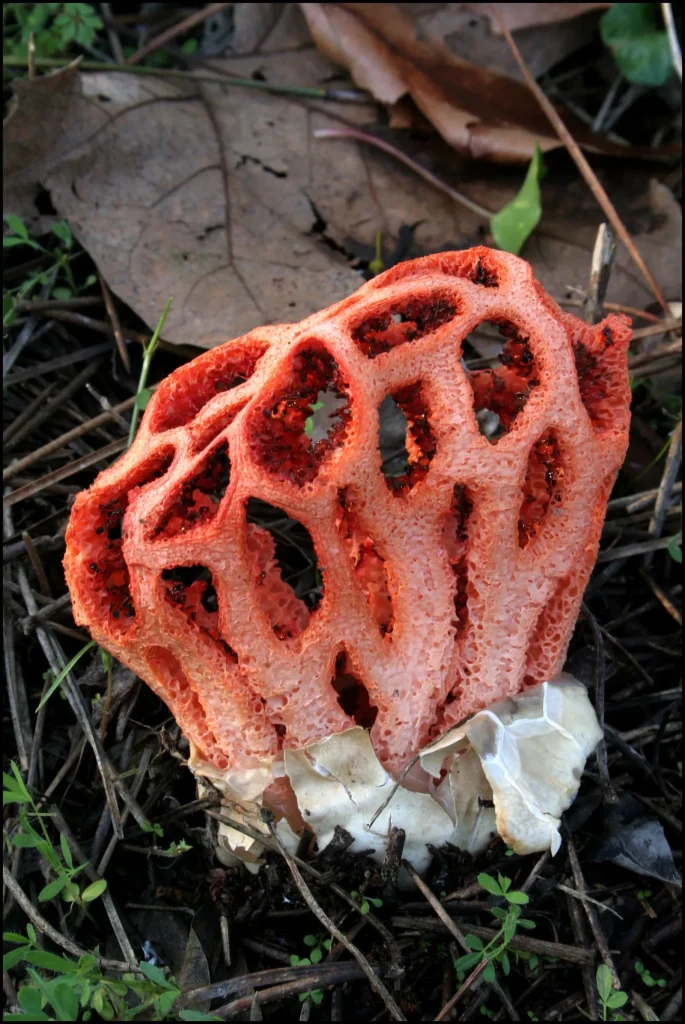
They remind us that forests hold mysteries shaped by evolution, purpose, and creativity. What may seem eerie at first glance becomes, with understanding, another example of nature’s remarkable variety.