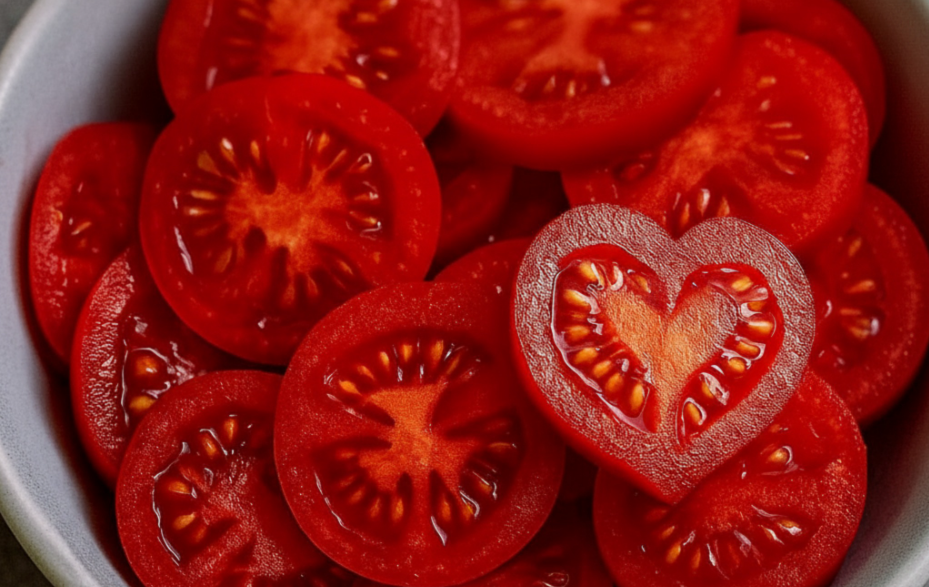
In a simple bowl of sliced tomatoes, one piece happened to resemble a heart. It felt like a quiet nudge, a visual reminder that some of the most meaningful foods in daily life do not arrive with grand presentation or complicated instructions. They appear regularly on kitchen counters and cutting boards, becoming part of meals almost without notice.
Tomatoes fall into that category with ease. Though botanically classified as a fruit, they have long earned their place as a foundational ingredient in cuisines across the world. They show up in salads, sandwiches, stews, sauces, and countless family recipes, offering flavor, color, and nourishment in an accessible way.
Tomatoes bring value not only through taste, but through their nutrient profile as well. Their vibrant red color comes from lycopene, a naturally occurring plant compound known for its antioxidant properties.
Antioxidants support the body as it manages everyday oxidative processes that occur through normal living, movement, and environmental exposure. Alongside lycopene, tomatoes provide vitamin C, which contributes to normal immune system function and supports the maintenance of healthy skin and connective tissues. They also contain vitamin A in the form of beta-carotene, which plays a role in supporting normal vision and skin health.
Beyond these well-known nutrients, tomatoes include smaller yet meaningful amounts of vitamin K and folate. Vitamin K contributes to normal blood clotting and bone health, while folate supports cell function and growth.
Taken together, these nutrients form a balanced package that fits naturally into many eating patterns. Tomatoes do not require elaborate preparation or special timing. They can be enjoyed fresh, cooked, blended, or roasted, offering flexibility for different preferences and lifestyles.
Another reason tomatoes remain such a reliable kitchen staple lies in how they support satisfying meals without feeling overly heavy. Tomatoes contain a high water content, contributing to hydration through food. They also provide dietary fiber, which supports normal digestion and helps meals feel more filling when combined with other whole ingredients. This can be especially helpful for people aiming to create balanced plates that feel complete without relying on excess calories. The presence of potassium adds another layer of benefit, supporting normal muscle function and helping maintain proper fluid balance in the body.
Because of this combination of water, fiber, and minerals, tomatoes work well as a base ingredient. They pair easily with beans, grains, vegetables, and proteins. A handful of chopped tomatoes can bring freshness to a grain bowl. Sliced tomatoes layered onto whole-grain toast add both flavor and texture. Simmered tomatoes become the backbone of soups and stews, carrying herbs and spices while enriching the overall dish. Blended into sauces, they help make vegetables and proteins more enjoyable, encouraging variety without added complexity.
Cooking tomatoes offers its own advantages. Heat changes the structure of lycopene, making it easier for the body to absorb and use. Tomato sauces, pastes, and slow-cooked dishes can therefore provide a different form of nutritional value than raw tomatoes. Fresh tomatoes, on the other hand, contribute crispness and brightness, offering a refreshing element to meals. Both forms play a role in a well-rounded eating pattern, and neither requires choosing one over the other.
Pairing tomatoes with healthy fats such as olive oil, avocado, seeds, or nuts supports nutrient absorption, especially for fat-soluble compounds like lycopene and beta-carotene. This pairing happens naturally in many traditional dishes, from tomato-based sauces cooked with olive oil to salads topped with seeds or cheese. These combinations demonstrate how simple ingredients often work best together, supporting both flavor and nourishment.
Beyond nutrition, tomatoes also connect people to memories and routines. They appear in family gardens, summer markets, and recipes passed down through generations. The act of slicing a tomato, sprinkling it with herbs, or stirring it into a pot can feel grounding. It reinforces the idea that healthy habits do not need to be dramatic to be effective. Small, consistent choices often shape long-term patterns more than occasional overhauls.
That heart-shaped slice resting in the bowl served as a gentle symbol. It reflected how everyday foods can support well-being in quiet ways, without demanding attention. Tomatoes offer color, flavor, and nutrients that fit easily into daily life. They encourage meals that feel vibrant and nourishing, built from ingredients that are familiar and approachable. In that sense, tomatoes remind us that caring for ourselves can begin with simple steps, repeated often, growing into habits that support health over time.