I Married a 70-Year-Old Hospice Patient to Fulfill Her Last Wish. After Her Funeral, Her Lawyer Revealed Why She Had Chosen Me.
I married a 70-year-old hospice patient to fulfill her last wish — after the funeral, her lawyer stepped aside with me and whispered, “I need you to see something. She didn’t choose you by accident.”
I started volunteering at the local hospice a few years ago. That’s where I met Eleanor.
She was 70 years old. While her illness was terminal, she still had days where her bright spirit completely outshined her diagnosis. For weeks, I sat with her, reading and listening to her stories.
She had lived her entire life completely alone. No husband, no children, no family to speak of.
One afternoon, she made a heartbreaking confession. She told me her one lifelong regret was never experiencing what it felt like to be a bride. She just wanted to wear a wedding dress and know what it meant to be chosen, even just once, before her time was up.
By then, Eleanor had become one of the people I cared about most at the hospice.
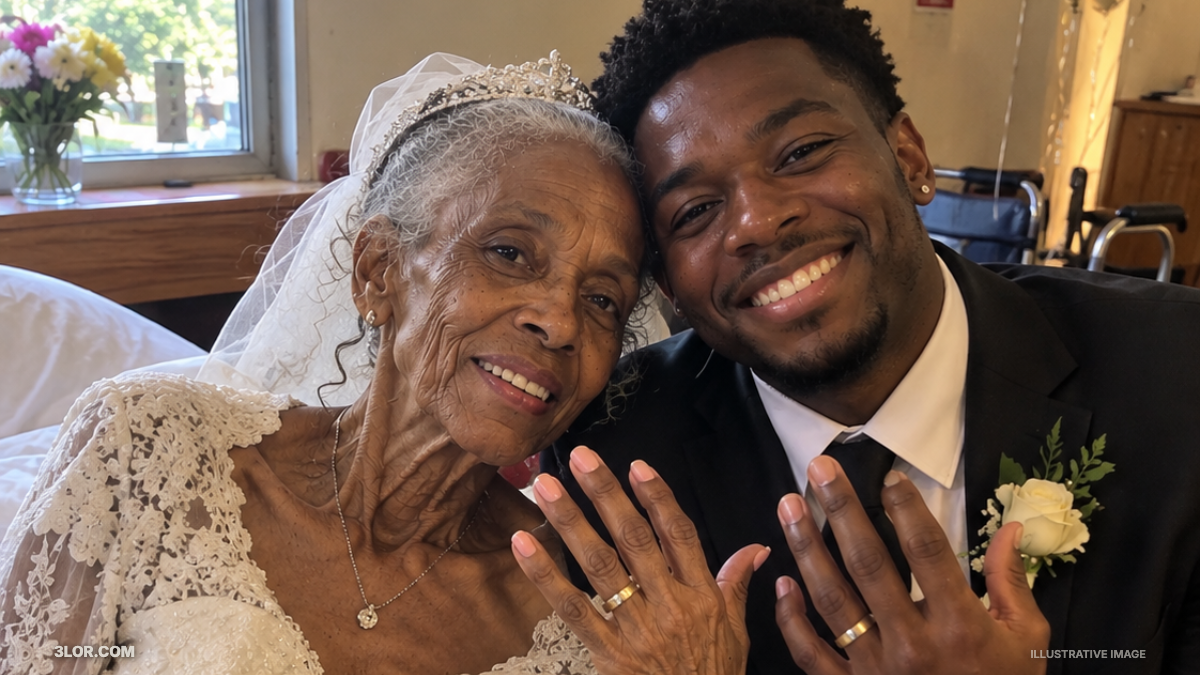
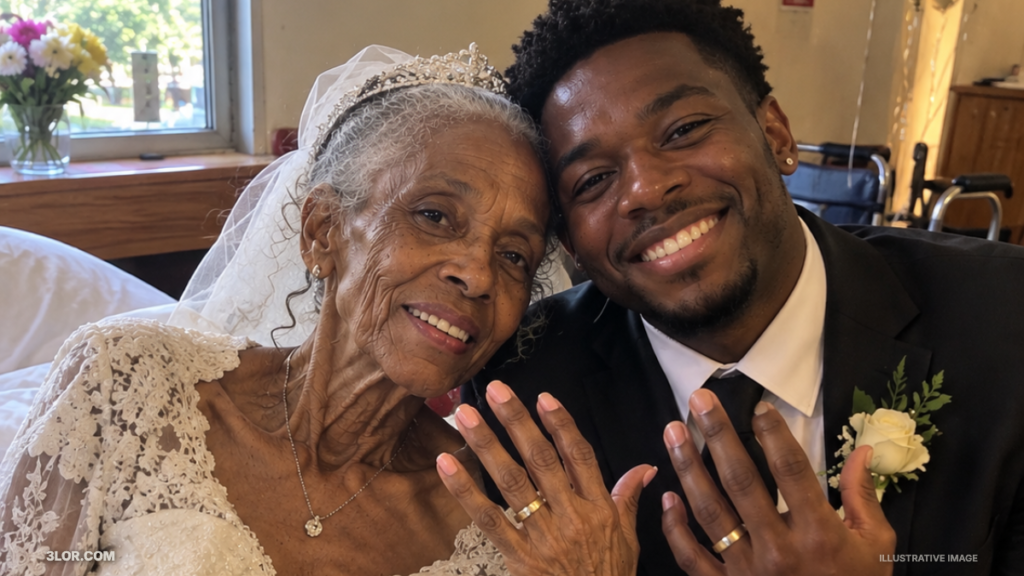
So, I found a simple, beautiful white gown. I arranged for a chaplain to come to the hospice. On the day of our wedding, Eleanor had a rare burst of energy. She was actually able to stand right beside me, radiating pure joy, as she proudly held up her hand to the camera to show off her ring.
For that one afternoon, she wasn’t a patient. She was just a beautiful, happy bride.
Eleanor passed away peacefully a few weeks later.
Her funeral was incredibly quiet. It was just me and a few of the nurses standing by the graveside under a heavy gray sky.
As the nurses made their way to their cars, a man in a sharp, dark suit approached me. He introduced himself as Eleanor’s lawyer.
He politely offered his condolences for my loss, but his manner quickly shifted. He checked to make sure we were completely alone, then drew a thick, sealed envelope from his leather briefcase.
“I need you to see something,” he whispered, handing it to me. “She didn’t choose you by accident.”
I looked down at the envelope.
My full name was written across the front.
Not just my first and last name.
My middle name, too.
And beneath it was an address I hadn’t lived at since I was twelve years old.
I looked at the lawyer.
“How did she know this address?”
He didn’t answer immediately.
Instead, he asked whether I remembered a woman named Patricia Mercer.
I hadn’t heard that name in almost twenty-five years.
And suddenly, I understood that whatever was inside the envelope had nothing to do with the wedding.
⸻
My name is Nathaniel Brooks, although everyone calls me Nate.
I’m thirty-nine years old, and until that afternoon, I believed I knew nearly everything worth knowing about my childhood.
My mother, Caroline, raised me alone in a small rental house outside Asheville, North Carolina.
She worked as a nursing assistant during the day and cleaned offices three nights a week.
We never had much money, but she made sure I never felt poor.
Every December, she’d save enough to buy a real Christmas tree.
Every birthday, she’d make my favorite chocolate cake.
And whenever I asked about my father, she’d tell me he had left before I was born.
I stopped asking when I was ten.
My mother died when I was twenty-six.
A stroke.
Sudden and devastating.
I was living in Charlotte at the time, working construction and trying to figure out what I wanted to do with my life.
After her funeral, I packed up her belongings and moved away.
There were things about my childhood I preferred not to remember.
Especially the summer I turned twelve.
That was the summer Patricia Mercer disappeared from our lives.
⸻
I met Patricia when I was eleven.
She was a social worker assigned to our neighborhood after several families reported problems with unsafe housing.
Our landlord had ignored a leaking roof for years, and mold had spread through two bedrooms.
Patricia visited our house several times.
She was in her forties, with short brown hair and a habit of carrying peppermint candies in her purse.
She helped my mother apply for housing assistance.
She brought me used books.
Once, when our electricity was shut off, she arrived with groceries and paid the overdue bill.
My mother was embarrassed.
Patricia told her that everyone needed help sometimes.
Then, one afternoon, I overheard them arguing.
I was supposed to be outside playing basketball.
Instead, I was standing in the hallway.
My mother was crying.
“You promised me nobody would ever find out.”
Patricia answered quietly.
“Caroline, I can’t keep pretending this didn’t happen.”
“You don’t understand what he’ll do.”
“I understand exactly what he might do. That’s why we need to handle this properly.”
I remember my mother saying one final thing.
“If you tell him, you’ll destroy everything.”
Patricia left that afternoon.
I never saw her again.
When I asked where she’d gone, my mother told me Patricia had moved to another state.
I believed her.
Until Eleanor’s lawyer mentioned her name.
⸻
The lawyer introduced himself as Martin Caldwell.
He suggested we sit somewhere private.
We drove separately to a small coffee shop near his office.
I ordered coffee I never touched.
Martin placed the envelope on the table.
“Eleanor asked me to give you this only after her death.”
“Why?”
“Because she wanted you to have a choice about what happened next.”
He opened a folder and removed a photograph.
It showed a younger Eleanor standing beside another woman.
The second woman had short brown hair.
I recognized her immediately.
“Patricia.”
Martin nodded.
“Eleanor Whitcomb was Patricia Mercer’s older sister.”
I stared at him.
“Eleanor told me she had no family.”
“She had no surviving close family when you met her. Patricia died seventeen years ago.”
I looked at the photograph again.
“Why didn’t she tell me?”
“Because she wasn’t sure you would believe her.”
He pushed the envelope toward me.
“Read the letter.”
⸻
The handwriting was neat but slightly uneven.
Dear Nate,
If you’re reading this, then I have finally run out of time.
There is something I should have told you the first day you walked into my room.
I knew who you were.
I recognized your name from a photograph my sister kept for almost twenty years.
Patricia loved you very much, although you probably never understood why.
She spent the last years of her life trying to correct a terrible mistake.
I promised her that if I ever found you, I would tell you the truth.
But when you appeared at the hospice, I was frightened.
Not of you.
Of what the truth might do to you.
I stopped reading.
My hands were shaking.
Martin waited.
I forced myself to continue.
Your mother was a good woman, Nate. Nothing in this letter should make you love her less.
But there is something about the day you were born that you deserve to know.
Caroline Brooks was not your biological mother.
I read that sentence twice.
Then a third time.
The coffee shop seemed to go quiet around me.
“That’s impossible.”
Martin didn’t interrupt.
“She raised me.”
“Yes.”
“She was there every day of my life.”
“Yes.”
“She was my mother.”
“Of course she was.”
I pushed the letter away.
“Then what is this?”
Martin folded his hands.
“It’s the story of how you came to live with her.”
⸻
According to the documents Eleanor had preserved, I was born in March 1987 at a hospital in western North Carolina.
My biological mother was a seventeen-year-old girl named Rebecca Sloan.
She had no stable home.
Her parents had thrown her out when they discovered she was pregnant.
She spent the final months of her pregnancy staying with friends and occasionally sleeping in her car.
Caroline Brooks was working at the hospital as a nursing assistant.
She met Rebecca during a prenatal appointment.
Over the following weeks, Caroline began bringing her food and helping her find somewhere safe to stay.
When Rebecca went into labor, Caroline was there.
I was born healthy.
But Rebecca developed serious complications.
She died two days later.
There was no father listed on my birth certificate.
No grandparents willing to take responsibility.
And no clear plan for what would happen to me.
Caroline had recently lost a pregnancy of her own.
She was grieving.
She was also unmarried and struggling financially.
But when she learned I might enter foster care, she asked whether she could take me home.
A hospital social worker helped arrange a temporary placement.
That social worker was Patricia Mercer.
I looked up from the documents.
“Patricia knew?”
Martin nodded.
“She was involved from the beginning.”
“Then why did she act like we’d just met when I was eleven?”
“Because by then, she’d discovered something was wrong with your adoption.”
⸻
Caroline had been allowed to care for me temporarily while the county searched for relatives and reviewed the placement.
But the process became complicated.
Records were misplaced.
An attorney handling the adoption retired unexpectedly.
And several documents were filed under the wrong case number.
Eventually, Caroline received paperwork that appeared to establish her as my legal mother.
She believed the adoption had been completed.
For eleven years, nobody questioned it.
Then Patricia transferred back to the county.
During a routine review, she discovered that my adoption file was incomplete.
The final court order was missing.
Worse, Rebecca’s father had contacted the county shortly after her death, asking about his grandson.
He’d been told the baby had already been legally adopted.
That wasn’t true.
He had spent years trying to find me.
His name was Thomas Sloan.
And he was still alive.
⸻
I sat staring at the letter.
“You’re telling me my grandfather spent years looking for me?”
Martin nodded.
“Yes.”
“And my mother knew?”
“Not at first.”
“But Patricia told her.”
“Eventually.”
I remembered the argument in our hallway.
You promised me nobody would ever find out.
I could almost hear my mother’s voice.
Martin continued.
“When Patricia discovered the missing order, she told Caroline they needed to contact an attorney and correct the records.”
“Why didn’t they?”
“Caroline was terrified.”
“Of losing me?”
“Yes.”
I leaned back.
For the first time, I understood the fear I’d heard in my mother’s voice that summer.
She wasn’t worried about losing our house.
She was worried about losing her son.
Martin handed me another document.
It was a letter from Patricia to Eleanor, dated six months after the argument I’d overheard.
Caroline has agreed to cooperate with the attorney. I believe we can correct the adoption without separating Nathaniel from the only mother he’s ever known.
But Thomas Sloan deserves to know his grandson is alive.
I should have made sure the paperwork was completed properly eleven years ago.
I thought I was helping.
Now I have to make it right.
I looked at Martin.
“Did they fix it?”
“Yes. The adoption was finalized the following year.”
I felt a wave of relief.
“So Caroline was legally my mother.”
“She was.”
“And my grandfather?”
Martin hesitated.
“He was contacted.”
“What happened?”
“He agreed not to challenge the adoption.”
“Why?”
“Because he met you.”
⸻
I didn’t remember meeting Thomas Sloan.
But Eleanor had kept a photograph.
Martin took it from the folder.
It showed a gray-haired man sitting on a park bench.
Beside him was a skinny boy holding a basketball.
Me.
I recognized the park immediately.
It was near our old house.
I remembered the afternoon.
My mother had taken me there after school.
A man she’d introduced as an old friend sat with us for nearly an hour.
He asked about basketball.
He asked what subjects I liked.
He bought me an orange soda from a vending machine.
Before we left, he shook my hand.
I remembered thinking it was strange that a grown man would shake hands with a kid.
That man was my grandfather.
I stared at the photograph.
“She never told me.”
Martin shook his head.
“No.”
“Did he know who I was?”
“Yes.”
“Did he want to take me away?”
“No.”
Martin opened another letter.
This one was written by Thomas himself.
I spent eleven years believing my grandson had been taken from me.
Today I met him.
He is healthy, happy, and loved.
Caroline has done what I was unable to do.
I will not take a child away from his mother simply because I have the right to ask.
But I hope that someday, when he is old enough, someone will tell him I existed.
I put the letter down.
My grandfather hadn’t abandoned me.
He’d chosen not to disrupt my life.
And my mother had carried that secret until the day she died.
⸻
“Is he still alive?” I asked.
Martin’s expression softened.
“Yes.”
My heart started pounding.
“Where?”
“About forty minutes from here.”
I stared at him.
“Forty minutes?”
“He’s eighty-four now. He lives in Hendersonville.”
I stood up so quickly my chair scraped against the floor.
“All these years?”
Martin nodded.
“He’s lived there most of his life.”
“Does he know about Eleanor?”
“Yes.”
“Does he know I’m here?”
Martin paused.
“Eleanor contacted him several months ago.”
I looked down at the letter.
“She knew where he was?”
“She did.”
“Then why didn’t she tell me?”
“Because she wanted you to decide whether to meet him.”
I sat down again.
For several minutes, I couldn’t speak.
Then I asked the question that had been bothering me since the funeral.
“Why did Eleanor ask me to marry her?”
Martin looked surprised.
“She told you why.”
“Because she’d never been a bride?”
“Yes.”
“But she knew who I was.”
“She did.”
“Was the wedding part of some plan?”
Martin shook his head.
“No, Nate. The wedding was your idea.”
I thought back.
He was right.
Eleanor had told me about her regret.
But she’d never asked me to marry her.
I’d suggested the ceremony.
I’d arranged the dress.
I’d found the chaplain.
She had simply accepted.
Martin leaned forward.
“Eleanor recognized you when you started volunteering. She wanted to tell you about Patricia and your grandfather, but she was afraid of hurting you.”
“Then why leave everything until after she died?”
“Because she was running out of time, and she didn’t want your kindness to become something you regretted.”
I looked at him.
“What do you mean?”
“She was worried that if she told you who she was, you might think she’d been using you.”
I remembered the afternoon I’d proposed the wedding.
Eleanor had cried.
I’d assumed they were tears of happiness.
Now I wondered whether she’d been thinking about something else.
⸻
There was one more document in the envelope.
A copy of Eleanor’s will.
I almost didn’t open it.
I had no interest in her money.
The wedding hadn’t been about that.
But Martin asked me to read the final page.
Eleanor had left most of her estate to a hospice charity.
A smaller amount was set aside to cover Patricia’s remaining memorial expenses and maintain the family graves.
And there was one personal bequest.
Not money.
Not property.
A wooden box.
Inside were Patricia’s letters, photographs, and the original documents she’d kept from my childhood.
Eleanor had left them to me.
Along with a note.
I know people may assume that because you married me, I left you a fortune.
I’m sorry to disappoint them.
What I have left you is something I believe matters more.
The truth about where you came from.
And the chance to know someone who has been waiting a very long time to meet you again.
I closed the folder.
For years, I’d believed my family consisted of two people.
My mother and me.
Now I was learning that other people had been quietly protecting me, searching for me, and making difficult decisions about my life.
Some of those decisions had been wrong.
Some had been generous.
And some had been both.
⸻
I didn’t drive to Hendersonville that afternoon.
I needed time.
I went home and opened the old box of photographs I’d kept from my mother’s house.
I found pictures of birthdays.
School plays.
Christmas mornings.
My mother standing beside me on graduation day.
She looked exhausted in most of them.
She’d worked so hard.
And she’d been afraid.
I thought about the day she’d told me Patricia had moved away.
I wondered how many nights she’d lain awake worrying that someone might come to our door and take me.
Part of me was angry.
She should have told me the truth.
She should have trusted me when I was older.
But another part of me understood how fear can make people hold on too tightly.
I loved her.
That hadn’t changed.
And learning about Rebecca didn’t erase Caroline.
It simply meant my story had begun earlier than I’d known.
⸻
Three days later, I called Thomas Sloan.
Martin had given me his number.
I stared at it for almost an hour before dialing.
A man answered on the fourth ring.
“Hello?”
His voice was rough and slightly breathless.
“Mr. Sloan?”
“Speaking.”
“My name is Nathaniel Brooks.”
There was silence.
Then I heard something fall.
A chair, maybe.
Or a phone being set down.
When he spoke again, his voice had changed.
“Nate?”
I closed my eyes.
“Yes.”
He made a small sound.
Then he said, “I’ve been hoping you’d call.”
I didn’t know what to say.
Neither did he.
Finally, I asked whether he remembered meeting me at the park.
He laughed softly.
“I remember every minute.”
“Why didn’t you tell me who you were?”
“Because your mother asked me not to.”
“Did that make you angry?”
“At first.”
“And later?”
He was quiet for a moment.
“Later, I realized she was scared. And I didn’t want you growing up thinking the people who loved you were fighting over you.”
I swallowed.
“Would you like to meet?”
He answered immediately.
“More than anything.”
⸻
The following Saturday, I drove to Hendersonville.
Thomas lived in a small white house with a vegetable garden and a porch swing.
He was waiting outside when I pulled into the driveway.
He looked older than the man in the photograph.
Of course he did.
Forty years had passed.
But I recognized his eyes.
He recognized mine.
For a moment, we just stood there.
Then he held out his hand.
I looked at it.
And suddenly remembered being twelve years old, shaking hands with a stranger in the park.
I stepped forward and hugged him instead.
He held on tightly.
“Your mother would have loved this,” he whispered.
I pulled back.
“Caroline?”
He shook his head.
“Rebecca.”
I felt tears sting my eyes.
“Can you tell me about her?”
Thomas smiled through his own tears.
“I’ve been waiting thirty-nine years for someone to ask.”
⸻
We spent the entire afternoon talking.
He showed me photographs of Rebecca as a little girl.
She had my eyes.
She loved animals.
She played the piano badly but enthusiastically.
She wanted to become a teacher.
Thomas told me he’d made terrible mistakes as a father.
When Rebecca became pregnant, he’d reacted with anger instead of compassion.
She left home believing she wasn’t welcome.
By the time he understood what he’d done, she was gone.
He tried to find her.
Then he learned she’d died.
And that she’d had a son.
He’d spent years searching.
When he finally found me, he discovered that I was loved and safe.
So he stepped aside.
“I thought I’d have more time,” he said.
“To do what?”
“To tell you everything when you were grown.”
He looked toward the garden.
“Then the years kept passing, and I didn’t know how to begin.”
I understood that feeling.
I was thirty-nine, and I’d nearly let another three days pass before making the call.
⸻
Before I left, Thomas gave me a small photograph.
Rebecca was seventeen.
She stood beside a Christmas tree, wearing a red sweater and holding a wrapped present.
On the back, in her handwriting, were four words.
For my little boy.
Thomas explained that she’d bought the present before I was born.
A stuffed brown bear.
He’d kept it all these years.
Then he went into the house and returned with a small box.
Inside was the bear.
Its fur was faded.
One ear had been repaired with blue thread.
But it was still there.
Waiting.
I held it carefully.
For the first time in my life, I had something my biological mother had chosen for me.
⸻
A month later, I returned to Eleanor’s grave.
I brought flowers.
And a photograph.
It showed Thomas and me sitting together on his porch.
We were both smiling.
I placed the photograph beside the headstone.
“Thank you,” I said.
I thought about the wedding.
The white dress.
The chaplain.
The way Eleanor had held up her ring and smiled for the camera.
At the time, I’d believed I was giving a dying woman one beautiful memory.
I hadn’t understood that she was carrying a piece of my history.
She’d spent her final weeks listening to me talk about ordinary things.
Work.
My childhood.
My mother.
My plans.
She’d known there was more to the story.
But she never made me feel like a project.
She let me be her friend.
And when I offered her a wedding, she accepted it for what it was.
A gesture of love.
Not romantic love.
Not obligation.
Just one person choosing to make another person’s final days a little brighter.
⸻
People sometimes ask whether I regret marrying Eleanor.
They assume it must have been strange.
A thirty-nine-year-old man marrying a seventy-year-old woman who was dying.
They ask whether I knew about her estate.
Whether I expected an inheritance.
Whether there was some hidden arrangement.
There wasn’t.
I didn’t receive a fortune.
I didn’t inherit a house.
I didn’t become wealthy.
What I received was a box of old letters, a few photographs, and a truth that had been waiting for me since childhood.
I learned that my mother had loved me enough to raise me when she had almost nothing.
I learned that another mother had loved me before I was born.
I learned that a grandfather had spent decades hoping to see me again.
And I learned that a woman I’d met in a hospice had been quietly carrying the last promise she made to her sister.
Eleanor never told me she knew my family.
She never asked me for anything beyond company.
And when I offered to make her a bride, she gave me the biggest smile I’d ever seen.
I used to think I married Eleanor to fulfill her last wish.
Now I understand that she fulfilled something for me, too.
She gave me the chance to discover that my life had always held more love than I knew.
And every year, on the anniversary of our little wedding, I visit her grave with two things.
A bouquet of white flowers.
And a photograph of me and my grandfather.
Because Eleanor wanted to know what it felt like to be chosen.
And in the end, she helped me understand something I’d spent most of my life wondering.
I had been chosen, too.
More than once.
By people who loved me enough to make sacrifices I never knew about.