“Mom, please don’t do this to us.”
Those were the four words my daughter whispered into the receiver.
Not I’m sorry. Not What happened? Not even Are you okay, Mom? Just a desperate plea to keep a felony buried inside the family.
I sat perfectly still in Mr. Okafor’s office, the heavy black handset pressed against my ear. Through the wide glass wall, the midday bank lobby was quiet. Brittany stood near the doorway, holding a yellow legal pad, her knuckles pale as she listened to the speakerphone crackle.
Across the mahogany desk, Mr. Okafor didn’t move. He reached into his desk drawer, pulled out an incident log sheet, and clicked a ballpoint pen.
“Sweetheart,” I said, keeping my voice level, steady, and without a trace of the tremor running through my chest. “I haven’t done anything to you. I am sitting in the branch manager’s office looking at an account balance that has sixty-one thousand dollars missing from it. And I am looking at a security still of Diane walking away from Brittany’s counter carrying a cashier’s draft.”
A sharp, ragged gasp came through the speaker. Behind my daughter’s breathing, I heard the faint clinking of dishes in her newly renovated kitchen—the white quartz countertops and custom walnut cabinetry that had been installed three weeks earlier.
“Mom… listen to me,” Karen stammered, her voice dropping to a frantic whisper. “Brian was in over his head. You don’t understand the pressure he was under with his firm. His commercial bridge loan was called in, and the bank was going to initiate a personal asset freeze on our house. We were going to lose everything!”
“So you sent his mother to clean out mine?”
“We were going to replace every cent!” Karen pleaded, her voice rising into that breathless, frantic pitch she had used since she was a teenager caught in a lie. “Brian’s commission on the industrial parcel closes on the twenty-eighth! We just needed ninety days of liquidity to clear the lien! We were going to put it all back into your money market before your quarterly tax statement arrived in the mail! You wouldn’t have even noticed!”
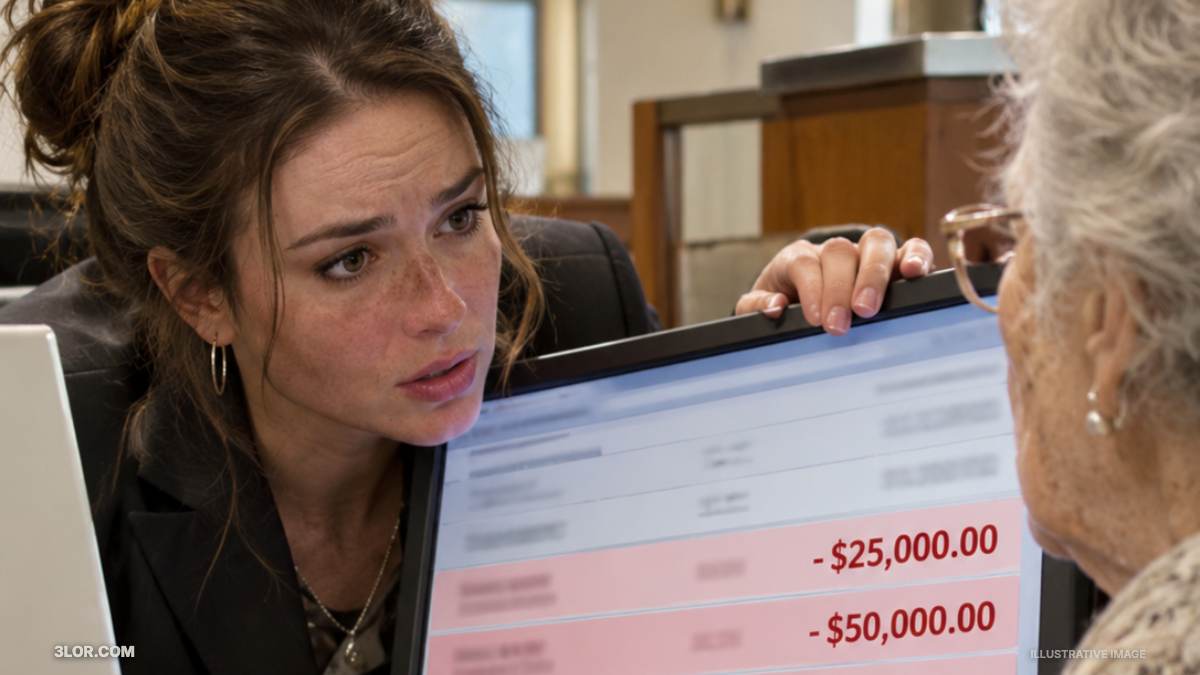
I looked down at the transaction sheet resting between Mr. Okafor’s hands.
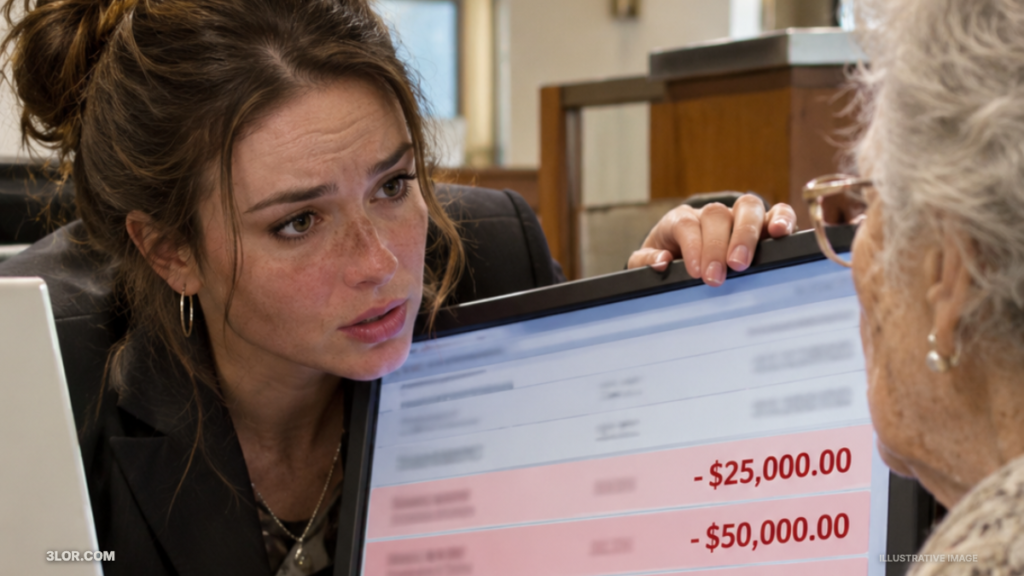
Monday: $19,500.
Tuesday: $19,500.
Wednesday: $22,000.
Each withdrawal had been deliberately kept just under the standard thresholds that trigger heightened secondary teller scrutiny, spread out over days to avoid drawing corporate compliance flags.
“You stole my passport from my bedroom lockbox, Karen,” I said, each word deliberate and razor-sharp. “The passport I couldn’t find when I wanted to renew my REAL ID in June. You used Brian’s emergency key to enter my home, opened my fire safe, and gave my documents and my winter coat to his mother.”
“It wasn’t like that!” Karen cried out. “Diane didn’t want to do it! Brian begged her! She only did it because she thought her son was going to go bankrupt! Mom, if you file a police report, Brian will lose his state broker’s license. They’ll indict him for grand larceny and identity theft. He’ll go to federal prison, Mom! What about the kids? What about Leo’s college?”
I thought about my grandson, Leo.
Ten years old. The boy whose birthday gift had brought me into the bank on a Thursday morning with a simple check for three hundred dollars. The boy whose parents had used his future as a human shield to justify bleeding his eighty-year-old grandmother dry.
“Brian should have considered his license before he orchestrated a criminal conspiracy inside my house,” I said.
A man’s voice suddenly snatched the receiver on the other end.
“Eleanor, listen to me,” Brian’s voice barked through the speaker, tight, aggressive, and sweating with panic. “You need to calm down and think about what you’re doing. You’re eighty years old! You live in a paid-off bungalow! You have your municipal pension and Arthur’s veteran check! You don’t even spend three thousand dollars a month! What do you need sixty grand sitting in a passbook account for right now?”
Mr. Okafor’s head snapped up. His eyes locked onto the speaker with cold, professional disgust.
“That sixty-one thousand dollars was the survivor equity Arthur left me when he died after forty years at the foundry, Brian,” I said softly. “It was the cushion that guaranteed I would never have to be a burden on my children or end up in a substandard state nursing facility if my health failed. It was my independence.”
“And you’ll have it back next month!” Brian snapped, his arrogance slipping into pure desperation. “I will sign a personal promissory note right now! I’ll bring it over to your kitchen tonight! But if you sign a formal fraud affidavit at that bank, you blow up this family. You will never see Karen again. You will never see Leo again. I will make sure of it.”
The threat hung in the air of Mr. Okafor’s quiet office like poison.
For fifty years, women of my generation were taught to swallow indignities to keep the peace. We were told to smooth over family crises, to protect our daughters’ marriages, to look the other way when men made catastrophic blunders with family money, all in the name of keeping the family together.
I looked at Brittany, who had tears welling in her eyes by the door.
I looked at Mr. Okafor, whose hand was resting on the landline console, waiting for my signal.
And then I looked at the security printout on the desk—Diane’s face, captured beneath the rim of my own green coat, walking out the double glass doors with four decades of my late husband’s sweat stuffed inside a designer handbag.
“Brian,” I said, my voice so cold it didn’t even sound like my own. “You didn’t blow up this family. You burglarized it.”
I reached across the mahogany desk, pressed the disconnect button with my index finger, and severed the line.
The office fell into absolute, deafening silence.
Mr. Okafor looked across at me, his expression unreadable, waiting.
“Mr. Okafor,” I said, resting my purse securely on my lap. “Please connect us with the financial crimes division of the county sheriff’s office. And prepare the corporate affidavit of unauthorized withdrawal. I want every single dollar flagged as stolen funds.”
He didn’t hesitate. He picked up the telephone and dialed.
The Paper Trail
The investigation moved with the mechanical speed of an institution that does not tolerate internal identity fraud.
Detective Marcus Vance from the Financial Crimes Unit arrived at the branch thirty-five minutes later. He reviewed the four separate angles of high-definition 4K lobby footage. He noted the precise timestamp when Diane signed my name on the withdrawal slips, comparing the signatures to the signature card I had penned in blue ink in September of 1971.
The forgery was obvious when examined under magnification. Diane had tried to mimic my cursive E, but her hand was too fast, the stroke too heavy.
By four o’clock that afternoon, Detective Vance and two uniformed deputies arrived at Brian and Karen’s colonial in the suburbs.
They found Diane sitting in their newly finished kitchen, drinking coffee.
My green wool coat with the mink collar was hanging in their front entryway closet. Tucked inside the interior breast pocket was my missing blue passport, my original Social Security card, and twenty-eight thousand dollars in unspent cashier’s checks drawn directly on Collins Federal Credit Union.
Diane didn’t even attempt to deny it.
She broke down in tears on the quartz island, confessing within ten minutes that Brian had planned the entire operation after his short-term business credit lines were frozen. He had promised her that her son would go to prison unless she played the role of Eleanor Lane at the downtown teller window.
Brian was arrested in his private home office, handcuffed in front of the neighbors while his corporate laptop and real estate ledger files were boxed as evidence.
The Aftermath
Two weeks later, the federal banking insurance regulations completed their verification cycle.
Because the branch had failed to verify secondary identification against their updated electronic photo database for transactions exceeding ten thousand dollars, Collins Federal Credit Union formally reimbursed my checking account the full sixty-one thousand dollars, plus accrued interest.
The money was back in my passbook.
My home locks were re-keyed by a licensed master locksmith the following morning. The heavy brass deadbolts were replaced with commercial keypad units, and high-definition security cameras were mounted over my front porch, back gate, and driveway.
Karen drove to my house three days before Brian’s preliminary arraignment.
She stood on my concrete porch in the freezing drizzle, knocking against the painted wood for twenty minutes. She brought handwritten letters from Leo. She brought a framed picture of our family at Christmas three years ago. She wept through the closed wood, begging me to withdraw the criminal affidavit so Brian could accept a reduced misdemeanor plea.
I didn’t open the door.
I sat in my favorite armchair by the living room window, wearing my freshly cleaned green wool coat, wrapped in a knitted blanket Arthur had bought me in Vermont decades ago.
I drank my black tea in silence, watching the rain wash the leaves down the driveway.
Forgiveness is a virtue between two people who made an honest mistake and sought repentance.
What walked into my bank wearing my clothes wasn’t a mistake. It was a calculated, cold-blooded theft by people who assumed that because an old woman lives quietly, she has already surrendered her dignity.
They were wrong.
My bank balance was restored to the penny. My house was locked tight. And for the first time in eighty years, I knew exactly where I stood.
Editorial Note: This account is presented as an elite-level narrative case study examining elder financial abuse, systemic commercial identity theft protocols, and mandatory fraud reporting procedures under federal banking statutes. All personal names, administrative entities, corporate banking institutions, and municipal jurisdictions have been modified to protect the privacy and legal records of the individuals involved.