Super Bowl Sunday delivered more than a decisive 29–13 victory for the Seattle Seahawks over the New England Patriots at Levi’s Stadium. Away from the scoreboard and the celebrations, an entirely different discussion took shape across the internet.
This year’s halftime break didn’t revolve around a single stage. Instead, it unfolded as a split-screen cultural moment, with millions watching two separate performances and debating everything from production choices to whether the music they heard was fully live.
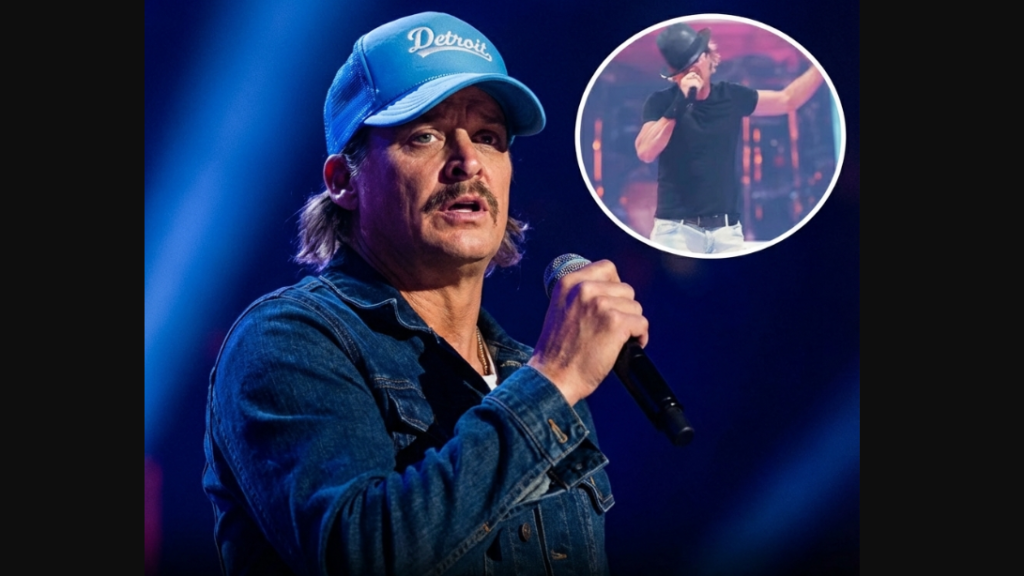
The alternative event, promoted by Turning Point USA, was introduced as the “All-American Halftime Show” and positioned as a counterpart to the NFL’s official performance by Bad Bunny. With a lineup built around a country-rock vibe and a finale featuring Kid Rock, the livestream immediately drew massive attention. Viewers flocked to compare it with the main broadcast, and within minutes, commentary poured across social platforms. Kid Rock’s closing segment became the focal point, with many questioning the timing of the vocals, the pacing of the set, and whether the performance ended earlier than expected.
As short clips spread online, the conversation widened beyond the night itself. Some users began resurfacing older content connected to Kid Rock—past lyrics, archived interviews, and previous televised moments that had sparked controversy.
Those resurfaced discussions blended into the current debate, raising questions about cultural relevance, public perception, and what audiences expect from such a widely viewed event. What started as chatter about a halftime performance quickly merged with broader conversations about entertainment values, public memory, and which artists merit attention on a night watched by tens of millions.
At the same time, support for the alternative show grew in its own corner of the internet. Fans praised the lineup for offering a familiar sound in an era where many feel their preferred genres are less represented on major broadcast stages.
They celebrated the energy of the performances, the enthusiasm of the artists, and the idea that halftime could reflect different musical identities. Livestream metrics suggested significant interest, with reports indicating that viewership reached into the millions during the broadcast and climbed into the tens of millions in the hours that followed.
The dual-show format highlighted a deeper trend in how major cultural events are experienced today. Audiences no longer gather around a single screen. Instead, they navigate between simultaneous streams, multiple platforms, and parallel conversations.
Super Bowl LVIII became a clear example of that shift. Whether someone admired the NFL’s official stage design or preferred the country-rock atmosphere of the alternative broadcast, both performances sparked passionate reactions and drew sizable audiences.
What stands out most is how long the conversation continued after the game ended. The halftime debate extended into the following days, with discussions about live vocals, music preferences, and the purpose of alternative broadcasts gaining just as much traction as post-game analysis. Super Bowl Sunday has always been about more than football, but this year made that especially apparent. Two halftime shows, two artistic visions, and one evening that kept millions talking well beyond the final whistle.