The first thing my children noticed when they arrived at the farm was the chain on the gate. It was not the old rusted chain that had been there for years, but a new, solid lock catching the afternoon light. Twelve family members stood outside carrying coolers, bags, folding chairs, and enough food prepared for an entire weekend. They expected to reach under the familiar flowerpot and find the spare key, as they always had. Instead, a wooden sign hung clearly on the gate with words that immediately changed the atmosphere: “This house no longer welcomes people who forget to ask permission.” Beneath the sign rested an old leather notebook, carefully tied with a red ribbon.
I observed everything quietly from the porch, standing beside Juan and my lawyer, Mr. Ferrer. My son Carlos stared at the lock with disbelief, unable to process what he was seeing. Only one week earlier, he had removed me from the family group chat and explained it with casual indifference. “Mom, it’s for working adults,” he had said. Those words stayed with me, leaving a deeper impact than any barrier placed on a gate.
For many years, I believed that being constantly needed meant being appreciated. The farm slowly became the center of every celebration, every holiday, every gathering. My children would arrive without notice, walk through the house as if it belonged to them, open cupboards, leave dishes behind, and treat the space as a place that required no care on their part. Over time, my role changed. I was no longer seen as “Mom,” but as the person who always made sure the key was available outside.
The group chat was what finally opened my eyes. Inside it, they planned weekends at the farm, assigned rooms, organized visits, and made comments about “the old woman” without realizing the weight of their words. When I asked Carlos why I had been removed, he responded without hesitation. “You wouldn’t understand what we talk about,” he said. That moment brought clarity. I realized I had not only been excluded from a conversation, but also from the respect that should have always been present.
The notebook placed at the gate held a story they had never fully seen. It contained pages written partly by my late husband, José. Every page described the effort it took to build the farm from empty land into a place filled with memories. There were records of expenses, repairs, and loans, along with handwritten notes about moments that shaped our lives. Some entries spoke quietly yet powerfully. “Benita sewed until midnight to help pay for the roof.” “Carlos needed medicine, so the dining room floor can wait another year.” These words reflected years of choices made with care and responsibility.
As my children read, their expressions began to shift. For the first time, they looked beyond the comfort they had always known and saw the reality behind it. The farm was no longer a background for their memories, but a result of effort, sacrifice, and persistence. When Carlos reached the final pages, he found my own words written clearly. I explained that the pain I felt did not come from being removed from a chat. It came from realizing I had become invisible within my own family.
Inside the notebook, another document waited. It contained updated legal papers stating that the farm belonged entirely to me and would not be divided among the children in the future. Instead, I had arranged for the property to become a retirement and community center for widows in the municipality, including a small library dedicated to José’s memory. My daughter Laura stood in silence. Diego reacted with frustration. Carlos spoke as if the situation came from a misunderstanding.
This decision was not shaped by one moment. It reflected years of patterns that had gone unrecognized. Then something unexpected changed the mood. My granddaughter Sofia stepped forward, continued reading the notebook aloud, and offered a sincere apology. Her words carried understanding, not expectation. She did not speak about access to the farm. She spoke about respect and appreciation. That moment held more meaning than any argument that followed.
In the end, I opened only the small side gate. One by one, the grandchildren entered for dinner, while the adults remained outside with their belongings. It was a quiet shift in experience, allowing them to understand what it felt like to wait rather than assume entry.
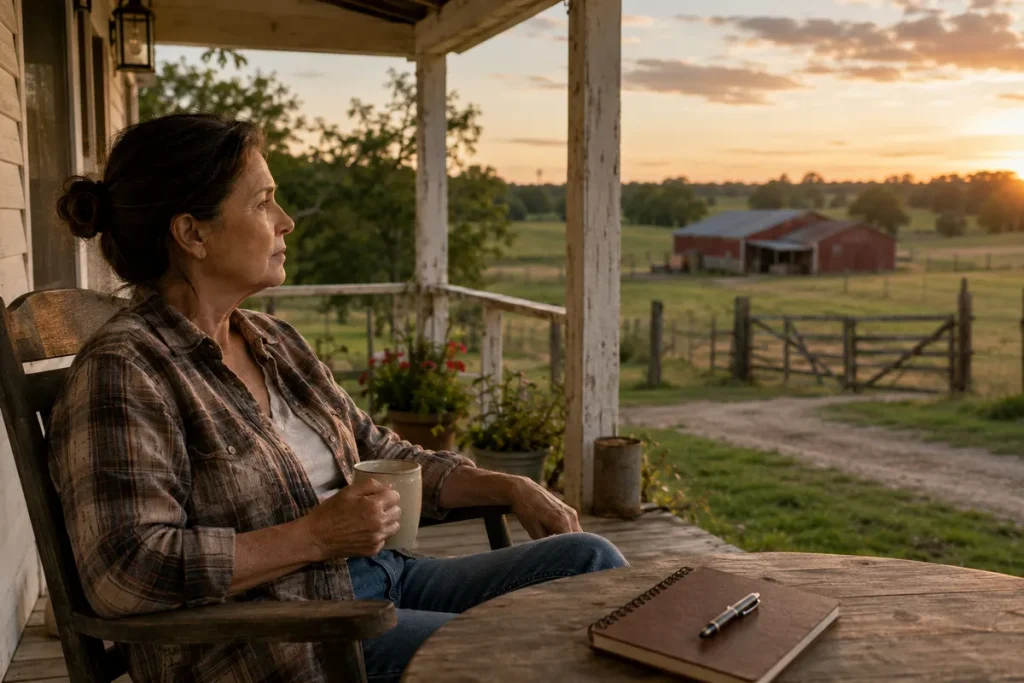
As I served soup in the kitchen and listened to the children speak softly, I felt a sense of calm that had been missing for a long time. There was no resentment in that moment, only clarity. I no longer felt the need to prove my place through constant effort or silence.
The farm was not closed because my feelings for my family had changed. It was closed because I had come to understand that care must exist alongside respect. Without that balance, even the strongest bonds begin to weaken. Sometimes, the most important step is no longer leaving the key under the flowerpot, and instead waiting to see who is willing to approach the door with consideration.