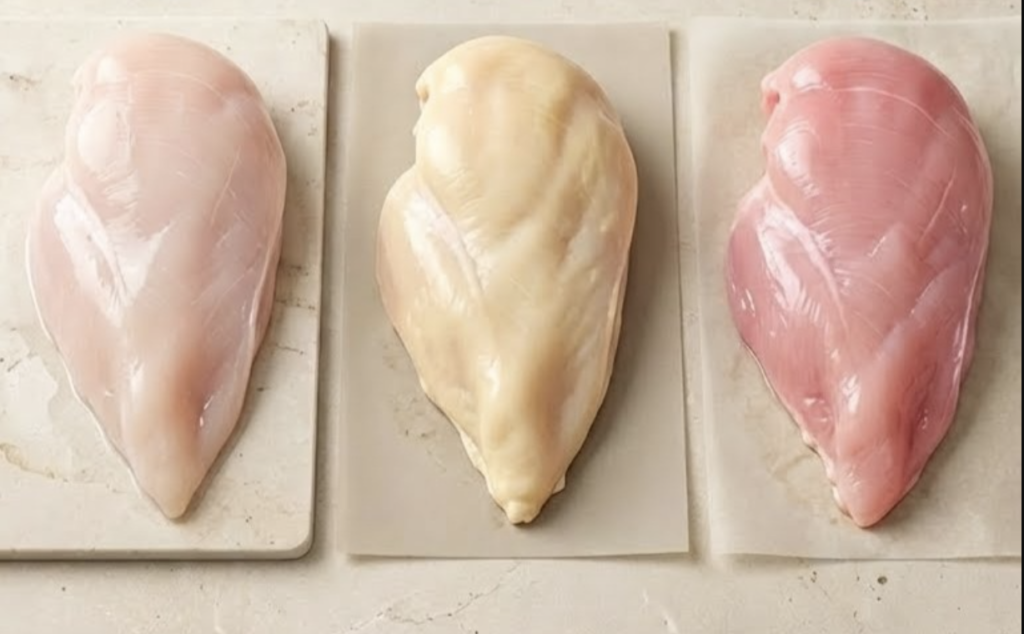
The moment you pause in front of the refrigerated case, a small detail often captures your attention. One package of chicken appears light and softly pink. Another carries a warm yellow hue that feels more traditional. The cut is identical. The price difference is minimal. Yet the visual contrast invites questions almost automatically. Many shoppers find themselves wondering what that color signals and whether it reveals something meaningful about quality, nutrition, or farming practices.
Color has a powerful influence on how people judge food. Long before labels are read, the eye forms expectations. With chicken, that reaction is especially strong because appearance varies more than many realize. Still, color alone rarely delivers a complete explanation. Instead, it hints at a combination of factors that shaped the bird’s life long before it reached the store.
Pale chicken commonly reflects the realities of large scale poultry production. These birds are raised to grow quickly, following feeding plans designed for consistency and efficiency. Their environments are typically indoors, where movement is limited and growth is carefully managed. This approach allows producers to supply vast quantities of affordable meat to meet demand. The lighter appearance is a result of controlled diets and minimal exposure to natural pigments. While this color does not indicate that the meat is unsafe or nutritionally empty, it does reflect a system focused on speed and uniformity.
Chicken with a deeper yellow tone often carries a different story. That color tends to develop when birds consume feed containing natural pigments such as corn, grasses, and plant materials rich in carotenoids. Time spent outdoors, exposure to sunlight, and a more varied diet can all contribute to this warmer shade. These birds usually grow at a slower pace and engage in more natural movement. Many people notice differences in texture and flavor, describing the meat as firmer and more pronounced in taste. For some, this aligns with memories of home cooked meals and traditional farming.
Appearance, however, can be shaped intentionally. Some producers adjust feed formulations to enhance color because shoppers often associate yellow chicken with quality and care. In these situations, the color may suggest a lifestyle that the bird did not fully experience. This practice demonstrates why visual cues can create assumptions that are not always accurate. Color becomes a signal that invites curiosity rather than a guarantee of how the animal was raised.
Labels provide a clearer picture than appearance ever could. Certifications and descriptions such as pasture raised, organic, free range, or Certified Humane communicate standards related to diet, living conditions, and animal treatment. These details offer insight into farming methods that influence both ethical considerations and eating experience. Reading packaging carefully allows shoppers to make informed decisions that reflect personal values rather than relying on visual impressions alone.
Freshness is another essential factor that color cannot define. Quality chicken should feel firm and moist without excessive liquid in the package. The scent should remain neutral and clean. Any strong or unpleasant odor signals a problem regardless of whether the meat appears pale or golden. Once cooked, flavor and juiciness reveal the outcome of many variables working together, including diet, movement, and processing.
Choosing chicken becomes a personal calculation rather than a simple visual judgment. Budget, convenience, taste preferences, and ethical priorities all play a role. Some meals call for affordability and speed. Others invite deeper flavor and connection to farming practices that emphasize animal welfare. Each option serves a purpose, and neither is automatically superior based on color.
The grocery aisle holds countless stories shaped by decisions made long before purchase. Color provides a first impression, a quiet introduction that sparks curiosity. Understanding what lies beyond that surface allows shoppers to look past assumptions and select food with confidence. In the end, the most meaningful choice comes from knowledge, awareness, and alignment with what matters most to you.